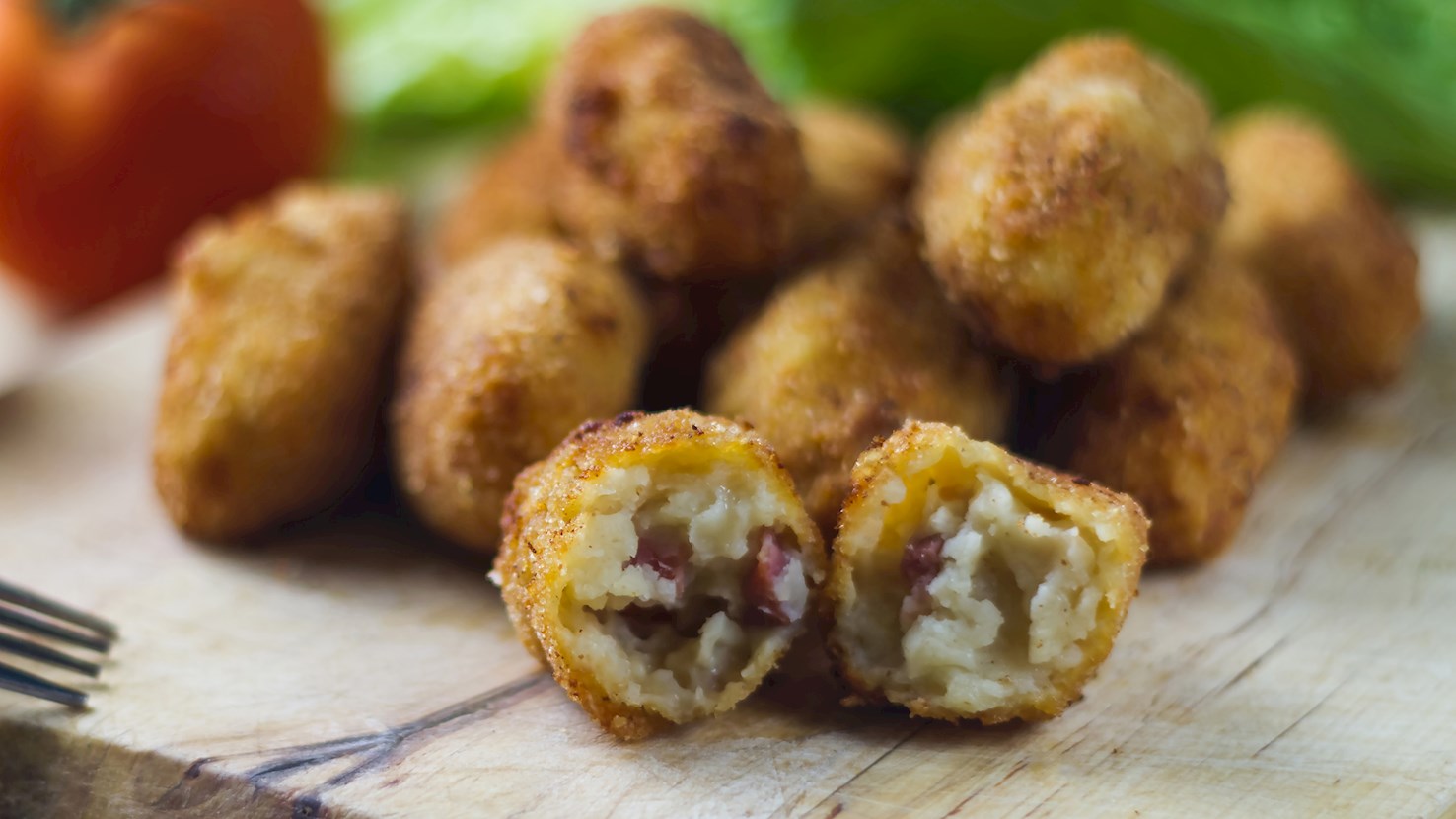
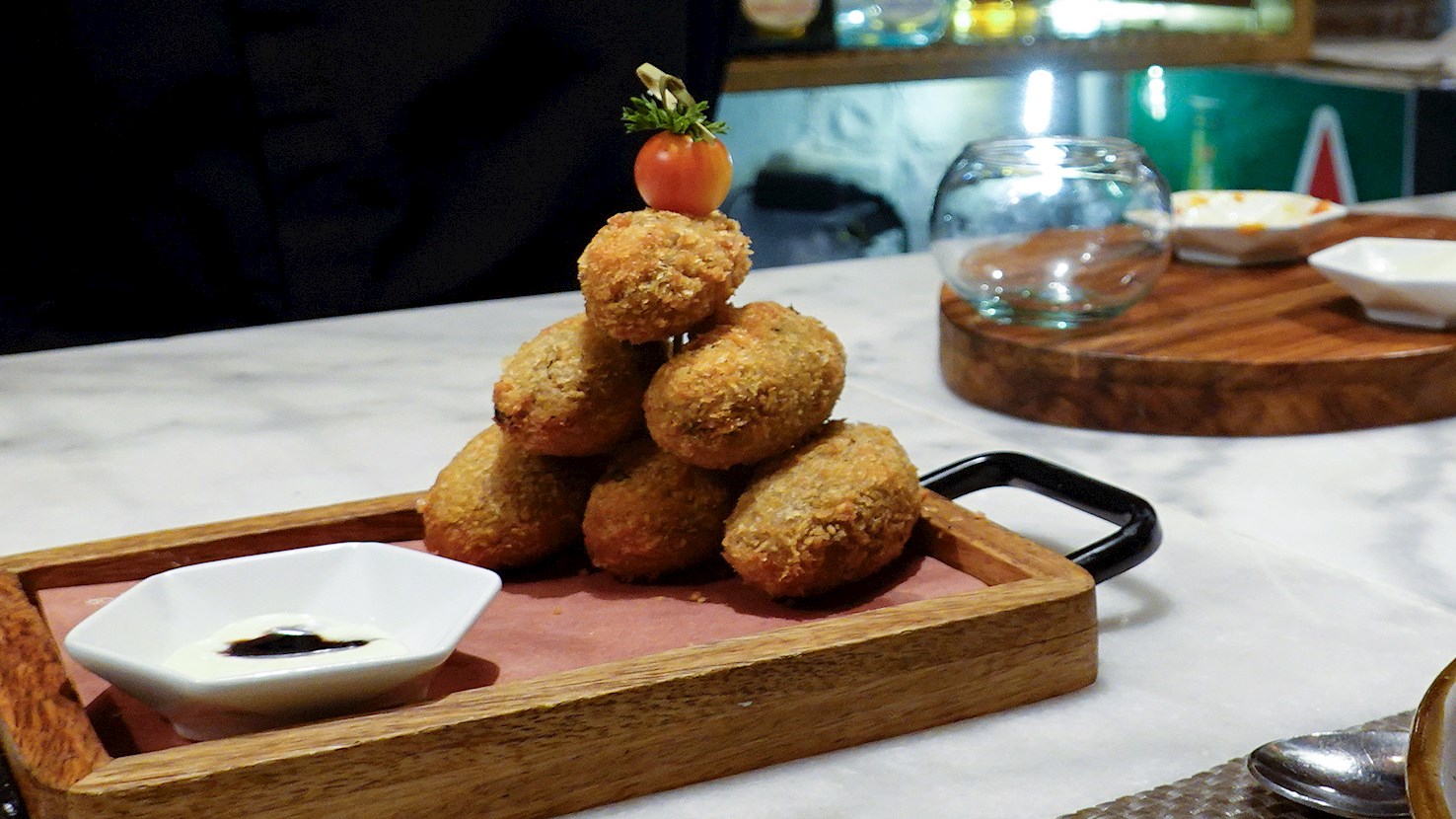
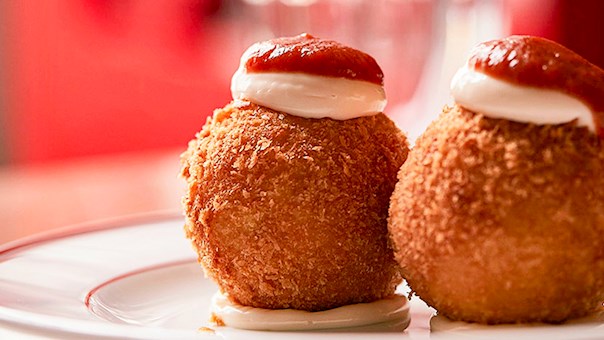
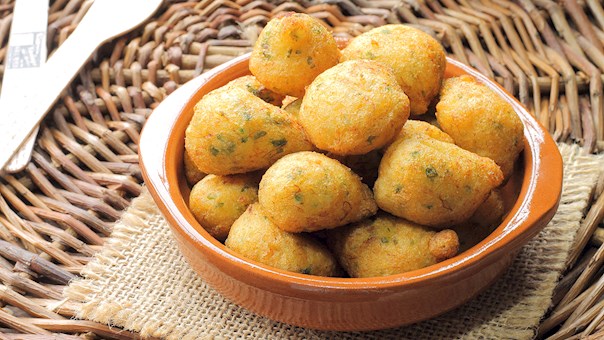
Crispy croquetas de jamón are small and unusual Spanish fritters, which consist of a crispy outer shell and a creamy interior. As the central ingredient, they employ a thick variety of buttery béchamel sauce, which is formed into small logs, coated in breadcrumbs and egg wash, and fried until golden and crunchy. Spanish croquetas are made with a variety of ingredients but the jamón version, which incorporates diced Spanish ham, is the most common and popular of them all. Fragrant and spicy ham is an ideal addition to the lush and mild taste of béchamel. Croquetas are not a decadent food item; they were developed as a poor man’s food, to make use of the cheap or the remaining ingredients. Today, they represent a favorite dish, popular and eaten everywhere in Spain. Whether they are served as a smaller tapas dish or a more substantial individual meal, they are always served fresh and hot, while the center is still hot and partially melted.
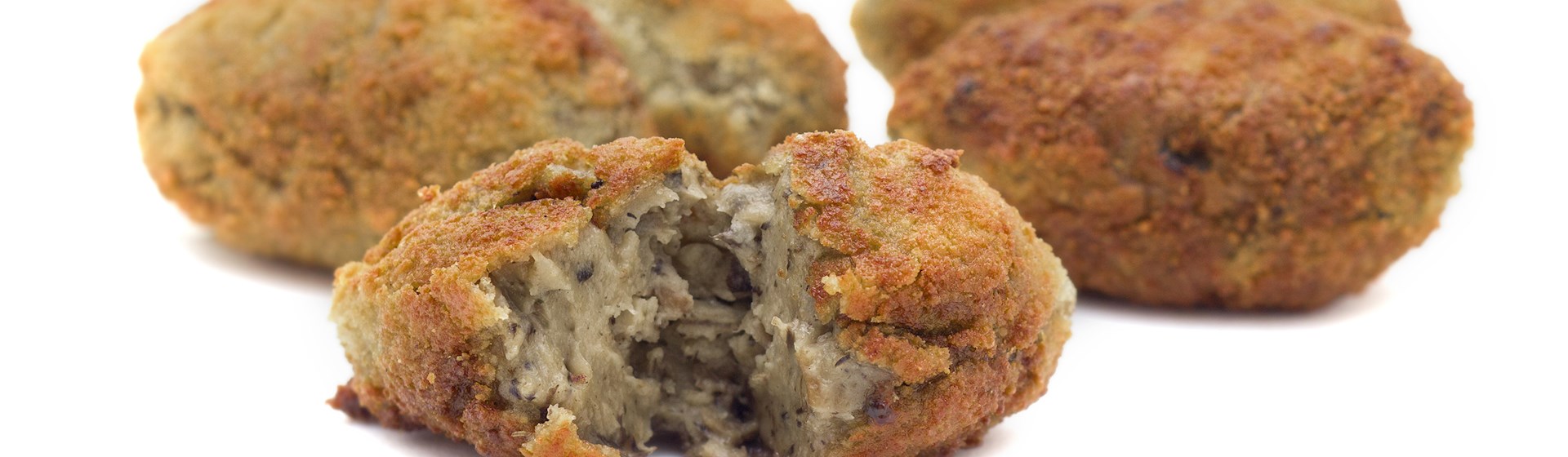
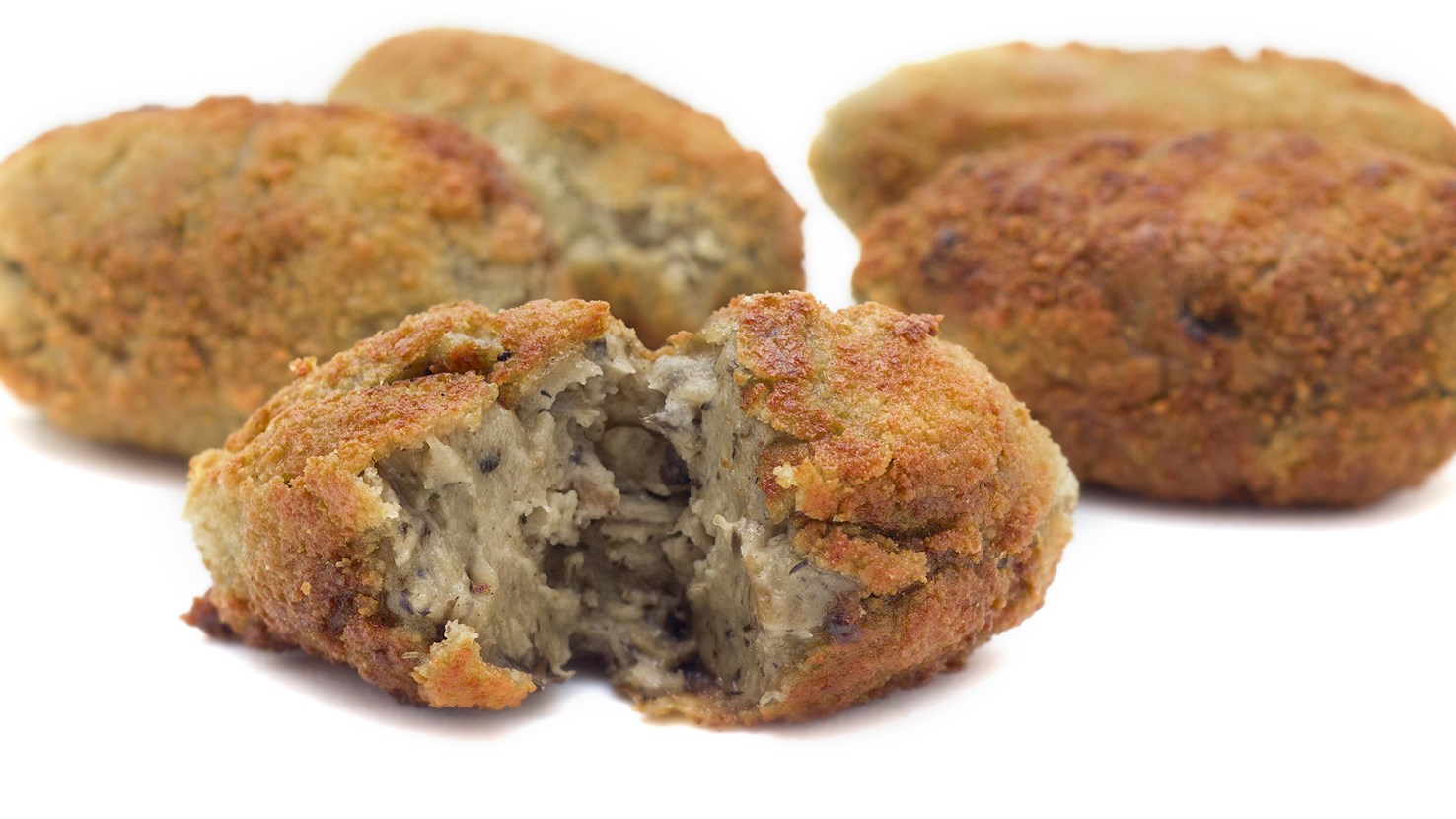
Mushroom croquetas are the small-sized Spanish fritters that are prepared with a combination of a creamy béchamel base and diced and sautéed boletus mushrooms. The base is well chilled before it is shaped into round or cylindrical forms. Each piece is coated in egg wash and breadcrumbs, then shortly deep-fried until golden and crispy. Boletus croquetas are often enriched with various spices and sautéed onions and are typically enjoyed as a ubiquitous Spanish tapas.
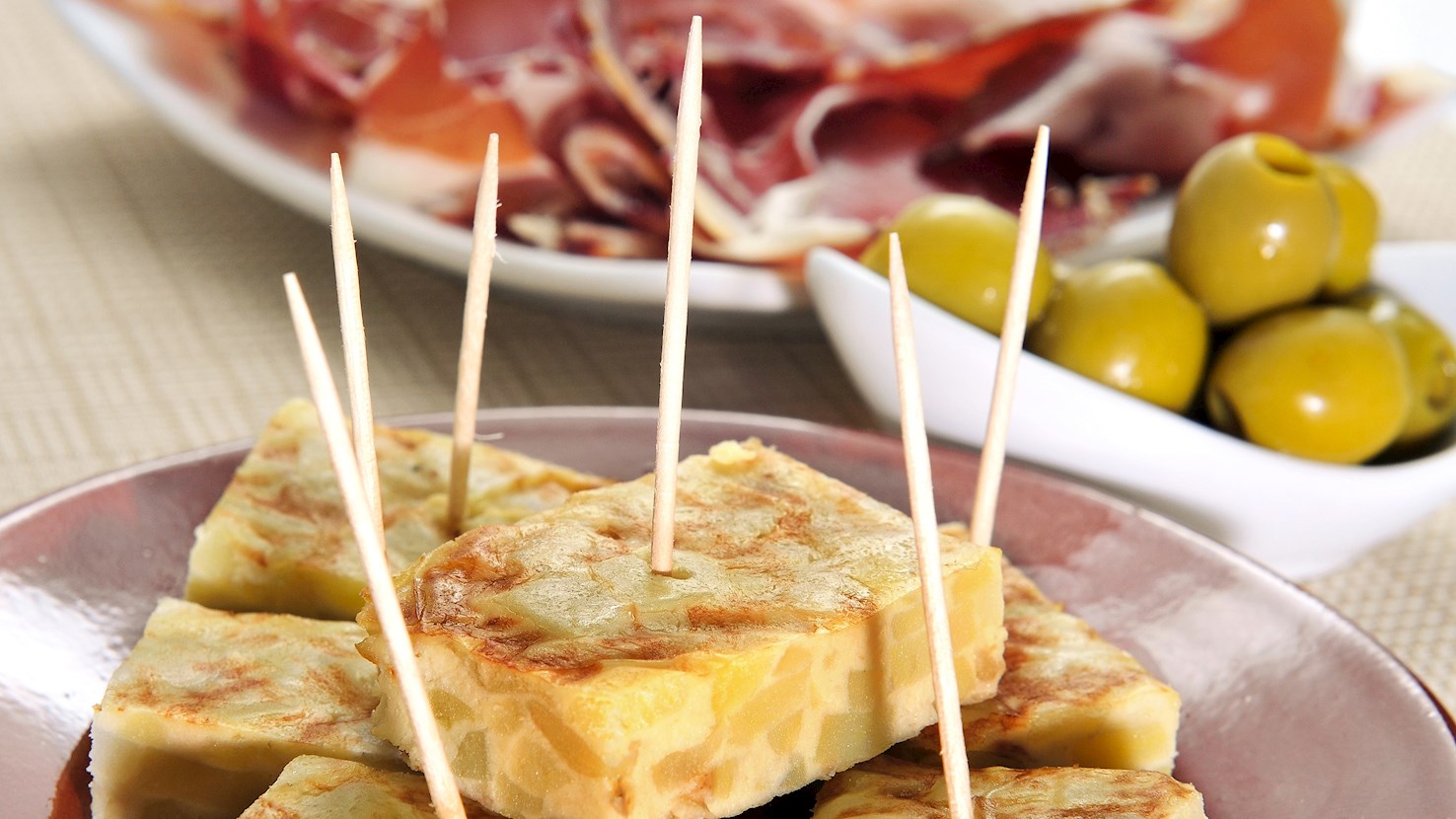
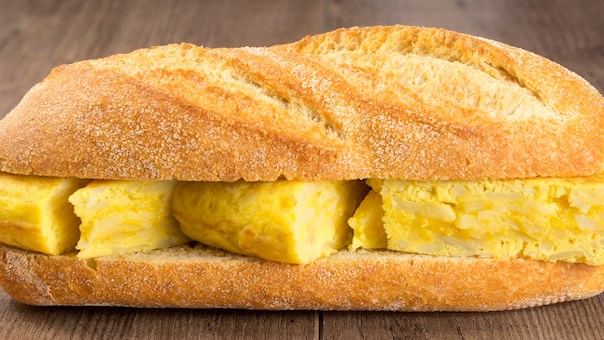
Pincho de tortilla is a traditional appetizer or bar snack originating from Basque Country. This classic pincho is made with Spanish tortilla omelet, which is nothing like the Mexican one – it's a cross between scrambled eggs and a crustless potato pie. The ingredients include potatoes, onions, milk, eggs, olive oil, and seasonings. The potatoes are sautéed in olive oil with the onions until both begin to soften, and the eggs are then scrambled in the same pan until the whole mixture becomes firm and fully cooked. This pincho is typically sliced into portions and skewered with a toothpick on a piece of baguette. It's recommended to use potato varieties such as Yukon Gold, Mona Lisa, or Kennebec when making the tortilla.
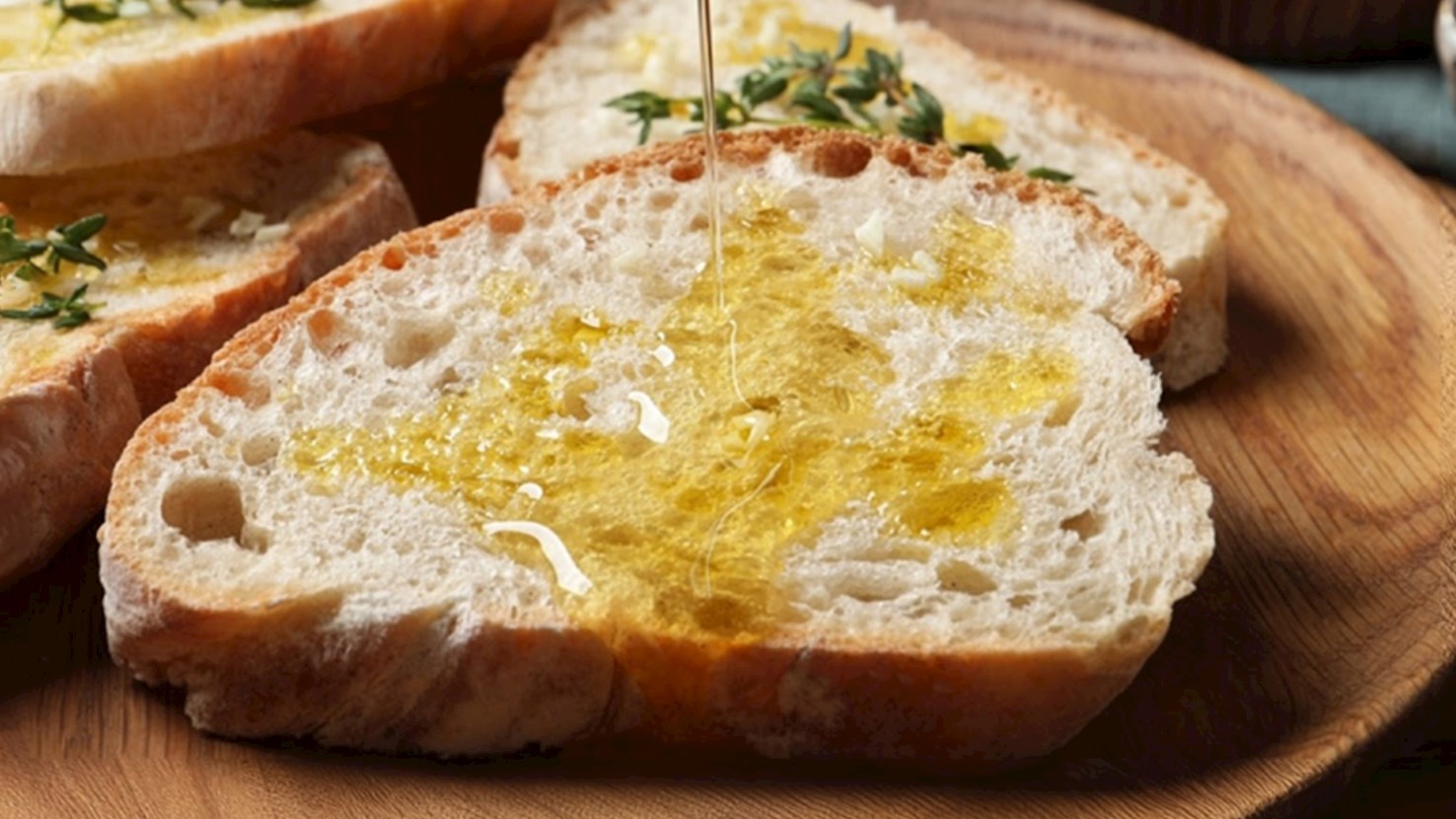
Pane e olio is an Italian phrase meaning bread and oil, referring to a simple yet classic Italian dish that highlights the quality of its basic ingredients: bread and olive oil. Traditional Italian bread such as ciabatta, focaccia, or a rustic country loaf is typically used, while extra virgin olive oil (EVOO) is the oil of choice due to its superior flavor and health benefits. High-quality, cold-pressed olive oil from regions like Tuscany or Puglia is ideal. The bread is usually sliced and may be served fresh or lightly toasted, with toasting enhancing its texture and providing a warm base for the olive oil. The olive oil is typically poured into a small dish or bowl for dipping, though some variations may include a drizzle of olive oil directly on the bread slices. The olive oil can be seasoned with a pinch of sea salt, freshly ground black pepper, or a dash of balsamic vinegar for added flavor, and some might add a sprinkle of dried or fresh herbs such as rosemary, thyme, or oregano. Rubbing a clove of garlic on the toasted bread before adding the olive oil can infuse the dish with a subtle garlic flavor, and additional toppings like sliced tomatoes, olives, or anchovies can be added for more complexity. Pane e olio is often served as an appetizer or a starter in Italian meals but can also be enjoyed as a light snack or part of an antipasto platter. This dish emphasizes the Italian culinary philosophy of using simple, high-quality ingredients to create delicious food and is a common practice in Italian households, showcasing the country's rich tradition of olive oil production and bread-making. But apart from Italy, the same dishes exist in other countries as well, such as Spain's pan con aceite, France's pain et huile d'olive, Lebanese khebez w zeit zaytoun, Turkish ekmek ve zeytinyağı, and many more.
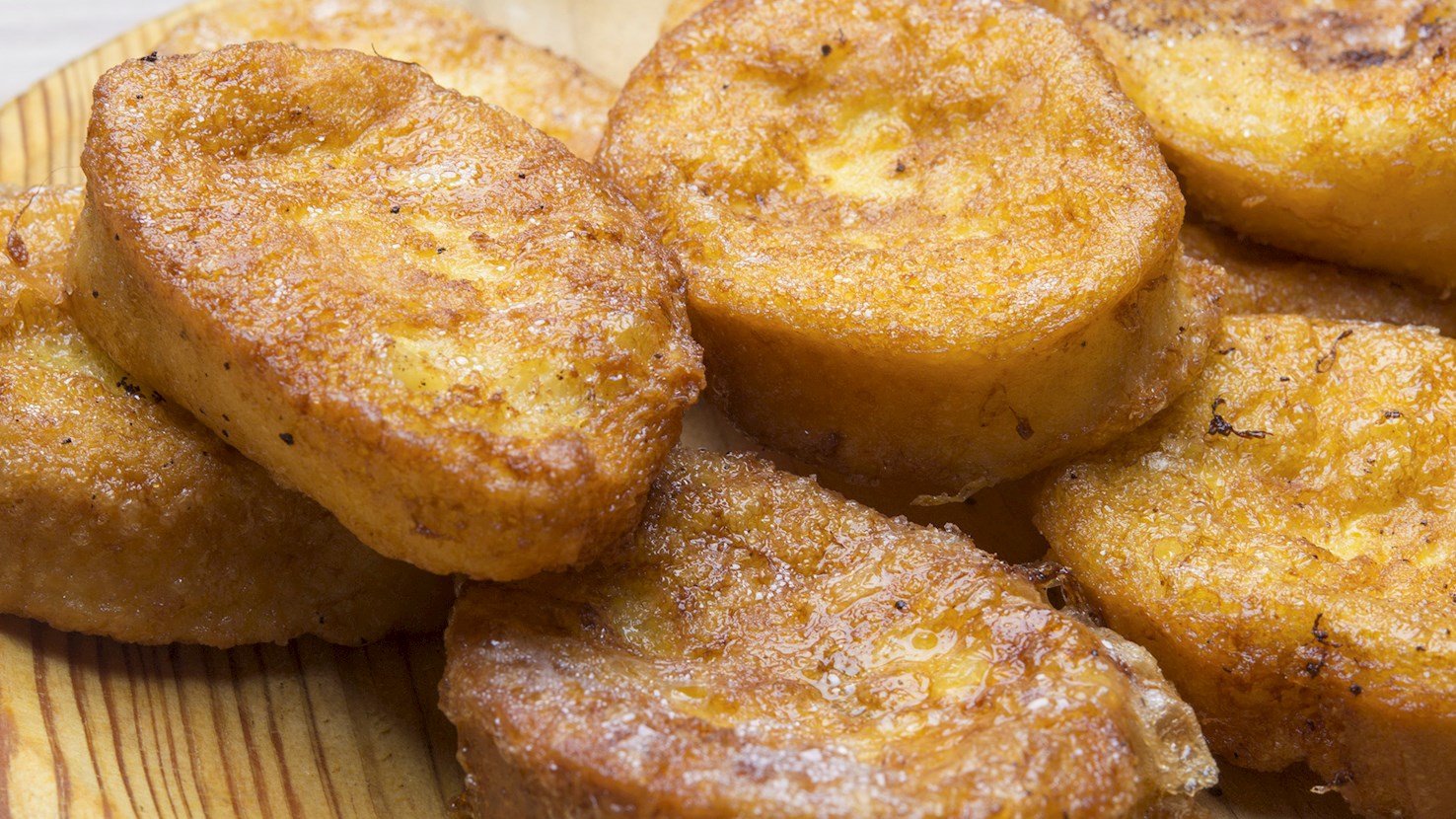
Torrijas is a Spanish version of the classic French toast, consisting of slices of leftover bread that are first soaked in milk, dipped in beaten eggs, and then fried in hot olive oil, unlike French toast, which is dipped in a mixture of eggs and milk. In the past, torrijas was often served to new mothers and wounded soldiers, since it provides a significant boost of energy. Today, torrijas is traditionally prepared around Easter, and it is recommended to serve it with cinnamon sugar or honey for extra flavor.
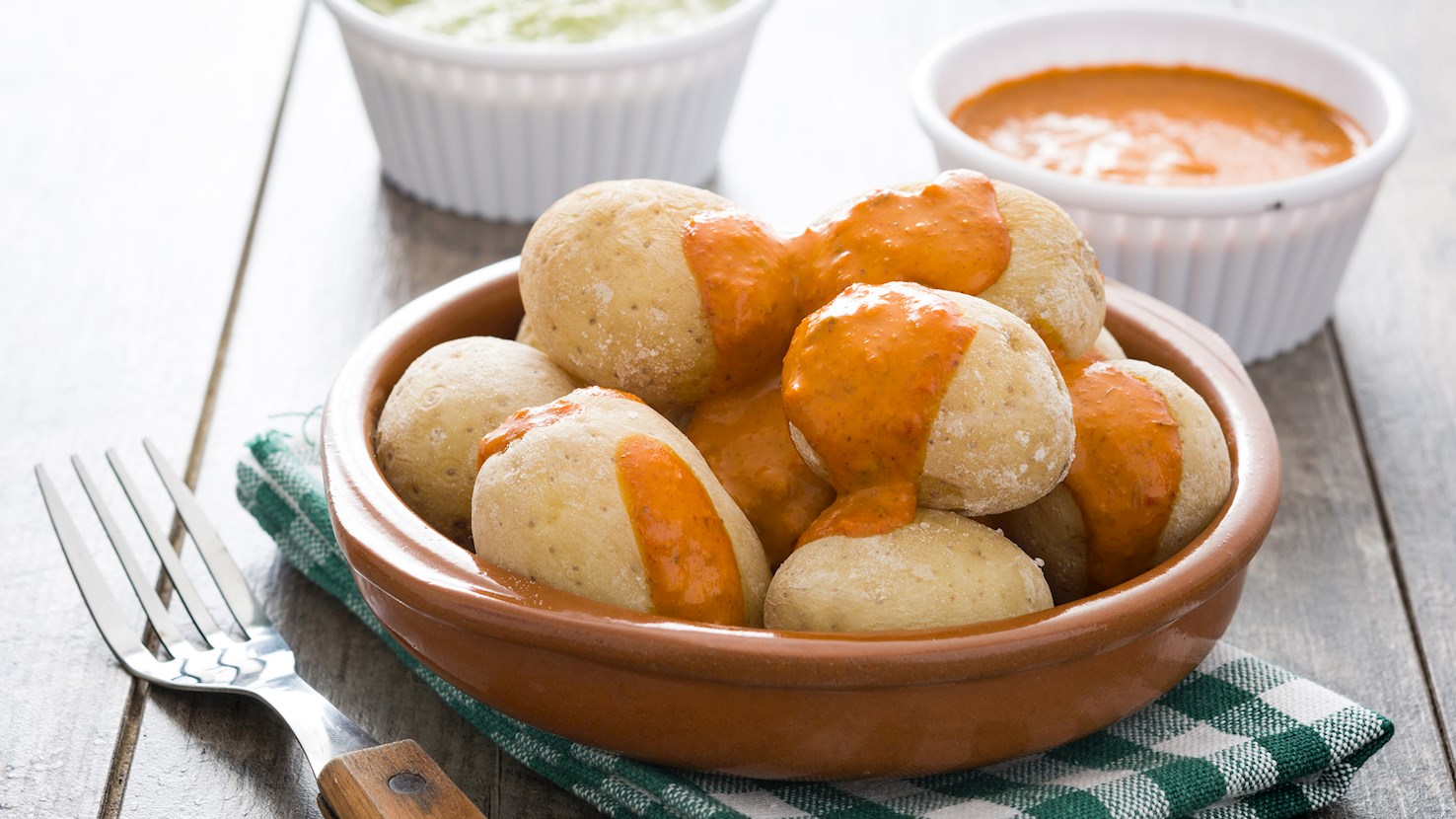
Papas arrugadas (wrinkly potatoes) is the signature dish of the Canary Islands. This incredibly simple specialty is made with whole, unpeeled potatoes that are thoroughly cleaned and then cooked in salted water. The dish was traditionally prepared with seawater, but nowadays, the water is usually just heavily salted. When cooked, the potatoes are put in the same pot without the water. The process allows any additional moisture to evaporate, leaving the potatoes somewhat dry while the skin attains its specific wrinkly appearance—hence the name—and a thin layer of salt. The dish is found in most traditional restaurants, and it is typically served as an accompaniment to hearty stews, though the potatoes can be served on their own as a simple and filling snack. Usually, the potatoes will come drizzled with mojo verde or mojo rojo—two typical Canarias sauces. The dish is best prepared with two potato varieties found on the Canary Islands, papas negra and papas bonita.
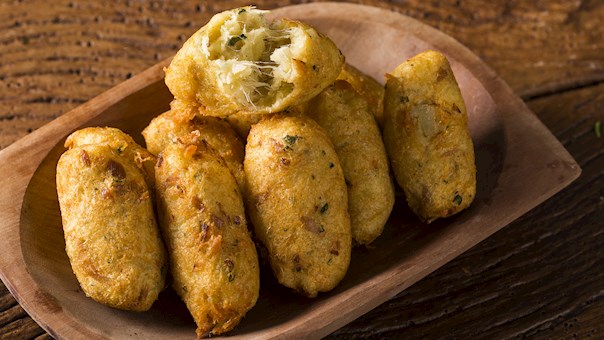
These traditional Spanish fritters are usually prepared with a buttery béchamel base that is well chilled and formed into round or cylindrical patties, which are then coated in egg wash and breadcrumbs, and finally fried until crispy and golden. Spain abounds in various types of croquetas, and the most popular versions incorporate ham or shredded chicken in the béchamel base, but other ingredients such as mushrooms, cod, or shrimp are also common. Though they originated as a frugal dish, which made use of leftover ingredients, today they are a classic that is often served as tapas—small finger foods that are usually accompanied by a few drinks.
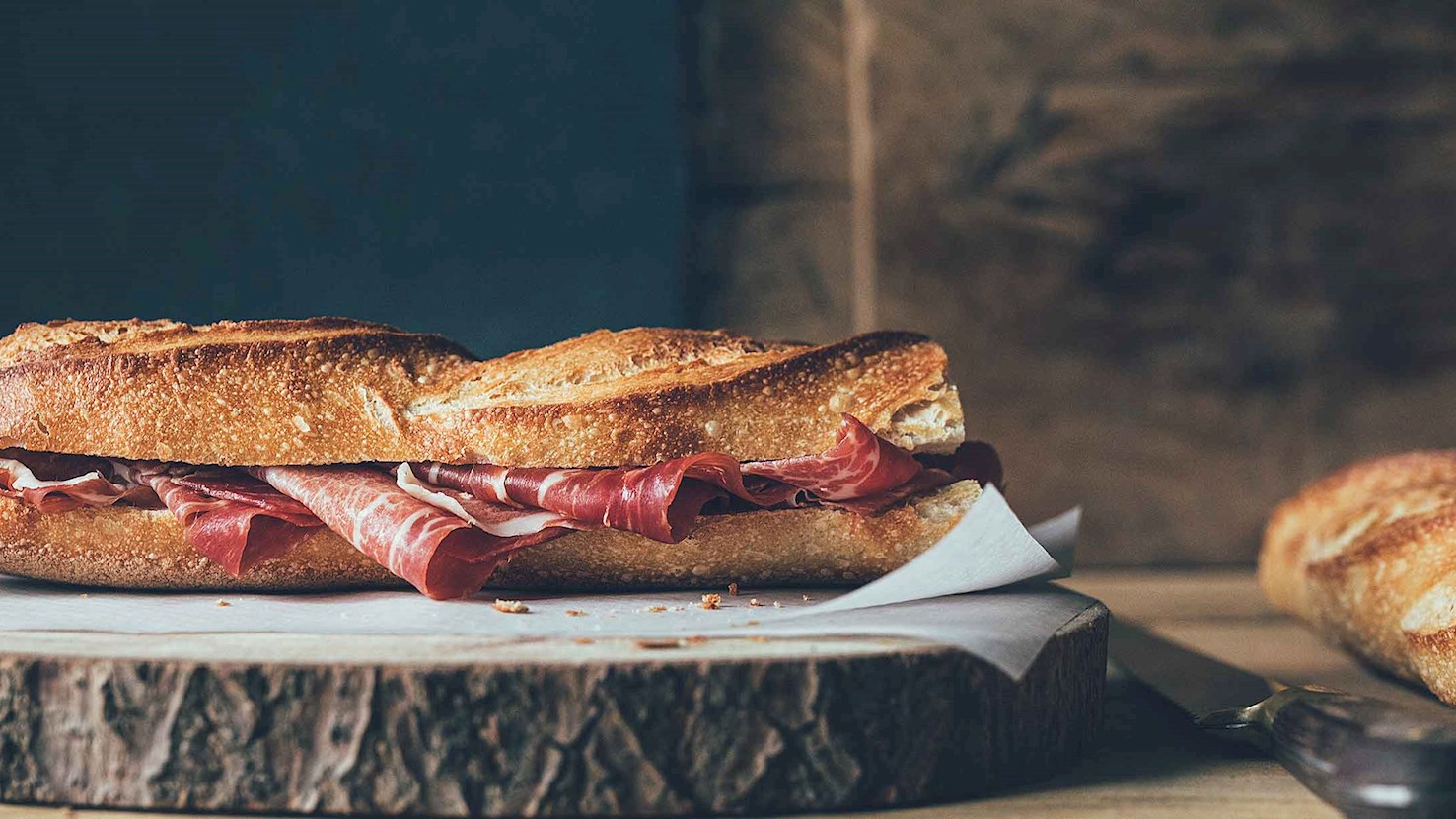
Bocadillo de jamón is a sandwich that is made with Spanish bread and slices of Spanish ham such as jamón Serrano (Serrano ham) or jamón Iberico (Iberian ham). It usually consists of a Spanish-style baguette (barra de pan) that’s been cut in half along the middle and layered with the ham. The cut side of the bread is often drizzled with olive oil and rubbed with ripe tomato halves and garlic to make the sandwich juicier and more flavorful, while the sandwich’s filling may also be enhanced with slices of cheese (often Manchego cheese), tomato slices, strips of roasted piquillo peppers, and pitted black olives. This simple Spanish ham sandwich is commonly available at Spanish cafes where it is usually accompanied by a cup of café con leche (coffee with steamed milk), tea, or a glass of freshly-squeezed orange juice, although there are also places that serve the sandwich with a glass of wine or champagne. In Spain, this bocadillo variety is considered the unofficial snack of Spanish football fans, and it is typically eaten as a snack or light lunch.
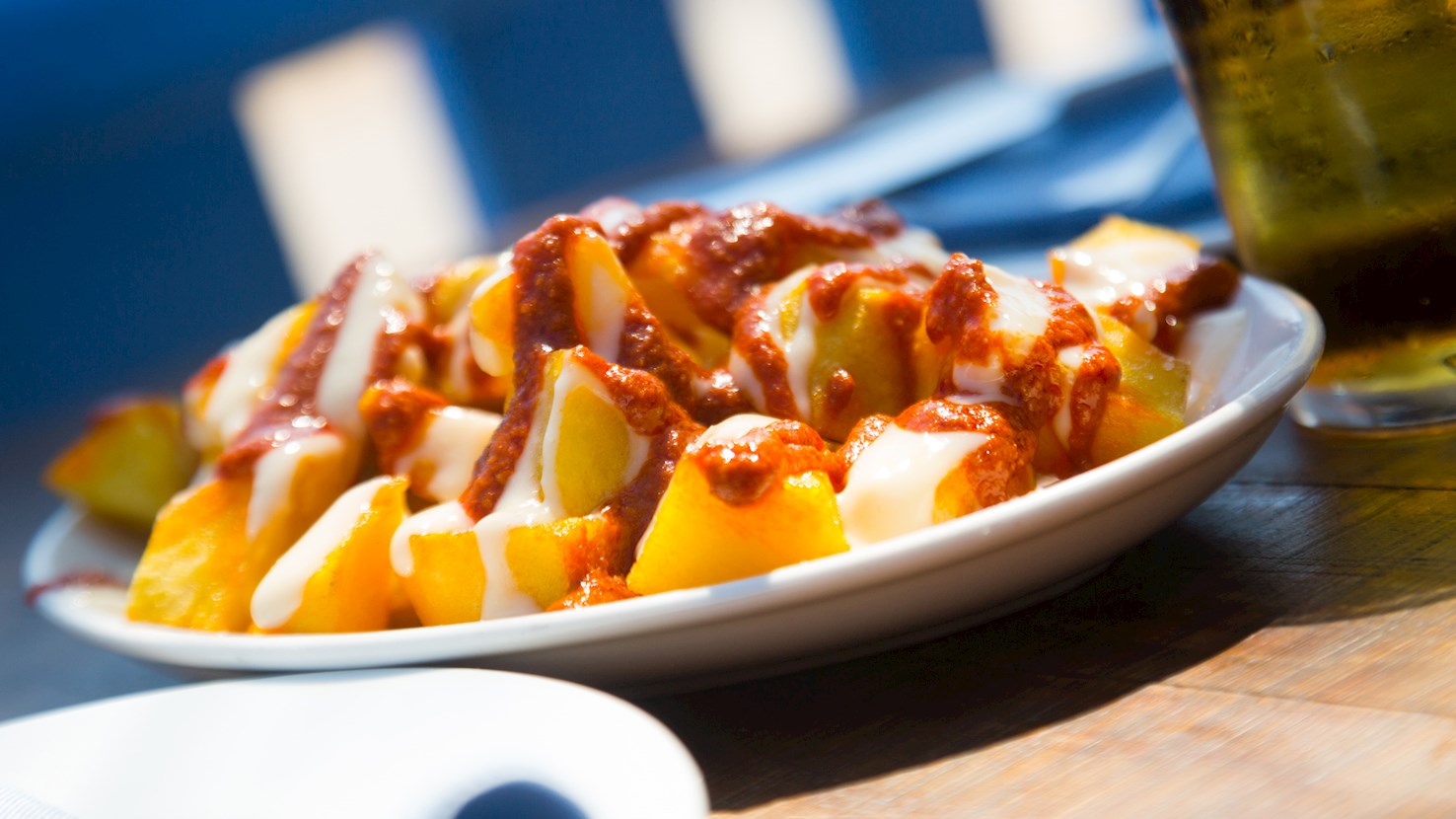
Patatas bravas is a traditional tapas dish consisting of potato cubes drenched in a spicy tomato sauce with onions, garlic, chili powder, and pimentón. This flavorful combination of ingredients is a staple at numerous tapa bars throughout Spain, and it is especially popular as a late-night snack. The dish is traditionally served with aioli sauce on top, but there is also a variety of other toppings that can be ordered with the snack, such as chorizo slices or fried fish.
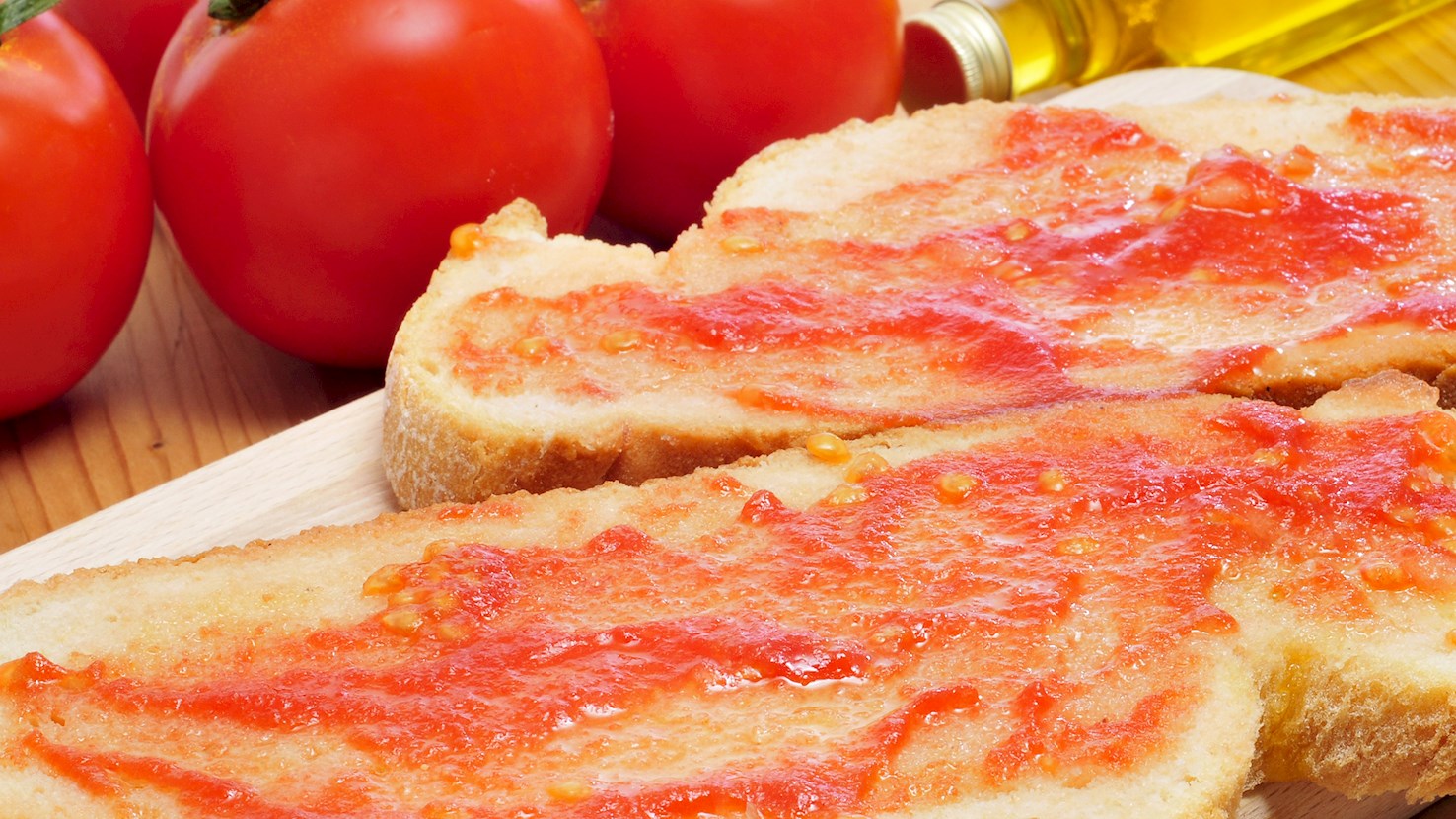
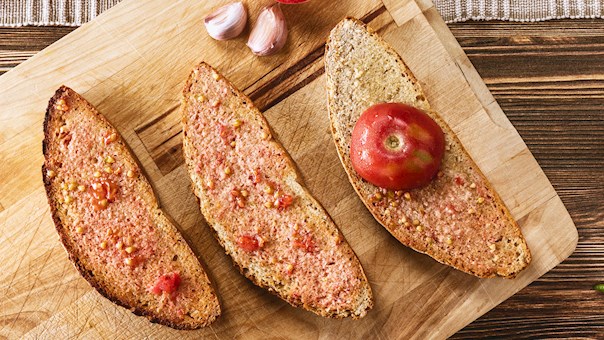
The classic Catalan invention known as pa amb tomàquet consists of toasted slices of bread that are sprinkled with salt, rubbed with tomatoes, and drizzled with olive oil (purists insist on rubbing both sides of the bread with tomatoes). The first recipe for this dish dates back to 1884, when stale bread was rubbed with tomatoes in order to soften it. It is recommended to use a rustic sourdough called pa de pagès and tomatoes on the vine, since they have a unique, intense flavor. The dish is usually consumed for breakfast or served before a big meal, as a tapa, or for merienda. There is also a Mallorcan version called pamboli amb tomàtiga, but it's additionally topped with capers and black olives.
TasteAtlas food rankings are based on the ratings of the TasteAtlas audience, with a series of mechanisms that recognize real users and that ignore bot,
nationalist or local patriotic ratings, and give additional value to the ratings of users that the system recognizes as knowledgeable.
For the “Top 78 Spanish Snacks” list until June 15, 2026, 6,608 ratings were recorded, of which 5,425 were recognized by the system as legitimate.
TasteAtlas Rankings should not be seen as the final global conclusion about food. Their purpose is to promote excellent local foods,
instill pride in traditional dishes, and arouse curiosity about dishes you haven’t tried.