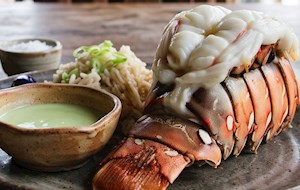
Roasted lobster tails with coconut curry dipping sauce

Roasted lobster tails with coconut curry dipping sauce is a culinary preparation originating from the Republic of Kiribati. The development of this dish is a direct result of the geographic availability of the spiny lobster, which inhabits the seaward edges of coral reefs, and the ubiquitous presence of the coconut palm across the archipelago. The integration of curry powder into the local diet stems from historical trade routes and British colonial influence in the Gilbert Islands during the late 19th and early 20th centuries, which introduced processed spice blends to the region. Preparation begins with the selection of fresh lobster tails, which are split longitudinally and seasoned with salt and lime juice before being roasted over open flames or in an oven at approximately 200°C until the flesh reaches an internal temperature of 60°C. The dipping sauce is constructed by extracting the liquid from grated coconut meat and simmering it with curry powder, minced garlic, and bird's eye chilies until the emulsion thickens. The lobster is served in its own shell to retain heat and is presented alongside the warm curry reduction. It is eaten as a significant protein source during communal gatherings known as botaki in local maneaba (meeting houses), or increasingly in hospitality venues catering to tourism. The dish is eaten by dipping pieces of the roasted tail into the sauce, often accompanied by local starches such as boiled breadfruit (te mai), taro, or te babai (giant swamp taro) which serve to neutralize the heat of the curry. Beverage pairings include fresh coconut water served directly from the shell, which provides an electrolyte-rich and cooling counterpoint to the spice, or a dry white wine, which possesses the acidity required to balance the saturated fats of the coconut cream.
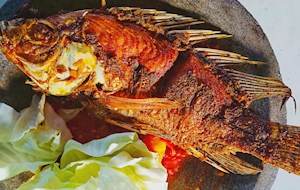
Te inai
Te inai is a culinary preparation of whole or sliced parrotfish that is fried in oil, serving as a primary protein staple in the Republic of Kiribati. The utilization of this specific reef fish is a result of the local ecology, as parrotfish are abundant in the shallow coral gardens and lagoon slopes of the atolls, where they are harvested using nets or spears from outrigger canoes. The practice of frying fish became more prevalent following the introduction of processed cooking oils through trade, though the use of rendered coconut oil remains a primary method. Preparation involves scaling the fish and removing the viscera, followed by scoring the skin with diagonal cuts to ensure the heat penetrates the dense muscle and to facilitate a crisp texture. The fish is then marinated and seasoned with sea salt, and fried in high-heat coconut oil until the exterior reaches a golden-brown state and the interior flesh becomes opaque and flaky. A specific property of parrotfish is its diet of coral and algae, which results in a lean, white meat with a mild flavor and a unique skin texture that becomes highly brittle when fried. Te inai is served hot and is typically the central component of a meal, often presented on a shared platter. It is eaten by hand, a method that allows for the efficient removal of the small bones common in reef fish, and is frequently accompanied by a starch like batata mash or boiled breadfruit. These starches serve to balance the oil content of the fried fish.
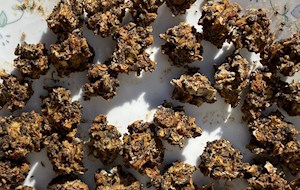
Masaura

Masaura are Nepalese sun-dried vegetable balls made with a combination of minced vegetables and black lentil paste. The vegetables used in the process are typically yam and colocassia leaf. The dried balls are usually fried in oil and used in curries, which are then paired with steamed rice on the side.
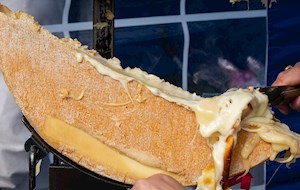
Raclette

Raclette is a semi-hard cow’s milk cheese produced primarily in Switzerland and in specific regions of France, made in wheel form and aged to achieve a supple interior and a rind that protects the paste while allowing controlled moisture loss. Its development is closely linked to Alpine dairy practices in areas where cattle grazing at elevation produced milk with higher fat content, and cheesemakers refined a style that favored even melting and restrained acidity, with written references to similar cheeses appearing in Swiss records from the medieval period and clearer identification of raclette-style cheeses emerging by the seventeenth century as seasonal herding patterns and local consumption shaped production. The cheese is made by gently heating raw or pasteurized milk, adding rennet to form curds, pressing the curds into wheels, and aging them for several months with regular washing or brushing of the rind, a process that encourages a mild aroma and prevents excessive drying, and this method results in a cheese that softens uniformly when exposed to heat rather than collapsing or separating. Preparation for serving centers on heating the cheese so the surface layer melts while the rest retains structure, historically achieved by placing a wheel near an open fire and now commonly done with specialized tabletop devices or ovens, after which the molten portion is scraped onto accompanying foods. A defining characteristic of raclette cheese is its melting behavior, which has been deliberately optimized through milk selection, curd handling, and aging parameters, making it distinct from many other Alpine cheeses that are better suited for grating or slicing. Raclette is eaten mainly in domestic and communal settings during cooler seasons in Switzerland and neighboring regions, served with boiled or roasted potatoes, pickled vegetables, and cured meats, and it pairs well with dry white wines such as those made from alpine grape varieties, light-bodied reds with low tannin, and non-alcoholic options like black tea or sparkling water that balance its fat content without overwhelming its flavor.
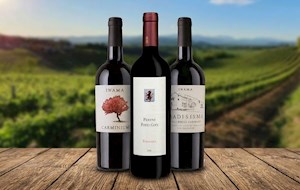
Colli Berici

Colli Berici refers to a wine-producing hilly area south of the city of Vicenza in the Veneto region of Italy and to the wines made under the Colli Berici DOC, which include both red and white styles sourced from limestone-rich hills distinct from the surrounding plains. Viticulture in the Colli Berici developed within a landscape shaped by ancient marine sediments uplifted into low hills, where well-drained calcareous soils and sheltered exposures supported grape growing alongside olives and cereals, and where proximity to Vicenza encouraged structured agriculture and commercial wine production rather than isolated subsistence farming. Wine production in the area focuses on both indigenous and international grape varieties, with reds often based on Tai Rosso, Merlot, Cabernet Sauvignon, and Cabernet Franc, and whites commonly produced from Garganega, Pinot Bianco, and Chardonnay, vinified with methods that emphasize balance and clarity, typically using controlled fermentation and moderate aging that may include oak for certain red wines while avoiding excessive extraction. A defining aspect of Colli Berici wines is the prominence of limestone influence, which contributes firmness and freshness across styles and supports Tai Rosso in particular, a grape that shows a markedly different profile here than in neighboring zones due to soil and microclimate rather than winemaking technique. These wines are consumed primarily as table wines in homes and restaurants across Veneto, served at appropriate temperatures depending on style, and they pair well with grilled meats, poultry, cured meats, vegetable dishes, and medium-aged cheeses, while lighter examples accompany everyday meals and more structured reds are reserved for dinner settings where food is central to consumption rather than tasting alone.
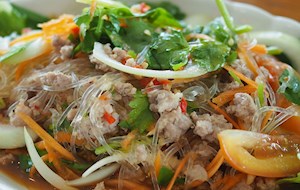
Yum sen lon

Yum sen lon is a glass noodle salad mixed with fresh vegetables, herbs, and cooked pork or shrimp, then dressed with lime juice, fish sauce, garlic, chile, and sugar. The noodles are translucent, slippery, and slightly springy, with a mild flavor that takes on the dressing. Celery, bell pepper, and thinly sliced shallots or onion add crunch, while mint and cilantro are mixed in near the end. The dish uses both pork belly and ground pork, which add different textures: sliced belly contributes pieces of meat and fat, while ground pork appears as small morsels throughout the noodles. The name also appears as yam sen lon, and recipes vary in their choice of vegetables and protein. Glass noodles, sometimes called cellophane or bean-thread noodles, are made from starch and become translucent when cooked. They differ from rice vermicelli, which remains more opaque, although both may be labeled “vermicelli” in English. The dried strands are softened and cooked according to the type being used, then drained thoroughly. They should be tender but still hold together when tossed. Overcooking makes them fragile, while excess water dilutes the dressing. Softened noodles can be cut with scissors to make them easier to portion; others leave the strands long. The dressing is made separately, often by pounding garlic and red chiles with sugar and a little salt before adding lime juice and fish sauce. The crushed garlic and chile are mixed into the salad in small pieces. Lime adds pronounced sourness, fish sauce supplies salt and savory depth, and sugar tempers both. The amount of chile can be adjusted without changing the basic preparation. The vegetables are sliced thinly enough to mix through the strands rather than sit in large pieces on top. Celery retains its firm bite, bell pepper adds sweetness, and raw onion or shallot brings a sharper flavor. Carrot is included in some versions. Mint and cilantro are left until the final toss so the leaves remain intact. The meat is cooked separately before assembly. Pork belly or other pork strips may be grilled, rested, and sliced, leaving browned edges that contrast with the soft noodles. Ground pork produces a more evenly distributed filling, while shrimp remains in distinct pieces. Some preparations include roasted peanuts, which add a dry crunch alongside the vegetables, but they are optional. Chicken and meat-free versions are also served in restaurants. A vegetarian preparation also omits meat and replaces fish sauce. Yum sen lon can be served slightly warm or made with cooled ingredients; chilling it is not required. It is eaten as a starter, a shared dish, or a larger noodle serving. Some restaurant versions include rice-and-sesame crackers, kept beside the salad to stay crisp. The dressing is tossed through shortly before serving, followed by the herbs and cooked meat or shrimp. Any dressing that settles at the bottom of the bowl can be spooned over the noodles when portions are served.
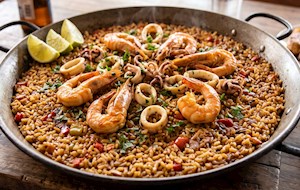
Arroz a la plancha

Arroz a la plancha is a traditional rice specialty hailing from Nicaragua. The rice is cooked a la plancha, referring to the unique cooking method that involves grilling food on a round, flat metal plate. To prepare this dish, rice is first boiled in water or stock until tender, then portions of it are cooked on a hot plancha or a non-stick pan until the exterior becomes slightly crispy and caramelized. The rice portions are often shaped while they’re being cooked on the plancha or pan using a round or square mold. There are numerous variations on this dish, and the grilled rice may come with a variety of accompaniments. One version calls for boiling the rice in fish fumet and then combining arroz a la plancha with sautéed shrimps, calamari, or chipirones (baby squid or small cuttlefish). The texture of this rice delicacy reminds of paella’s signature crispy, caramelized bottom.
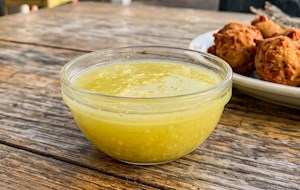
Old Sour

Old sour is a unique American sauce that is especially popular in Key West and the Bahamas, where it is a staple found in almost every kitchen. It used to be made with bird peppers, key lime juice (or sour oranges) and salt, but today it is typically made with a fermented combination of lime juice and salt. Old sour pairs especially well with cooked or raw seafood or conch chowders, although it can also be used instead of vinegar or citrus juices as a salad dressing.
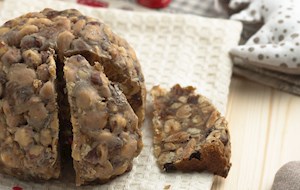
Pangiallo
Pangiallo is a traditional Christmas cake originating from Rome, where it's eaten during times of celebration. It's also known as the Christmas cake of Lazio. The cake is usually prepared on the day of the winter solstice as a wish for the return of sunny days. It's made with a combination of flour, candied fruit, pine nuts, hazelnuts, walnuts, almonds, raisins, honey, grated orange peel, lemon peel, and chocolate. The cake is topped with saffron glaze and baked, and if you want to make it even richer, feel free to add pistachios and dried figs to the mix.

Panonta
Panonta is a multi-layered sandwich that’s one mammoth of a meal given it’s made with a large loaf of homemade bread, which is sliced, then brushed with bacon grease or lard, and layered with various ingredients, typically fried bacon, sausages, peppers, frittata, grated cheese, garlic, and parsley. The sandwich is present in Abruzzo, Molise, and parts of Lazio, while the name comes from the phrase pane unto, meaning greased bread. It was created for practical reasons so that shepherds and farmers had something easy to carry that could sustain them while working long and hard in the mountains or the countryside. As far as variations go, the one from the town of Miranda is especially popular and prized.
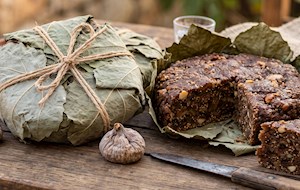
Sykomaida

Sykomaida is a traditional dessert from the Greek island of Corfu, a type of fig cake made from dried figs, ground almonds or walnuts, ouzo (a Greek anise-flavored liquor), cinnamon, cloves, and fennel seeds. In 2009, sykomaida was recognized by the European Union as a Protected Designation of Origin (PDO) product, meaning that only fig desserts made in a specific way in Corfu can be called sykomaida. A typical process of making sykomaida involves drying figs in the sun, then chopping or grinding them up and mixing them with the other ingredients to form a dense, sweet, and flavorful mixture. The mixture is then shaped into a round or a roll, which can be stored and sliced off as needed. The product has a long shelf life and is often served with coffee or as a snack or dessert.

Central Coast AVA
The Central Coast AVA appellation is a large American Viticultural Area in California that extends from San Francisco Bay to Santa Barbara County and covers a wide range of climates and soils that support grapes such as Pinot Noir, Chardonnay, Syrah, Cabernet Sauvignon, and numerous other varieties grown across coastal valleys, foothills, and inland benches. Its designation emerged in 1985 as producers and regulators sought to define a broad zone that shared maritime influence from the Pacific Ocean while encompassing several more specific sub-regions, allowing wineries to label wines sourced from a multi-county area that showed consistent cooling effects, fog patterns, and topographic features distinct from the hotter parts of the state’s interior. Production methods vary widely due to the size of the region, but most wineries rely on controlled fermentation in stainless steel or open-top tanks, selective use of oak for structure and aromatic development, and careful blending when fruit comes from multiple counties, while bottling is timed to maintain balance between acidity, fruit expression, and tannin management. One notable aspect is the scale of the appellation, which contains numerous smaller AVAs with markedly different microclimates, giving producers flexibility to craft single-site wines or multi-area blends under the same broad designation. Central Coast wines are consumed throughout California, across the United States, and in export markets where California wine is widely available, and they are served at cool cellar temperatures for reds and lightly chilled for whites with foods such as grilled poultry, salmon, pork, vegetables, pasta, and mild cheeses, accompanied by still water, sparkling water, and unobtrusive aperitifs depending on the context of the meal.
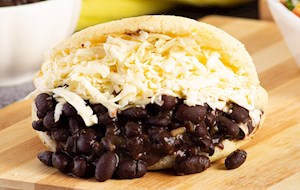
Arepa dominó

Arepa dominó is an arepa filled with black beans and white cheese, a simple combination whose black-and-white colors inspired the name “dominó.” It is eaten throughout Venezuela and is especially common at areperas, breakfast counters, cafés, and home kitchens, where it is valued as a filling meatless option that still feels substantial enough for breakfast, lunch, or a late snack. The pairing became part of the modern Venezuelan arepa repertoire as filled arepas grew into a highly varied urban food culture during the 20th century, with many combinations acquiring memorable names based on their ingredients or appearance. The dominó filling is one of the clearest examples: black beans, usually seasoned in a straightforward home-style manner, are matched with a mild white cheese such as queso blanco, queso de mano, or another fresh salty cheese. The arepa itself is made from precooked cornmeal mixed with water and salt, shaped into a thick round, then cooked on a griddle and often finished in the oven until the exterior is lightly crisp and the inside remains soft. Once split open, it is filled generously with the beans and cheese, which can be crumbled, sliced, or grated depending on the type used. Some versions add a little butter inside the hot arepa, while others keep the filling to just beans and cheese so the contrast stays clean. The defining feature is not a complicated technique but the balance between the earthy, creamy black beans, the salty fresh cheese, and the warm corn flavor of the arepa. Arepa dominó is commonly eaten for breakfast or dinner, though it is also a standard all-day order at Venezuelan areperas, and it is often served on its own or with avocado, fresh cheese, or a simple salad on the side. It pairs naturally with café con leche, black coffee, fresh fruit juice, papelón con limón, or malt drinks, all of which fit the casual, everyday way the dish is usually eaten.
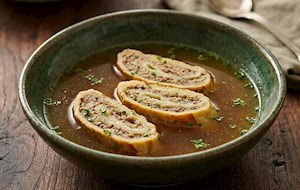
Fleischstrudelsuppe

Fleischstrudelsuppe is a soup consisting of clear beef broth served with slices of savory strudel filled with seasoned minced or finely chopped meat. It is found throughout Austria, particularly in regional home cooking and inns, and belongs to the extensive Austrian repertoire of clear soups enriched with substantial additions known as Suppeneinlagen. The strudel is usually made from thin, hand-stretched dough wrapped around a filling of beef, onions, parsley, and seasonings such as marjoram, salt, and black pepper. Once cooked, it is sliced into rounds that reveal a spiral of pastry and meat, then placed in hot broth shortly before serving. The result combines the flavor of slowly simmered beef stock with tender, savory meat and thin layers of dough that gradually absorb the liquid. Fleischstrudelsuppe developed within Austria's long-established culture of serving clear beef soup as the opening course of a meal, particularly in households where beef was regularly simmered with vegetables to produce both broth and cooked meat. Austrian cooking developed numerous additions for these soups, including sliced pancakes, semolina dumplings, liver dumplings, and filled pastries. Fleischstrudel offered another way to make a relatively simple broth more substantial, while also providing a practical use for beef that had already been cooked in the soup. In some preparations, the meat is taken directly from the stockpot, finely minced, seasoned, and used as the strudel filling. Other recipes use fresh ground beef, which is cooked or seasoned before being enclosed in the dough. The dish is also encountered in neighboring parts of southern Germany, particularly Bavaria, reflecting the closely related cooking practices of the region. Preparation generally begins with the broth, usually made by slowly simmering beef, sometimes with bones, together with carrots, celeriac, parsley root, onions, leek, peppercorns, and other aromatic ingredients. The stock is strained to produce a clear, flavorful liquid, which is seasoned before serving. The strudel dough is made from flour, water, oil, salt, and sometimes egg or a little vinegar. After kneading, it is left to rest so that the gluten relaxes, allowing the dough to be rolled and stretched into a very thin sheet without tearing. The meat filling is prepared separately. Finely chopped onions are sautéed in butter or another cooking fat, then combined with minced beef or finely chopped cooked beef, parsley, marjoram, salt, and pepper. Some recipes include garlic, egg, breadcrumbs, or a little stock to bind the mixture and prevent it from becoming dry. The filling is distributed evenly across most of the stretched dough, leaving the edges free so the strudel can be sealed. The dough is then rolled tightly around the meat, often using a cloth to help maintain an even shape. There are two established methods of cooking the strudel. In one, the roll is brushed with butter and baked until the pastry is golden and the filling is completely cooked. After a brief rest, it is cut into slices approximately one to two centimeters thick and added to the hot soup. This method produces a slightly firmer pastry that retains its shape well when placed in the broth. In another preparation, the filled roll is divided into smaller sealed portions and gently simmered directly in the beef stock or separately in salted water before being added to the soup. These pieces have a softer texture because the dough cooks in liquid rather than developing a browned exterior. Both methods produce a filling that remains distinct from the broth, although the pastry gradually softens as it absorbs moisture. Unlike a meat soup in which the ingredients are cooked together and distributed throughout the liquid, Fleischstrudelsuppe is assembled around a prepared pastry filling that is often cooked separately and added at the final stage. This helps preserve the clarity of the broth and allows the strudel to retain its recognizable spiral structure. The flavor depends on the quality of the beef stock, the seasoning of the meat, and the thickness of the dough. A well-prepared version has a clear, aromatic broth, a moist meat filling, and pastry that is tender without falling apart. The finished soup is generally served very hot in deep bowls, with several slices of meat strudel arranged in the broth and a sprinkling of freshly chopped chives or parsley on top. In Austria, Fleischstrudelsuppe is eaten in homes, country inns, and restaurants serving regional Austrian cuisine, most commonly as a starter before a larger main course, although a generous portion can also function as a light meal. Because it already contains meat and pastry, it usually requires no substantial accompaniment, although fresh bread may be served alongside it. Its restrained seasoning and savory beef flavor pair well with Austrian white wines such as Grüner Veltliner or a dry Welschriesling, while a light lager or Märzen also makes a suitable choice. When served as the first course of a multicourse meal, the soup is generally eaten on its own, allowing the clear beef broth and seasoned meat strudel to remain the focus of the dish.
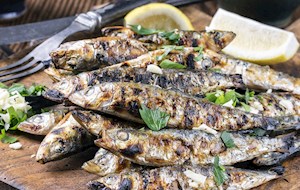
Boquerones a la plancha

Boquerones a la plancha are fresh anchovies cooked on a hot flat grill or griddle, a seafood dish found especially along the coast, with a strong presence in Andalucía, particularly in Málaga, where boquerones are among the most familiar local fish. The dish uses fresh anchovies rather than salted, and the fish are usually cleaned, opened, seasoned lightly, and cooked quickly in olive oil with salt, garlic, parsley, or lemon, depending on the cook. In Spain, the same fish may also be called anchoa or bocarte, depending on the region and preparation, but in Málaga and much of southern Spain, boquerón is the common name for the fresh fish. Its connection with coastal cooking comes from the availability of small oily fish in Spanish waters and from the practical habit of preparing them soon after purchase with little more than heat, oil, and salt. Málaga has a particularly close relationship with boquerones; the fish appears in fried, vinegar-cured, stuffed, and grilled forms, and people from Málaga are often nicknamed boquerones because of that association. The plancha method developed naturally in bars, homes, and seafood restaurants because it lets small fish cook quickly without a flour coating or deep-frying. Compared with fried boquerones, this version gives more attention to the fish itself, since there is no crisp breading to cover the flesh. The best choice are firm, shiny, mild-smelling anchovies. The head, innards, and central bone are often removed, leaving the fish opened flat, although very small specimens may be cooked with less trimming. After cleaning, the fish are rinsed briefly and dried well so they do not steam on the grill. A hot plancha is brushed with olive oil, then the boquerones are placed skin-side down or opened flat, depending on the size and the cook’s preference. They need only a short time on each side, because overcooking makes them dry and fragile. Salt is usually added before or just after cooking, while garlic and parsley may be chopped together and spooned over the fish with olive oil. Lemon is common at the table, though it is often used sparingly so as not to mask the fish's flavor. Some versions include white pepper, a splash of vinegar, or a small amount of chili, but the dish is normally kept simple. A good plate should arrive hot, with the fish still moist, the skin lightly browned, and the flesh easy to lift from the plate without falling apart. They are often served in rows on a plate, sometimes with salad leaves, roasted peppers, potatoes, or bread, and they work well as a small plate for sharing. Boquerones a la plancha are eaten in beach restaurants, seafood bars, market counters, family kitchens, and casual restaurants, mainly as a tapa, starter, light lunch, or part of a mixed seafood meal. They are best eaten straight after cooking, while the surface is still warm and the flesh is soft. Drink pairings include cold beer, dry white wine, fino, manzanilla, vermouth, sparkling water, or a light white vermouth with ice. Best side dishes include tomato salad, roasted peppers, olives, crusty bread, gazpacho, salmorejo, patatas aliñadas, grilled vegetables, tortilla española, grilled prawns, clams, squid, or other simple seafood plates.
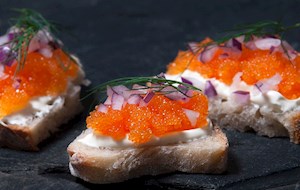
Löjromstoast

Löjromstoast is a refined Swedish appetizer that showcases löjrom, the prized roe of the vendace fish native to the waters of northern Sweden and the Baltic Sea. This dish pairs the delicate, slightly salty roe with crisp toast, often complemented by a creamy base such as crème fraîche, finely chopped red onions, and a touch of lemon, creating a harmonious blend of textures and flavors. The emergence of löjromstoast is tied to the longstanding fishing traditions in Sweden’s northern regions, where vendace roe has been harvested and valued for centuries. As Swedish cuisine evolved, the roe became a sought-after delicacy, often served in ways that preserved its natural taste and texture. Serving it atop toast with mild accompaniments allows the roe’s distinct flavor to shine without overpowering the palate, illustrating the careful balance central to Scandinavian culinary philosophy. Preparation involves gently toasting thin slices of bread until crisp and golden. A layer of crème fraîche or a similar mild, creamy spread is applied to provide richness and contrast. Löjrom is then carefully spooned over the base, followed by garnishes such as finely chopped red onion, fresh dill, and a squeeze of lemon juice to enhance brightness. The simplicity of assembly belies the dish’s elegance and the quality of its components. Löjromstoast is enjoyed across Sweden, particularly during special occasions, festive gatherings, and in fine dining settings where local ingredients take center stage. It is often served as an appetizer, allowing diners to savor the unique flavor of Swedish vendace roe in a way that is both accessible and sophisticated.
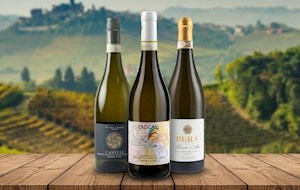
Canelli
Canelli refers to a sparkling white wine produced in and around the town of Canelli in the province of Asti, within the Piedmont of Italy, and is regulated under the Canelli DOCG, made exclusively from the Moscato Bianco grape and distinguished from Asti and Moscato d’Asti by production method and structure. The wine’s development is tied to Canelli’s long-standing role as a center of Italian sparkling wine production, where underground cellars and technical experimentation supported the refinement of fermentation techniques, leading to a style that favors bottle fermentation and extended contact with lees rather than rapid production for immediate sweetness. Canelli wine is produced by fermenting Moscato Bianco to full dryness or near dryness, followed by a secondary fermentation in bottle and mandatory aging on lees, which contributes stability, complexity, and a finer mousse compared to tank-fermented counterparts, with strict regulations governing minimum aging periods and alcohol levels to ensure consistency across producers. A defining aspect of Canelli is the use of the Moscato grape in a format more commonly associated with drier sparkling wines, resulting in a profile where aromatic intensity is balanced by structure and fermentation-derived elements rather than residual sugar. It is served chilled and consumed primarily as a table wine rather than a dessert wine, often at the beginning of meals or alongside light courses, and it pairs well with raw fish, shellfish, delicate appetizers, mild cheeses, and vegetable-based dishes, while also being consumed on its own in social settings where a restrained, aromatic sparkling wine is preferred over sweeter expressions.
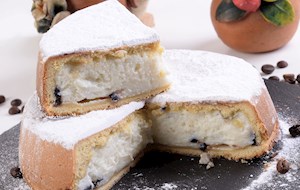
Cassata al forno siciliana
Cassata al Forno is a traditional Sicilian baked dessert and a simpler variation of the iconic cassata siciliana. Unlike the more elaborate version with marzipan and candied fruits, cassata al forno is baked and has a rustic charm, particularly popular in Palermo and other parts of Sicily. It features a buttery shortcrust pastry (pasta frolla) shell filled with a mixture of sweetened ricotta cheese, chocolate chips, and sometimes candied citrus peel. The dough is rolled out to line a baking dish, and the ricotta mixture is placed inside, covered with another layer of pastry or latticework, and baked until golden. The result is a dessert with a crisp exterior and a creamy, tangy-sweet filling, blending the richness of chocolate and the freshness of ricotta. Typically served at room temperature or slightly chilled, it is often dusted with powdered sugar and enjoyed during holidays, family gatherings, and special occasions. Predating the more ornate cassata siciliana, cassata al forno reflects Sicily’s rich culinary heritage, influenced by Arab, Norman, and Italian traditions. Its simplicity highlights the quality of its ingredients, making it a beloved example of Sicilian pastry artistry.
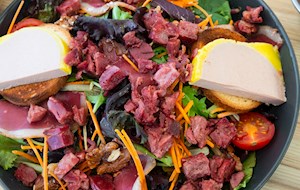
Salade périgourdine

Hailing from the Dordogne region of southwestern France, salade périgourdine is a hearty, composed salad that celebrates the area’s local poultry and nut production. The salad starts with a base of crisp lettuce or mesclun topped with boiled new potatoes, green beans, and fresh tomatoes. It is defined by its rich duck components, typically featuring warmed confit gizzards, sliced magret de canard, and often a portion of foie gras. Toasted walnuts and crunchy croûtons are added for texture, and the entire dish is finished with a dressing made of walnut oil, mustard, and wine vinegar. Preparation involves cooking the vegetables until tender and gently heating the duck before carefully arranging the ingredients on a plate. While variations exist—such as adding white asparagus, hard-boiled eggs, or raisins—the core of the salad remains the pairing of savory poultry with fresh produce. Usually served at room temperature as either a starter or a main course, it is traditionally enjoyed with crusty country bread and a glass of regional wine, such as a red or rosé from Bergerac or Cahors.
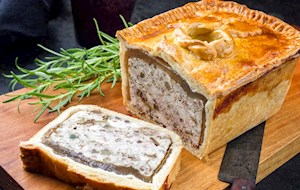
Pâté de Chartres
Pâté de Chartres is a very luxurious meat pie, consisting of a sturdy, buttery pastry crust stuffed with a mix of wild game and a large chunk of rich foie gras, baked right in the center. Originating in the city of Chartres, legend says it was first created for a king in the 1500s, but it really took off in the 1800s when famous writers started raving about it, eventually becoming such a big deal that UNESCO recognized it as part of the official French cultural heritage. While traditional hunters used to make it using small wild birds, modern cooks usually rely on wild duck, pheasant, or partridge, mixing the game with some fatty pork and veal so it doesn't dry out in the oven. What makes it so special—and expensive—is that making a traditional one is a massive, four-day project. On the first day, the meats are chopped up and left to soak overnight in a mix of Cognac or Port wine, thyme, and bay leaves; on the second day, that soaked meat is mixed with cooked onions and shallots, seasoned, and left in the fridge to let the flavors blend. By the third day, the cook makes a tough, sturdy pastry dough using boiling butter and water, letting it rest before the final assembly on day four, where the dough is pressed into a mold, filled with the meat mixture, and the foie gras is tucked into the middle. It gets a pastry lid with a small hole poked in the top to let steam out, goes into the oven, and after it cools, the cook pours a savory, meaty liquid broth through the hole, which sets into a jelly to fill any air pockets inside the pie. When this incredibly rich and heavy pie is finally ready, it is served cold in thick slices, usually with something sharp and tangy, like pickled black cherries, to perfectly balance the flavor.
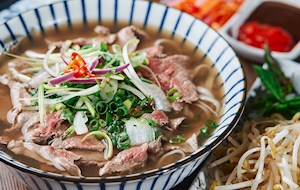
Phở bò

This beef-based version of pho is prepared with assorted cuts and parts of beef – the stock is made from beef bones, shank, ox tail, and neck, while the toppings include thinly sliced fatty brisket (gầu), flank, eye-round steak, tripe, cooked and raw beef (tái nạm), tendon (gân), or beef balls (phở bò viên), but the latter version is not that popular in Vietnam. Beef pho is usually flavored with dried spices such as cinnamon, star anise, cloves, cardamom, and coriander. The dish is served piping hot in a bowl along with rice noodles, and it's typically topped with cilantro, sliced onions, and chopped green onions. On the side, you can often find a platter with bean sprouts, lime wedges, and sliced hot peppers so each person can add the garnishes to his or her liking. Hoisin and Sriracha sauces are also often-seen staples on the side.
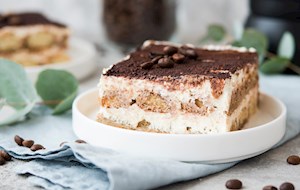
Tiramisù
Even though tiramisù is actually a fairly recent invention, this dessert of coffee-soaked ladyfingers layered with mascarpone cream enjoys an iconic status among Italian desserts. Its name stems from the phrase tirami sù, an Italian expression which literally means pick me up, a reference to the uplifting effects of sugar, liquor, and coffee. The origins of tiramisù are heavily disputed between Veneto and Friuli-Venezia Giulia regions, but it is often suggested that the first was made in Veneto in the early 1960s. The earliest documented recipe for tiramisù (interestingly, without alcohol!) was printed in the 1981 spring edition of Vin Veneto magazine in an article on coffee-based desserts by Giuseppe Maffioli, a renowned food critic and member of the Italian Academy of Cuisine. However, in August 2017, Friuli-Venezia Giulia's tiramisu was officially added to the list of traditional regional dishes, but a Veneto local won the Tiramisu World Cup in November 2017, so the playing field is somewhat levelled once again. Regardless of these disputes, the perfect tiramisù should always deliver a serious caffeine kick from a shot of strong espresso, while brandy-fortified Marsala wine adds a nice sweet buzz. In 2021, Ado Campeol, the owner of the restaurant where tiramisù is widely thought to have been invented, has died.
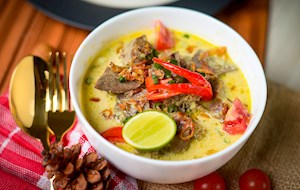
Soto Betawi

Soto Betawi is a hearty beef soup consisting of chunks of meat and offal that are slowly simmered in a coconut milk broth, which is usually enriched with various spices such as lemongrass, turmeric, galangal, kefir lime leaves, and coriander. When served, the soup is accompanied by different condiments that typically include tomatoes, scallions, sweet soy sauce, and emping crackers. Because of its name, it is believed that the dish originated in Jakarta among the Betawi people, and today it is one of the most popular dishes in the city, usually sold at various street stalls, restaurants, or hawker-style establishments. Soto Betawi is traditionally enjoyed with steamed rice and pickled acar on the side.
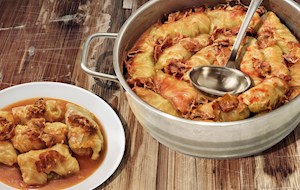
Sarma

One of the staples of traditional Turkish cuisine, sarma consists of a filling that is snugly surrounded by leaves or leafy vegetables. There are numerous versions of this dish but the mixture typically combines ingredients such as minced meat, rice or bulgur, various herbs, seasonings, red pepper, paprika, ground sumac, or tomato sauce, while the typical wrapping usually includes vine, cabbage, or sauerkraut leaves, or a variety of leafy vegetables such as collard greens and swiss chard. Having its roots in the Ottoman Empire, sarma is also traditionally consumed in the Balkans, the countries of Central Europe, the South Caucasus, and the Middle East. Although it is commonly enjoyed as a filling lunch or dinner (typically during the winter season), sarma is often prepared on special occasions and holidays. The dish is usually accompanied by plain yogurt, mashed potatoes, and crusty bread on the side.
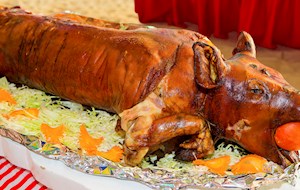
Lechon

Lechon, derived from a Spanish word for roasted suckling pig is one of the most popular dishes in the Philippines. The slowly-roasted suckling pig is usually stuffed with lemongrass, tamarind, garlic, onions, and chives, and is then roasted on a large bamboo spit over an open fire. It is traditionally served whole on a platter, at celebrations and festive events such as weddings and Christmas. Once the meat is properly roasted and falls off the bone, people tend to eat every part of the pig, and the crispy, reddish-brown, crackling skin is especially beloved. Lechon is often served with a thick and rich liver sauce that is cooked with sugar, fresh herbs, and vinegar. If anything is left after the feast, the leftovers are often made into lechon slaw, slowly cooked with vinegar, garlic, and liver sauce for that extra bit of flavor. Apart from the Philippines, the dish is especially popular in countries such as Cuba, Puerto Rico, the Dominican Republic, and Spain. Some famous chefs even named lechon the best pig in the world, so it is definitely worth a try.
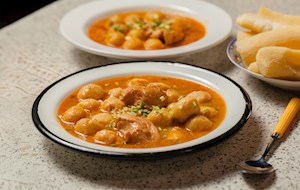
Vori-vori

Vori-vori is a soup from Paraguay made with small balls of cornmeal and cheese cooked in a broth that often includes chicken, vegetables, and herbs, and it is recognized as a staple dish across the country’s rural and urban regions. Its development is linked to the long-standing use of corn and poultry in Guaraní and later mixed culinary practices documented in household cooking records and regional accounts from the eighteenth and nineteenth centuries, where corn-based doughs were shaped into dense dumplings to stretch ingredients during periods of limited supply. Preparation involves mixing finely ground cornmeal with grated cheese and a small amount of fat or broth to form a firm dough, shaping it into small spheres, and poaching them gently in a simmering broth until they swell and soften; the soup is seasoned with onions, garlic, parsley, and occasionally peppers, and served as soon as the dumplings reach a uniform texture. A notable feature is the density of the dumplings, which absorb broth while retaining their structure, giving the dish a thickened consistency without flour or other thickeners. Vori-vori is eaten throughout Paraguay in home kitchens, rural gatherings, and small restaurants, often as a main meal during cooler weather, and it pairs well with simple accompaniments such as mandioca, fresh salads, mild cheeses, herbal teas, and lightly flavored nonalcoholic beverages, with some households serving it alongside light beers or local wines depending on the occasion.
Beeshee

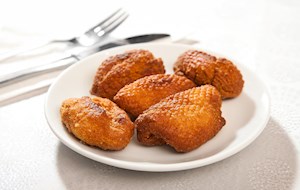
Beeshee, also known as bishi, is a thin and crispy Armenian fried treat similar to a pancake. It is usually made with a dough consisting of flour, sugar, salt, and warm water that is rolled out into very thin circles, brushed with melted butter, and then shaped into square packet-like pastries. The dough squares are rolled out again into larger squares, brushed with melted butter, and then fried until crisp golden on both sides. These crispy fried Armenian treats are eaten warm with lots of sugar, simple syrup, or honey on top, usually for breakfast.

Plo

Plo is a one-pot rice dish from Saint Helena that combines rice, meat, vegetables, and mild seasonings cooked together until the liquid is absorbed and the mixture forms a cohesive, lightly sauced meal. It is made in homes across the island and is considered one of the most common everyday dishes, prepared for family meals, community gatherings, and casual events. The dish resembles other rice-based stews found in regions that influenced Saint Helena’s food culture, including West Africa, India, and Britain, all of which contributed people and ingredients to the island over centuries. As Saint Helena cooks adapted these influences to local conditions, they developed a method of cooking rice with available meats and vegetables in a single pot, relying on economical ingredients and simple seasoning. Plo became a consistent household dish because of its versatility and the ease of feeding large groups with minimal resources. Preparation begins by browning or lightly frying pieces of meat, usually beef, mutton, chicken, or sausage, along with onions and garlic. Vegetables such as carrots, cabbage, celery, or peas are added depending on availability. Water or broth is poured over the mixture, and seasonings such as salt, pepper, curry powder, or bay leaf are included. Rice is added last and stirred into the liquid so it cooks directly in the flavored broth. The pot is left to simmer until the rice is tender and the liquid has evaporated, forming a unified dish in which the rice absorbs the flavor of the meat and vegetables. Some cooks add soy sauce or a small amount of tomato for color, while others rely solely on the stock and seasoning. A characteristic feature of plo is that it is neither completely dry nor heavily sauced; the texture is moist but not soupy, and the rice retains its structure rather than becoming mushy. Plo is eaten throughout Saint Helena at lunch or dinner, often as a complete meal. It is served directly from the pot and is commonly paired with pickled vegetables or a simple salad when available. Because the dish is filling and adaptable, it is also used for social meals, church events, and gatherings where a large pot can feed many people. Beverage pairings include tea, soft drinks, lemon water, or beer, depending on the setting. In households with visitors, plo is often one of the dishes offered to introduce people to Saint Helena’s home-style cooking, reflecting the island’s blend of influences and its reliance on practical, resource-based recipes.
Aji amarillo

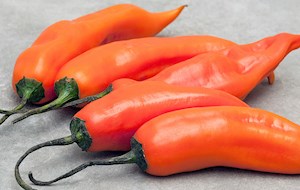
Aji amarillo is a staple in Peruvian cuisine, a chile pepper with a bright orange color and thick flesh. Its heat level ranges from medium to hot, and it is commonly used in a variety of soups and sauces. This chile variety is native to South America and has a distinctive, subtle, and full-bodied fruitiness. It can be bought in a few forms: dried, fresh, canned, or in the form of a paste. When incorporated into sauces, it is often thickened with bread, mayonnaise, and dairy products, and it is then spooned over a variety of meat, fish, and vegetable dishes. When used in its dried and ground form, it is especially good for rice dishes, giving them a sweetish flavor and vibrant color.
Aceite Monterrubio
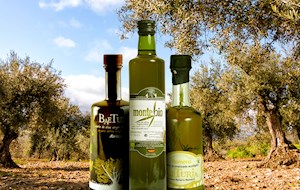
Aceite Monterrubio is an extra virgin olive oil made in the in the province of Badajoz, in the Autonomous Community of Extremadura. This olive oil is made using local olive varieties; Ergot, which gives it a fruity, aromatic and nutty flavor, and Picual or Jabata, responsible for the stability of the oil and its slightly spicy flavor. Aceite Monterrubio is made using only mechanical means that don't alter its natural qualities. Traditional cultivation practices combined with modern technology and strict rules regarding all stages of production are essential to protect the quality and ensure the traceability of this exceptional olive oil.
Daing
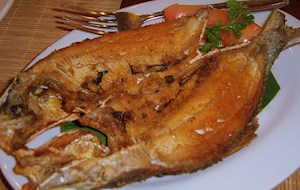
Daing is a Filipino term which refers to a vast category of marinated or salted sun-dried fish. Depending on the region and the technique, daing can be produced with various types of fish that may differ in texture and moisture levels. Marinated or dried fish is used in numerous Filipino dishes as an ingredient, side dish, topping, or a condiment which gives flavor to various stewed or stir-fried dishes. Though it originated as a preservation technique, today it is produced in many traditional Filipino households and sold at numerous markets throughout the country.

Aisy Cendre
Aisy Cendre is a traditional cheese hailing from Burgundy. The semi-soft cheese is made from pasteurized cow's milk. The rind is washed in Marc de Bourgogne wine, and it's then covered with oak or grapevine ash before it's left to mature for at least a month. Underneath the rind, the texture is firm when young and smooth and creamy when fully aged. The aromas are nutty, smokey, and earthy, while the flavors are rich, salty, smokey, and herbaceous. It's recommended to serve Aisy Cendre with celery sticks or fresh fruit such as pears and apples. Pair it with a glass of full-bodied and fruity Burgundy wine.

Carbonara
The carbonara we know today is prepared by simply tossing spaghetti with guanciale (cured pork jowl), egg yolks, and Pecorino Romano cheese. Despite its simplicity, this dish remains one of Rome's favorites, equally popular throughout the country. Even though carbonara is considered a typical Roman dish today, its origins are quite vague and often disputed. The name is said to have been derived from the carbonari, woodcutters and charcoal-makers who lived in the Appenine mountains northeast of Rome, and who supposedly cooked their pasta over a hardwood charcoal fire and tossed it with eggs and cheese. Another popular theory claims that carbonara was invented after the liberation of Rome in 1944, when food shortages were so severe that Allied troops distributed bacon and powdered eggs, which the local population would then mix with water to make pasta sauce.
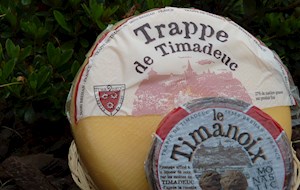
Abbaye de Timadeuc
Abbaye de Timadeuc is a French cheese hailing from Brehan in the region of Brittany, where it's produced by the monks at the Abbaye Cistercienne Notre-Dame de Timadeuc. The cheese is made from pasteurized cow's milk and it's usually left to age from 2 to 3 weeks before consumption. Underneath its washed rind, the texture is slightly soft, springy, and open with a few irregular eyes scattered throughout the paste. The flavors are generally mild and lactic. It's recommended to pair the cheese with a glass of Gamay de Touraine wine.
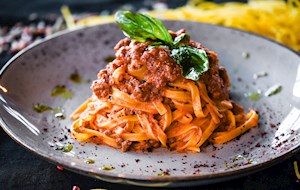
Tagliatelle al ragù alla Bolognese
Tagliatelle al ragù alla Bolognese is a traditional dish originating from Bologna, consisting of tagliatelle pasta and a rich ragù made with a mixture of minced beef and pork, and tomatoes as key ingredients. Even though they are often thought to be synonymous, tagliatelle al ragù—one of Bologna's signature dishes—bears little or no resemblance to the dish known as spaghetti Bolognese in the rest of the world. In fact, the world famous Italian ragù alla Bolognese meat sauce is never served with spaghetti in Bologna. Instead, when it isn't served over fresh tagliatelle, you will most often find it topping a bed of some other other ribbon-like pasta, such as fettuccine or pappardelle. Regardless of the type of pasta used, what makes or breaks this classic Emilian dish is the ragù itself. Experts nowadays tend to consider the recipe for ragù alla Bolognese registered by the Italian Academy of Cuisine in October 1982 the most authentic version. However, chances are that every restaurant and trattoria in Emilia Romagna dishes out its own version of tagliatelle al ragù, and each version is surely worth trying.
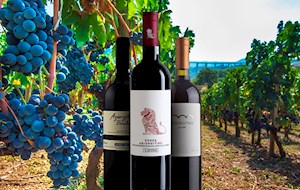
Agiorgitiko
Agiorgitiko is the most widely planted red grape variety in Greece. It is cultivated in several wine regions, but Nemea, where the grape originated, is its most important region. Agiorgitiko is a versatile grape that can be vinified into several styles, and it is often used as a backbone in many Greek blends. It is best known as a full-bodied red, usually coming from Nemea, but it can also be made into young, light red wines, fresh rosés, or dessert styles. Agiorgitiko wines are typically characterized by fruity aromas, which are sometimes accompanied by notes of sweet spices. The wines are soft, and the tannins are present but never aggressive. The acidity is usually low to moderate. Aged and oak-aged styles are more tannic, with more concentrated, complex flavors. Agiorgitiko wines are usually food-friendly and can pair with a variety of dishes. They are a good match with red meat, sausages, stews, lamb, and pasta dishes.
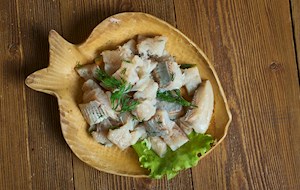
Indigirka Salad

Indigirka is a Russian fish salad that has its origins in Yakutia (Sakha). It consists of diced frozen fish that is combined with onions, oil, salt, and pepper. The salad is typically made from whitefish such as broad whitefish (also known as chir), nelma, and muksun, and it is traditionally served in ice bowls. Indigirka salad first appeared in the middle of the 20th century and was named after the Indigirka River, one of the major Yakutian rivers. It is believed it was created by chef Innokenty Tarbakhov, who based it on a similar ethnic Yakutian dish made with raw fish called raw in the Yakut language or five minutes in Russian. The salad is occasionally accompanied by lemon wedges, but modern variations may include fish roe, fennel, as well as various dressings. This well-chilled appetizer ideally pairs with vodka.
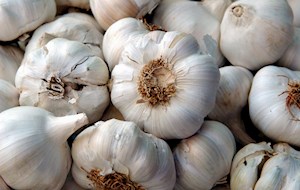
Aglio Bianco Polesano
The cultivation of garlic in the wider Polesine area goes back to the Roman times when garlic was the most widely spread crop. Due to its commercial importance throughout history, and the rise of industrial cultivation in the mid-1900s, Aglio Bianco Polesano has become known as the White Gold of Polesine. It is still grown across the Veneto plains, locally known as 'the Land of the Great Rivers', nestled between Italy's two largest - Po and Adige. The Aglio Bianco Polesano was derived from a local ecotype and apart from its white color, this variety of garlic is distinguished by a unique, fruity aroma, less pungent than other varieties, and a delicate, fresh taste. Another interesting fact: every summer, in the Arquà Polesine Castle, people from around Veneto gather for the feast of Aglio Polesano.

Space Cake

ALTHOUGH THERE ARE CLAIMS THAT EATING SPACE CAKES CAN LEAD TO PSYCHOSIS OR PSYCHOSIS SYMPTOMS FOR SOME PEOPLE, THERE'S STILL NOT ENOUGH CONCLUSIVE SCIENTIFIC EVIDENCE TO SUPPORT THEM. Originating from Amsterdam, space cake is a notorious delicacy that belongs to a group of cannabis-infused edibles. Variations on this specialty abound, and any baked good that contains cannabis butter may be called a space cake. This Dutch specialty is usually prepared with typical cake ingredients such as flour, sugar, baking powder, butter, milk, and eggs, which are combined with a certain quantity of cannabis. A great variety of ingredients can be added to the base to enrich the cake, including cocoa powder, chocolate drops, dried fruit, buttercream, vanilla, or various spices, and the baked cakes often come dusted with powdered sugar, glazed, soaked in rum, or stuffed with cream or custard. As with other cannabis intake methods, the consumption of cannabis in the form of space cakes also provides psychotropic effects upon its consumers due to the presence of THC (tetrahydrocannabinol) and other compounds. In the case of space cakes, the effects are usually prolonged and much stronger, and consumers typically feel high within 3 hours from the consumption. Space cakes with different shapes, flavors, and varying strengths can be savored at nearly any coffee shop in Amsterdam and they’re typically enjoyed alongside a cup of coffee, herbal tea, or beer. When it comes to the legal status of these cakes in the Netherlands, the country’s court allows the sale only of those cakes that are made with crushed weed.
Cassata al forno siciliana
Cassata al Forno is a traditional Sicilian baked dessert and a simpler variation of the iconic cassata siciliana. Unlike the more elaborate version with marzipan and candied fruits, cassata al forno is baked and has a rustic charm, particularly popular in Palermo and other parts of Sicily. It features a buttery shortcrust pastry (pasta frolla) shell filled with a mixture of sweetened ricotta cheese, chocolate chips, and sometimes candied citrus peel. The dough is rolled out to line a baking dish, and the ricotta mixture is placed inside, covered with another layer of pastry or latticework, and baked until golden. The result is a dessert with a crisp exterior and a creamy, tangy-sweet filling, blending the richness of chocolate and the freshness of ricotta. Typically served at room temperature or slightly chilled, it is often dusted with powdered sugar and enjoyed during holidays, family gatherings, and special occasions. Predating the more ornate cassata siciliana, cassata al forno reflects Sicily’s rich culinary heritage, influenced by Arab, Norman, and Italian traditions. Its simplicity highlights the quality of its ingredients, making it a beloved example of Sicilian pastry artistry.