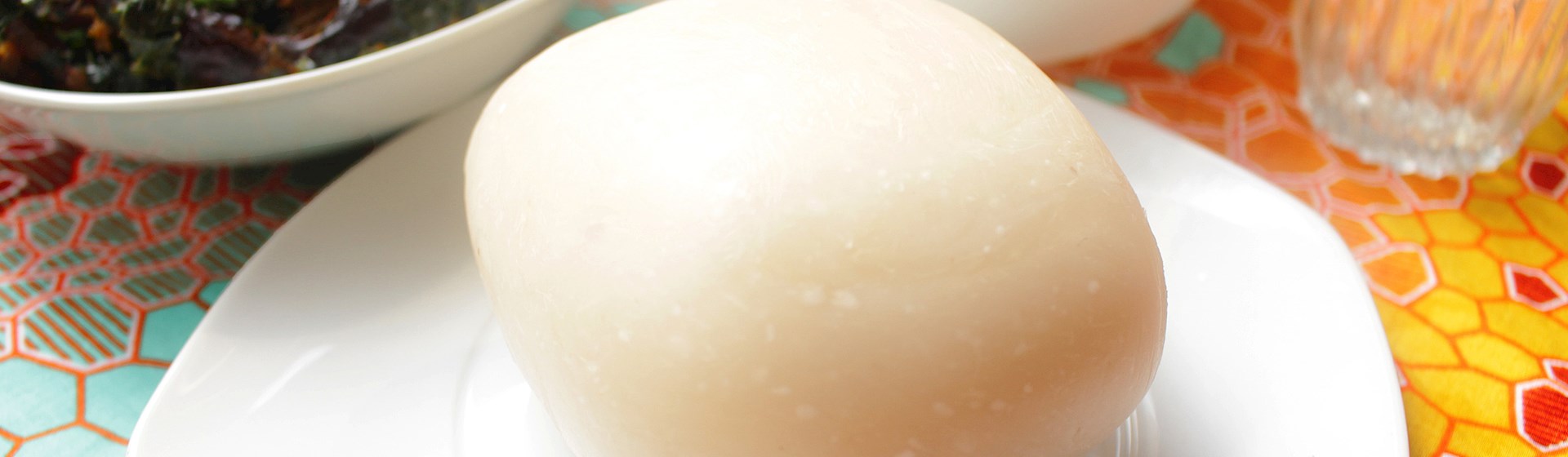
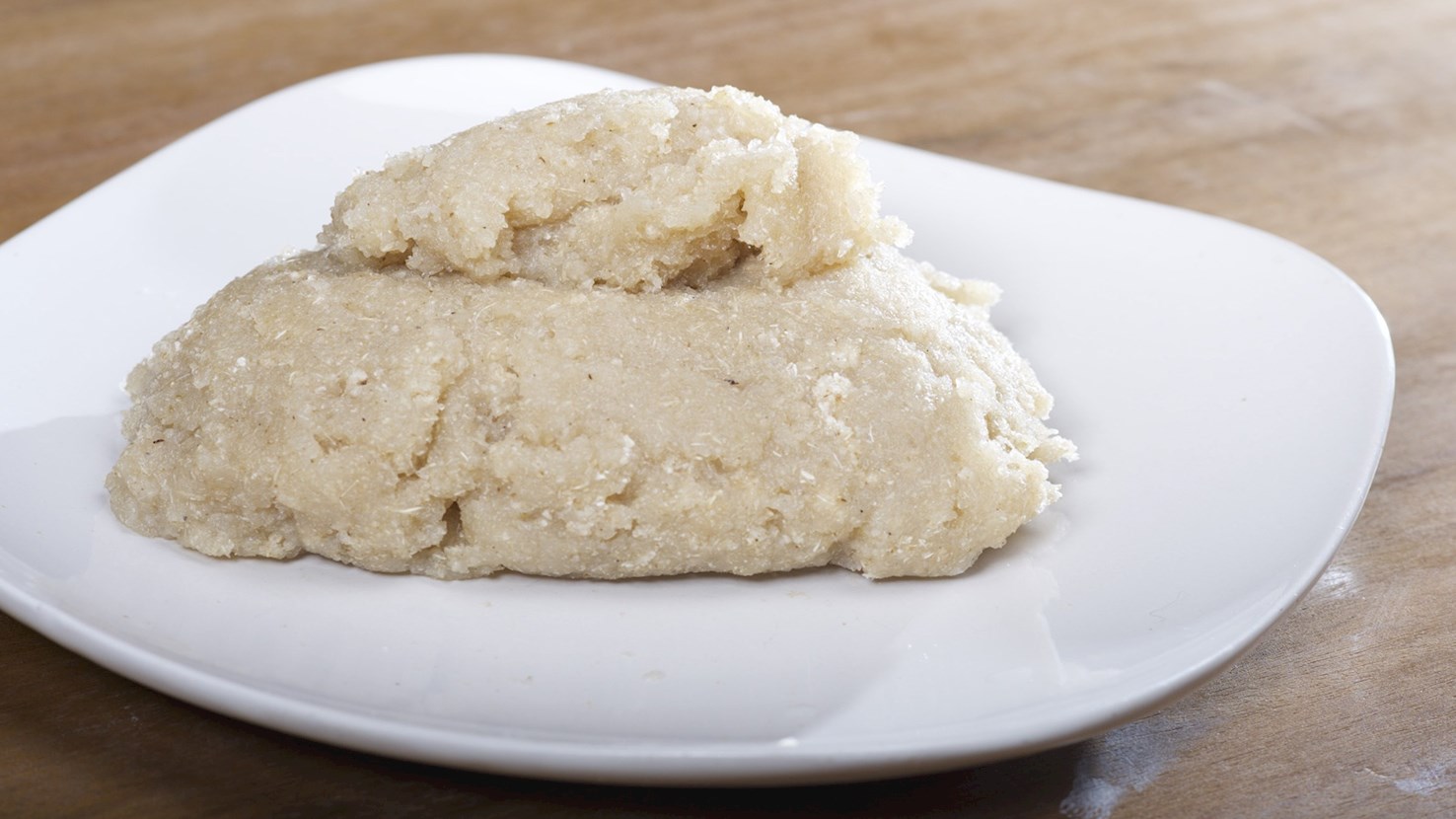
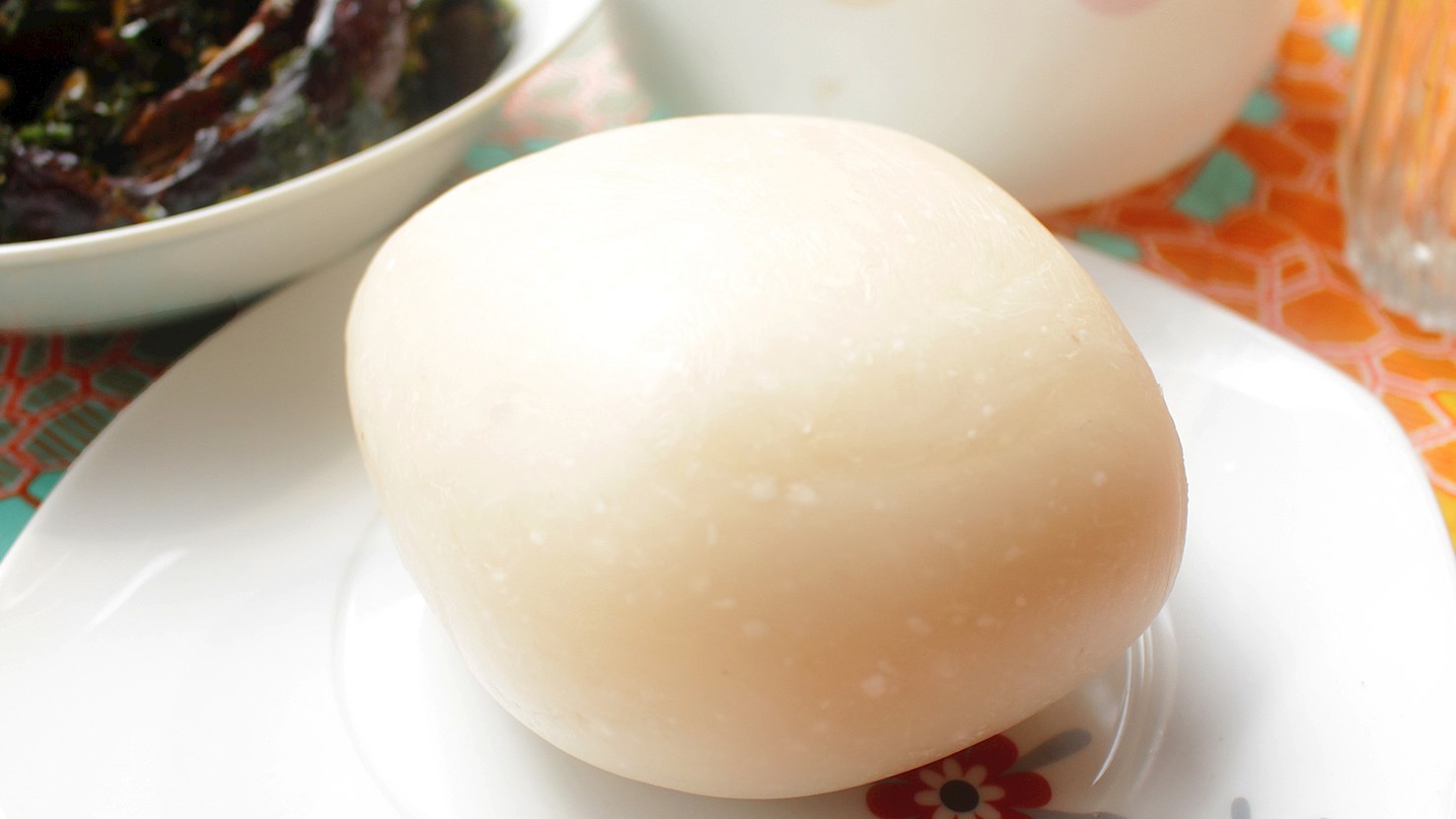
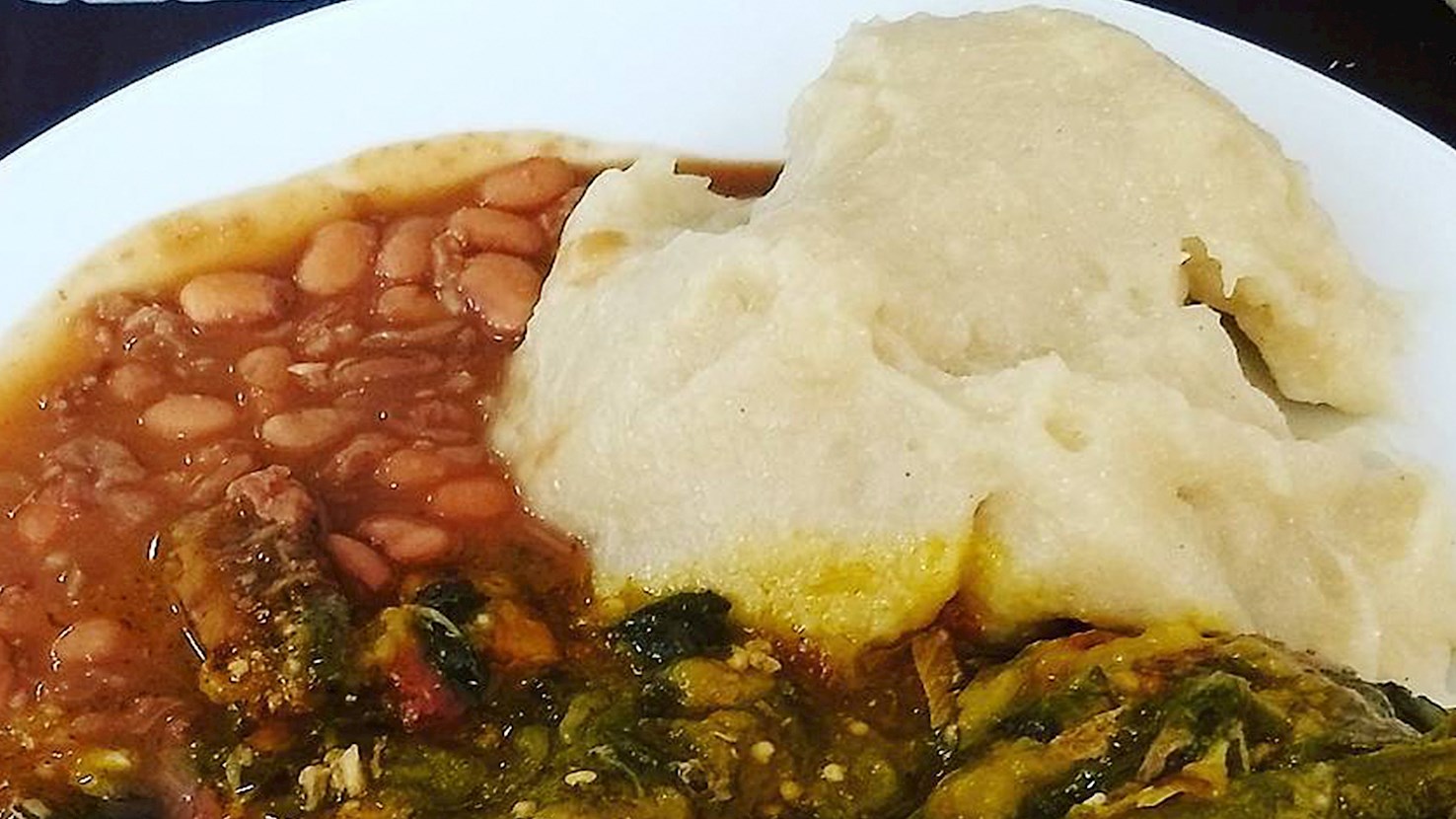
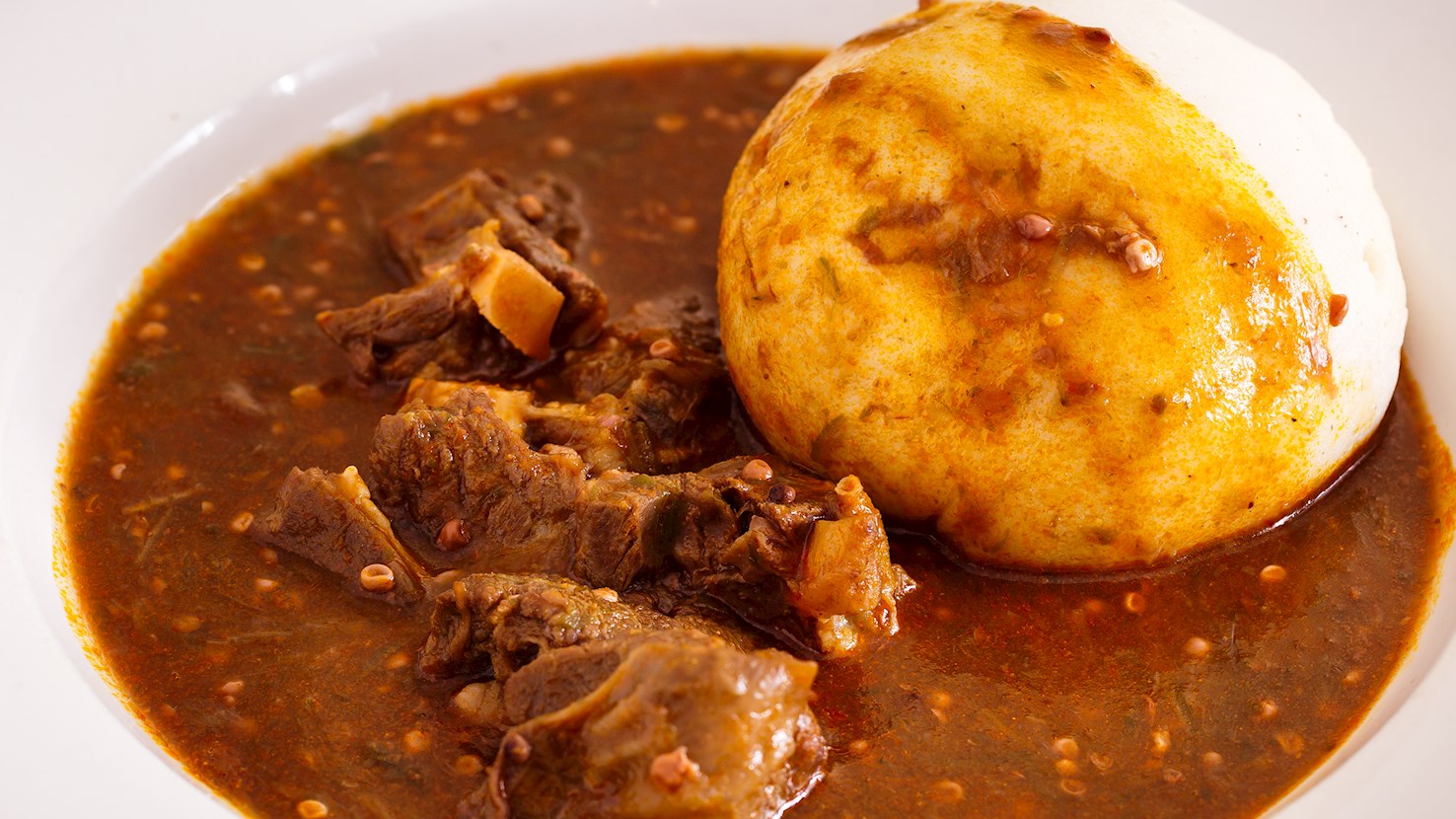
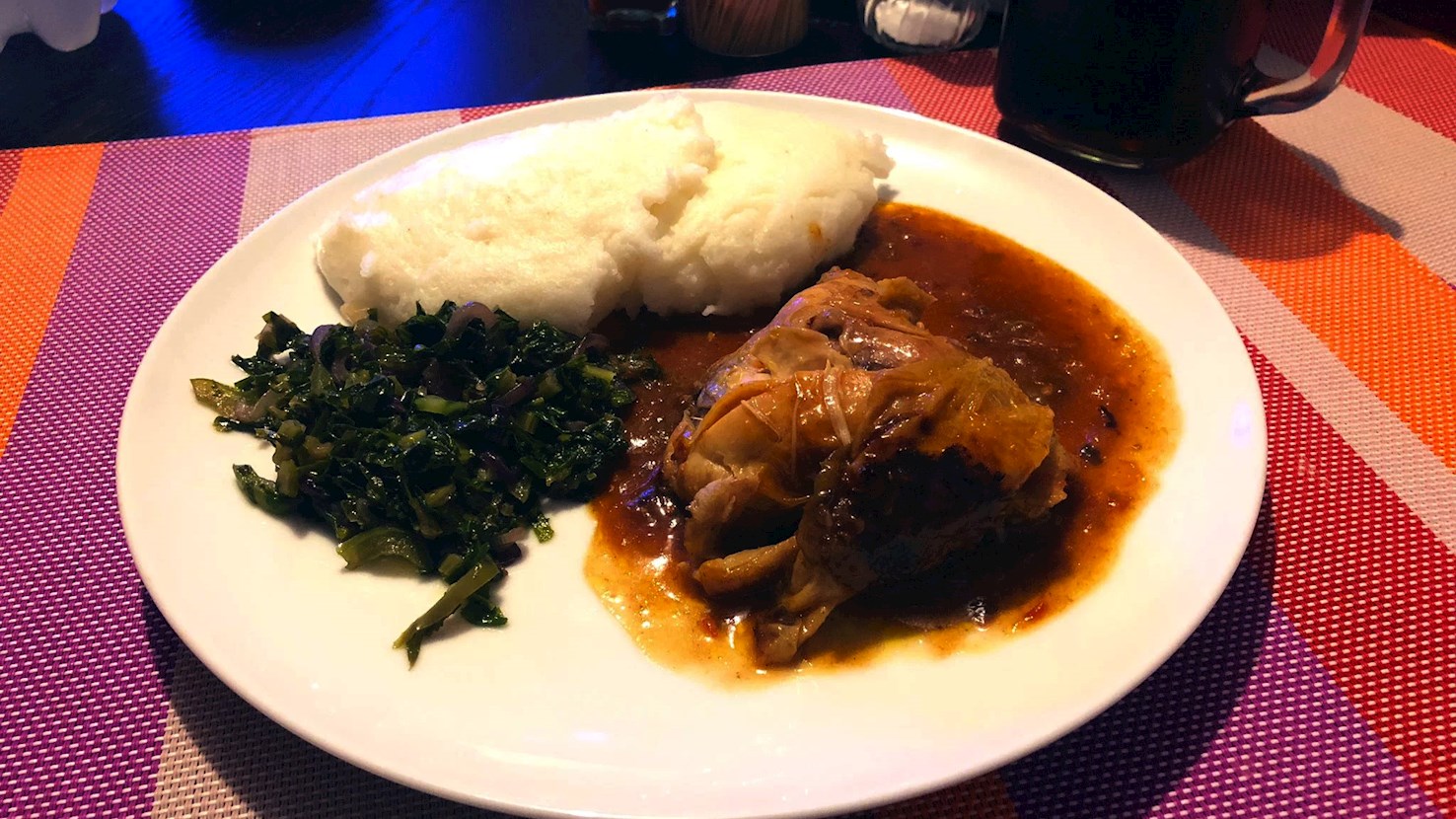
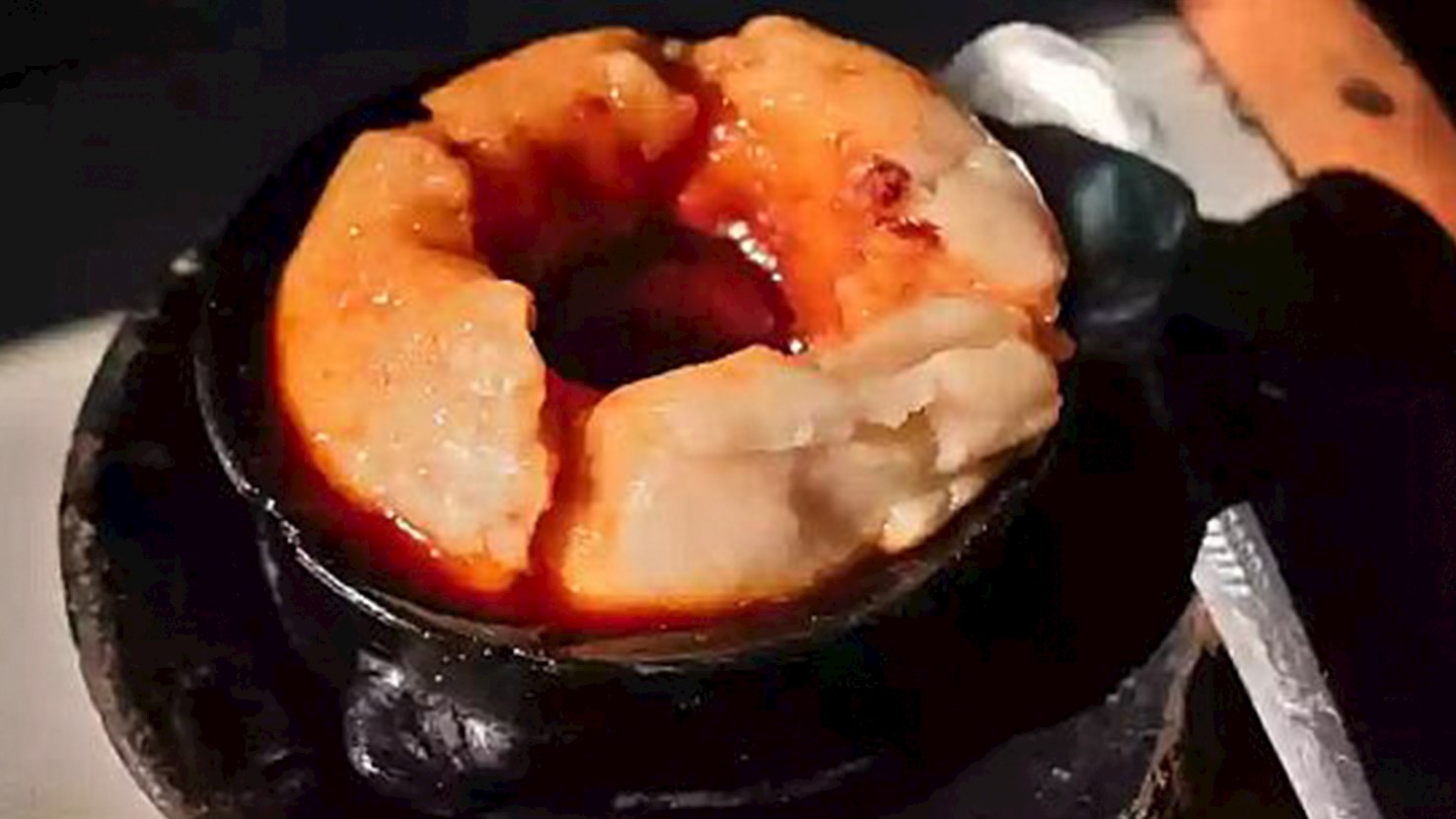
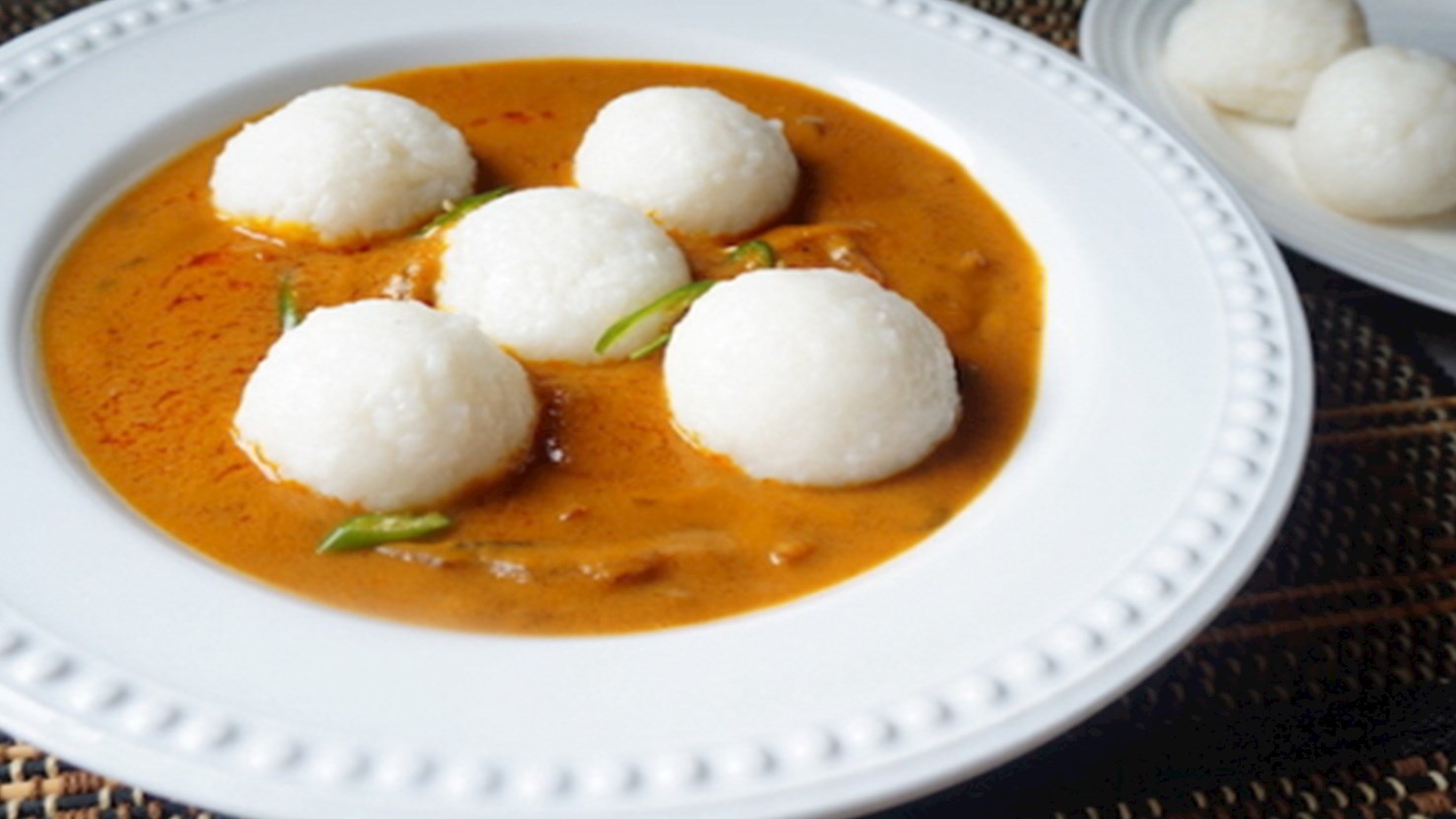
Eba or garri is a Nigerian staple food consisting of cassava flour combined with hot water. The combination is traditionally mixed with a large wooden spoon until it firms up, and is then rolled into a ball. Eba is served with almost all Nigerian soups. It can be dipped into the soups, but it's also often served with stews and various meat dishes.
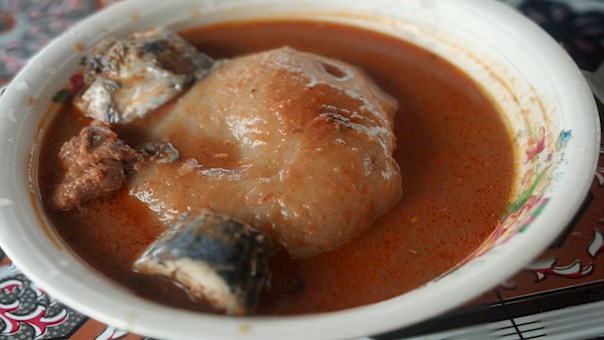
Fufu is a staple side dish made by pounding cassava and unripe plantains together with a big wooden pole and mashing them while adding water. As it needs to be vigorously stirred, it usually takes two people to make it - one pounding it, and the other moving it around between the pounding. Once the mixture is smooth, it gets shaped into small balls that are then placed in a stew or soup with meat. Similar to the Tanzanian ugali, an indentation is made in the ball, used for scooping up the sauce, with fufu acting as a spoon. The texture is quite gummy and stretchy, while the flavor is bland, but dipping it into a stew gives fufu a spicy flavor that is slightly reminiscent of peanuts. Just make sure not to eat with your left hand, as this is considered extremely disrespectful in many parts of Africa, because the left hand is used for toilet-related actions. This starchy side dish is an important accompaniment to various stews and sauce-based dishes, and it's regularly eaten throughout West and Central Africa.
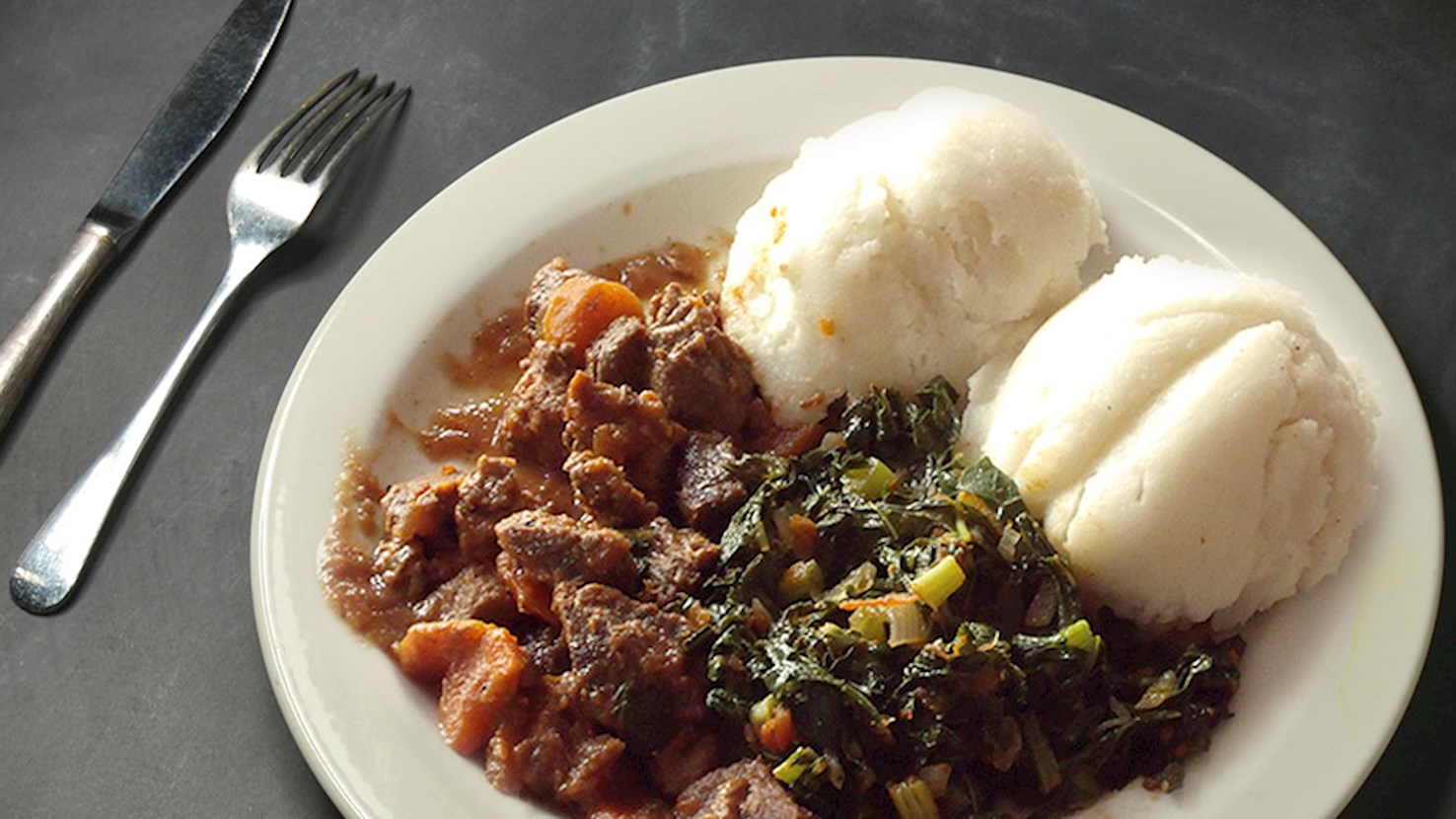
Ugali is a stiff maize-based staple food made by cooking maize flour with water into a firm mass, eaten widely across eastern and southern Africa, most prominently in Kenya and Tanzania, and also present under the same name or close variants in many other African countries, where it functions as a primary source of dietary energy rather than a side dish. Its development followed the introduction of maize to Africa from the Americas beginning in the sixteenth century, after which the crop spread rapidly because of its adaptability and yield, gradually replacing earlier millet and sorghum porridges in many areas and becoming embedded in everyday meals due to its affordability, long storage life, and compatibility with diverse local sauces. Preparation involves bringing water to a boil and steadily adding maize flour while stirring continuously to prevent lumps, then cooking the mixture until it thickens into a cohesive mass with no free liquid, a process governed more by experience and texture than by fixed measurements. Serving is immediate, with the cooked ugali shaped into a mound and portioned by hand or spoon, and it is not consumed alone but used to scoop vegetables, legumes, meat stews, or fish, acting as a neutral carrier rather than a flavored component. It is eaten primarily at lunch or dinner in homes, eateries, and communal settings, most often by hand, and it pairs naturally with leafy greens, bean dishes, grilled or stewed meats, and fish sauces, while beverages alongside are typically water, unsweetened tea, or light fermented drinks rather than sweet or acidic options, keeping attention on the accompanying foods rather than the starch itself. Nsima from Malawi, which follows the same method and role at the table and was formally recognized in 2017 when it was inscribed on the Representative List of the Intangible Cultural Heritage of Humanity by UNESCO, reflecting its central place in daily life and social practice.
Known as funge or funje in Angola and Ghana, and mfundi in Democratic Republic of the Congo and Republic of the Congo, it is an essential side dish accompanying breakfast, lunch, and dinner meals in many households of rural families throughout these countries. It is a type of porridge known as swallow, made from cassava flour that is stirred into water. Funge has a sticky, smooth, and creamy texture, while a slightly bland flavor makes it great for evening out the intense spices found in many local dishes. Traditionally, at their most basic, these dishes consist of funge and a full-flavored, spicy sauce.
Banku is a Ghanaian dish made from fermented corn and cassava dough. It is usually shaped into a ball and served with a variety of fish dishes, soups, and stews. Banku is consumed by almost all Ghanaian tribes, and can be traced back to the tribes in the Volta River region.
Sadza is a traditional swallow originating from Zimbabwe, consisting of cornmeal and water. The name sadza means meal, and, in accordance, it can be served at any time of the day, whether for breakfast, lunch, or dinner. The cornmeal is mixed with cold water until it becomes a smooth paste, and the combination is then cooked in boiling water. Sadza is usually served hot as a side dish accompanying meat or vegetable stews. Interestingly, sadza is one of the first foods given to babies in Zimbabwe.
Pounded yam is a staple dish from Nigeria, made by pounding boiled yam until it becomes smooth, stretchy, and dough-like. The dish emerged from the long history of yam cultivation in West Africa, where yam has been one of the most important crops for centuries. Yams are celebrated not only as food but also as part of cultural rituals and festivals, marking harvest and community gatherings. The practice of pounding yam developed as a way to transform the tuber into a base that could complement richly flavored dishes like egusi soup, ogbono, or vegetable stews. This method spread widely across yam-growing regions and became a shared food identity among many West African peoples. Preparation involves peeling and cutting yam tubers into chunks, boiling them until soft, and then pounding them in a large wooden mortar with a pestle until the texture changes from lumpy to elastic and smooth. The process requires strength and rhythm, and in many households it is done by more than one person working together. Modern kitchens sometimes replace the mortar and pestle with yam pounders or mixers, but the essence of the dish remains in its consistency and texture. Once prepared, the pounded yam is shaped into round portions and served alongside soups, where small pieces are pinched off, rolled, and dipped into the accompanying dish. Today, pounded yam is eaten daily in many households across Nigeria, featured at celebrations, family gatherings, and communal feasts. It is considered both everyday food and a dish for special occasions, depending on the context in which it is served.
Genfo or ga'at is a simple Ethiopian and Eritrean porridge that is commonly consumed for breakfast, made by adding dry-roasted barley flour or wheat flour to boiling water and stirring the concoction with a wooden utensil until it develops a smooth, yet extremely thick consistency. The porridge is then transferred to a bowl, shaped into a mound, and a hole is created in the center, usually by using a finjal (Ethiopian coffee cup). The well is filled with clarified spiced butter niter kibbeh (it will usually be made with spices like besobela known as Ethiopian sacred basil, koseret, fenugreek, cumin, coriander, turmeric, Ethiopian cardamom, cinnamon, or nutmeg ) and berbere, a mix of chili peppers and up to 20 different spices. Genfo is traditionally consumed as it is, although it can be accompanied by a scoop of yogurt. The dish is often shared and consumed by pulling the thick porridge pieces from the outside and dipping them into the spice blend in the center.
Tuwo shinkafa is a unique Nigerian dish consisting of rice flour or soft, short-grained rice and water. The combination of those ingredients is cooked, mashed, and formed into large balls. It is popular throughout the northern parts of the country, and is often served as an accompaniment to various soups and stews.
Dumboy is the national dish of Liberia. In order to prepare it, fresh cassava is peeled and boiled, while the fibers from the center are removed. The cooked roots are placed in a big mortar and beaten with a heavy pestle, then shaped into balls. The pounding requires expertise and skill, so if dumboy is prepared by a novice, it will probably be quite lumpy and inedible. Before serving, meat stock or hot pepper soup is poured over the dumboy, along with some vegetables, because the sticky dough will adhere to anything dry if it's not consumed immediately after it's been prepared. Dumboy is especially prized by the Mano, Gio, and Bassa people of Liberia.
TasteAtlas food rankings are based on the ratings of the TasteAtlas audience, with a series of mechanisms that recognize real users and that ignore bot,
nationalist or local patriotic ratings, and give additional value to the ratings of users that the system recognizes as knowledgeable.
For the “Top 15 African Swallows” list until June 15, 2026, 249 ratings were recorded, of which 186 were recognized by the system as legitimate.
TasteAtlas Rankings should not be seen as the final global conclusion about food. Their purpose is to promote excellent local foods,
instill pride in traditional dishes, and arouse curiosity about dishes you haven’t tried.