Bourbon coffee

Bourbon coffee is a high-quality botanical variety of the Coffea arabica species, recognized as one of the two main genetic pillars of modern specialty coffee alongside the Typica variety. It is physically defined by its broad leaves, round cherries, and a high yield potential that is approximately 20% to 30% greater than that of Typica. The variety originated on the island of Réunion in the Indian Ocean, which was known as Île Bourbon during the 18th century. The item developed through a natural mutation of coffee plants brought to the island from Yemen by French missionaries in 1715. Of the original sixty trees delivered to the island, only one survived, and its offspring eventually adapted to the local volcanic soil and tropical microclimate, resulting in the distinct Bourbon mutation. By the mid-19th century, these seeds were transported to Brazil and subsequently spread throughout Latin America and East Africa, where the variety remains a staple of premium coffee production. Preparation of Bourbon coffee is focused on highlighting its high glucose and fructose content, which provides a characteristic sweetness often compared to caramel or chocolate. The beans are typically processed using the wet (washed) method to preserve their bright acidity and floral clarity, though honey and natural processing are utilized to emphasize the variety's heavy body. Roasting parameters are generally set to medium or medium-dark levels to caramelize the natural sugars without masking the delicate fruit notes of cherry and peach. Serving standards for Bourbon coffee involve brewing methods that offer high clarity, such as the pour-over or French press, at water temperatures between 90°C and 96°C. A specific botanical trait unique to this variety is the occurrence of color-specific sub-types, including Red, Yellow, and Pink Bourbon; the Pink variant is a rare hybrid of the Red and Yellow strains and is noted for a significantly higher concentration of floral aromatics. The coffee is consumed as a primary beverage in specialty cafes and home environments, often served black to appreciate the nuanced acidity and sweetness of the specific terroir. It is frequently paired with butter-based pastries, almond biscotti, or milk chocolate, as the fats in these items complement the creamy mouthfeel and nutty undertones of the coffee. In savory contexts, it is served alongside toasted bread with salted butter or mild cheeses, which balance the citrus-like brightness of the brew. For dessert, Bourbon coffee is paired with caramel tarts or fruit-based galettes, utilizing the beverage's inherent brown sugar notes to enhance the sweetness of the food.

Jiàng yóu gāo

Jiàng yóu gāo is a thickened, semi-solid soy paste or soy sauce cream primarily associated with Taiwanese culinary practices. The development of this condiment occurred as an adaptation of liquid soy sauce brewing, where the necessity for a stable, clingy dipping agent led producers to modify the liquid base with local thickening agents. Its presence became standardized in the post-war Taiwanese food industry, as industrial and artisanal brewers sought to create a versatile product that combined the savory profile of soy with a controlled, gel-like rheology. Preparation begins with a base of high-quality fermented soy sauce, often brewed from black soybeans, which is blended with sugar and a starch-based thickening agent, typically glutinous rice flour or cornstarch. This mixture is heated and stirred continuously to gelatinize the starches, resulting in a glossy, opaque finish and a texture that resists spreading. A specific property of jiàng yóu gāo is its high sugar-to-salt ratio compared to standard light soy sauce, which provides a mild sweetness that tempers the fermented salinity of the beans. The paste is served primarily as a cold dipping sauce or a room-temperature glaze, frequently dispensed in dollops rather than poured. A unique characteristic of this condiment is its high adhesive property, which allows it to remain on the surface of smooth or moisture-rich foods without diluting into a liquid pool. It is eaten throughout Taiwan as an essential accompaniment to "blanched meat" (baí zhǎn ròu), turnip cakes, and oyster omelets, and is often drizzled over cold tofu or century eggs. Food pairings include starchy or protein-dense items that require a concentrated burst of flavor, such as sticky rice zongzi or boiled dumplings. Beverage pairings involve light, fermented drinks like Taiwanese oolong tea or iced winter melon tea, which provide a clean, refreshing contrast to the dense, savory-sweet profile of the soy paste.
Mastika

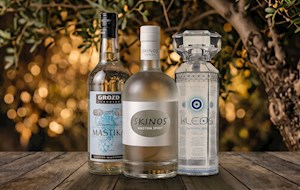
Mastika is a clear, aromatic spirit produced in Bulgaria, North Macedonia, and parts of Serbia, flavored with mastic resin, anise, or a combination of the two. It is widely consumed in bars, restaurants, and homes throughout the Balkans and is bottled by both large commercial distilleries and smaller local producers. The alcohol content usually ranges between 40 and 50 percent, and the drink is known for its sweet aroma, mild herbal character, and the distinct resinous note imparted by mastic. Although mastika shares certain characteristics with Mediterranean anise spirits such as ouzo and rakı, it has its own established profile within Balkan drinking culture, shaped by local taste preferences and regional distilling practices. Mastika emerged within the broader distillation traditions of the Balkans, where grape-based spirits such as rakia have long been produced. Distillers began flavoring clear spirits with mastic resin brought from the eastern Mediterranean or with anise grown in the region. Bulgaria adopted mastika on a large scale, incorporating it into commercial production during the twentieth century, while North Macedonia developed its own variations. The use of mastic resin distinguished it from other flavored spirits in the region, and the drink gained popularity as a flavored alternative to grape brandy. In some areas, producers used anise either to enhance the flavor or to replace the resin when supplies were limited, resulting in a range of styles that vary from strongly resinous to predominantly anise-based. Mastika is made by infusing a distilled base spirit—typically derived from grapes or grain—with mastic resin or aniseed. The flavoring may be added directly to the alcohol or combined before a second distillation that clarifies the spirit and concentrates its aroma. Some producers add sugar to achieve a smoother, slightly sweet finish. When mixed with water or ice, mastika often becomes cloudy due to the separation of essential oils, a characteristic shared with other anise-flavored spirits. Its flavor is both sweet and herbal, with a soft resin note that defines the drink in its resin-forward versions. Mastika is consumed across the Balkans as an aperitif or a social drink, commonly served chilled or over ice. It can be mixed with water to reduce its intensity or consumed neat in small glasses. It is paired with salads, grilled meats, cheeses, olives, and other small appetizers found in Balkan cuisine. In warm months, it is frequently enjoyed outdoors and in casual social settings, while in restaurants it accompanies shared dishes and light starters. Outside the region, mastika appears in Balkan specialty restaurants and among communities maintaining regional drinking customs, where it is valued for its distinctive combination of sweetness, resin, and herbal notes.
Wǔyí yánchá

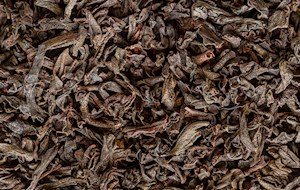
Wǔyí yánchá is an oolong tea produced in the Wuyi Mountains of northern Fujian Province. It is known for its semi-oxidized leaves, roasted aroma, and mineral-rich flavor profile. The term yánchá means “rock tea,” referring to the rocky soil and mountainous terrain in which the tea is cultivated. The area’s volcanic and sandstone formations, coupled with misty humidity and filtered sunlight, create growing conditions that yield tea leaves with a distinctive character known as yán yùn or “rock rhyme,” a mineral taste and lingering aftertaste unique to teas from this region. Wǔyí yánchá is considered one of the most renowned Chinese oolong teas, combining complex aroma, layered flavor, and a long finish. The cultivation of tea in the Wuyi Mountains dates back over a thousand years, with oolong processing methods developing during the Song and Ming dynasties. The region became recognized for producing semi-oxidized teas that bridged the gap between green and black teas, offering the freshness of one and the depth of the other. Artisans in the area refined techniques of partial oxidation and charcoal roasting, which gave Wuyi teas their distinct flavor and longevity. Over time, teas grown on the rocky cliffs near the Nine Bends River gained particular fame for their unique soil composition and microclimate. These cliff-grown teas were categorized as zhèng yán (core rock area teas), while those grown slightly outside the central valley were classified as bàn yán (half rock area teas). Famous varieties such as Dà Hóng Páo, Shuǐ Xiān, Ròu Guì, and Bái Jīguān emerged from this region, each noted for its own fragrance and flavor profile. Processing Wǔyí yánchá involves several carefully timed steps. Freshly picked leaves are first withered under the sun to reduce moisture content, then gently shaken and rested to initiate oxidation. This controlled bruising of the leaf edges allows enzymes to interact with oxygen, producing complex aromatic compounds. The oxidation is halted midway through heating, and the leaves are rolled to shape them into long, twisted strands. Finally, they are roasted multiple times over charcoal at low temperatures, often over several days or weeks, to stabilize the tea and bring out its toasty, mineral notes. The result is a dry leaf with a dark brown to black color and a glossy surface. When infused, the liquor is amber to orange-red, rich in aroma, and balanced in taste with hints of floral sweetness, fruit, and spice. A distinctive feature of Wǔyí yánchá is its yán yùn, the mineral or “rock” resonance left on the palate after drinking. This characteristic arises from the mineral composition of the Wuyi soil and the humid microclimate that supports slow, steady leaf growth. The flavor is further shaped by charcoal roasting, which enhances depth and extends the tea’s shelf life. Each batch of yánchá varies slightly depending on the location of the tea bushes, the skill of the roaster, and the duration of oxidation, making it a product that reflects both its environment and human technique. Wǔyí yánchá is typically prepared using the Gongfu brewing method, common in Fujian and Guangdong. Small clay teapots or porcelain gaiwans are used to brew high leaf concentrations in short infusions, allowing the flavor to unfold over multiple steeps. Each steeping reveals different layers: initial roasted notes, followed by floral, fruity, or honey-like tones, and finally a mineral aftertaste. The tea is consumed both in formal tastings and in daily tea sessions, valued for its depth and lasting aroma. It is most commonly enjoyed in southern China, particularly in Fujian and Chaozhou, and by tea enthusiasts worldwide. It pairs well with lightly flavored foods such as steamed fish, dumplings, or fruit, which allow its complexity to stand out. Heavier roasted varieties can accompany richer foods like roast duck or pork, while aged yánchá complements mildly sweet pastries and nuts. In modern settings, it is often served after meals as a digestif or during quiet gatherings, reflecting the tea’s balance between refinement and everyday accessibility.
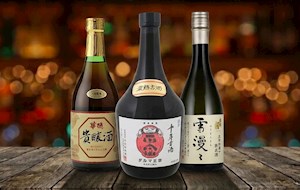
Sake koshu

Sake koshu is aged Japanese sake, made from the same basic ingredients as other sake (rice, water, koji mold, and yeast) but deliberately matured after brewing so that time becomes one of the main factors shaping its color, aroma, and flavor. Produced throughout Japan rather than belonging to a single region, koshu, meaning “old sake,” can refer broadly to sake from an earlier brewing year, while bottles marketed specifically as long-aged koshu are commonly matured for several years and sometimes for decades. Unlike the nearly colorless appearance and fresh, often fruity character associated with young sake, koshu can range from pale gold to deep amber and typically develops aromas and flavors reminiscent of nuts, caramel, honey, dried fruit, toasted grain, molasses, spices, and, in more strongly aged examples, soy sauce or other deeply savory notes. Its development is closely connected with Japan’s long-established practice of storing sake before release. Ordinary sake is generally allowed a period of maturation after fermentation, but extended aging was historically less straightforward because older storage and distribution conditions made deterioration difficult to control. Nevertheless, aged sake was known in earlier periods, and surviving records indicate that deliberately stored older sake could be valued rather than automatically regarded as spoiled. In the modern sake industry, improved sanitation, temperature control, filtration, bottling, and storage have allowed breweries to manage maturation far more precisely, leading to a renewed category of long-term aged sake. Koshu does not require a separate brewing process in the same sense as styles such as kimoto or nigori; the decisive stage comes after the sake has been brewed, pressed, and prepared for storage. Depending on the producer, the base may be junmai, ginjo, honjozo, or another sake style, and it may be aged in tanks, bottles, or other controlled containers at anything from refrigerated temperatures to cellar or ambient conditions. Temperature has a particularly strong influence on the result. Cool aging slows chemical changes and can preserve a lighter color and more restrained profile, while warmer storage generally accelerates maturation and produces deeper color and more pronounced roasted, caramelized, and savory aromas. During prolonged storage, sugars and amino acids participate in reactions including the Maillard reaction, gradually changing a clear sake toward yellow, gold, or amber while fresh fruity aromas diminish and more mature flavors emerge. Because of these variables, two koshu of the same age can taste remarkably different: one may remain delicate, smooth, and lightly nutty after many years of cool storage, while another can become dark, dense, sweet-savory, and strongly reminiscent of dried fruit or fortified wine after a shorter period at higher temperatures. Age declarations therefore provide useful information but do not describe the style completely. Some producers release sake after two or three years, while others maintain stocks for five, ten, twenty, or considerably more years, and very long-aged examples may be described with terms such as daikoshu or hizoshu. Extended aging also changes the texture, often making the sake rounder and smoother while lengthening the finish; a slight bitterness can appear as well, a characteristic that would often be undesirable in young sake but can form part of the balance of mature koshu. Serving temperature depends on the bottle rather than on a single rule. Mature sake is frequently served cool to room temperature, roughly within the broad range of about 7–25°C, which allows its nutty, dried-fruit, spice, and caramel aromas to emerge without excessive alcoholic sharpness, although fuller examples can also work gently warmed. Small wine glasses are increasingly used because their shape makes complex aromas easier to examine, while ochoko and other sake vessels remain equally suitable depending on the setting. Koshu is usually consumed in relatively modest pours and can be approached almost like a mature wine or digestif, with attention paid to its age, storage method, color, and changing aromas as it reaches the serving temperature. Its concentrated savory character makes it particularly useful with foods that can overwhelm lighter sake. Aged cheeses, cured meats, pâté, roasted or grilled meat, braised dishes, mushrooms, soy-based preparations, miso-rich foods, pickles, nuts, dried fruit, and caramelized or moderately sweet desserts can all work well, while darker koshu can accompany blue cheese or strongly flavored charcuterie especially effectively. In Japan it may be served with rich izakaya dishes, grilled foods, preserved ingredients, or multicourse meals where its mature flavors suit the later, more intense courses. Outside Japan, its combination of sweetness, umami, acidity, gentle bitterness, and oxidative or caramel-like aromas allows it to occupy territory more commonly associated with aged wine, Madeira, sherry, or certain dessert wines.
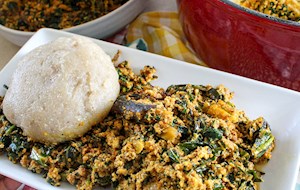
Akple

Akple is a unique Ghanaian dish consisting of corn flour, cassava flour, water, and salt. The combination of these ingredients is usually rolled into a ball and left to ferment. The dish was invented by the Ewe tribe and is traditionally consumed without any utensils. Akple is often served with a flavorful okra soup known as fetri detsi.
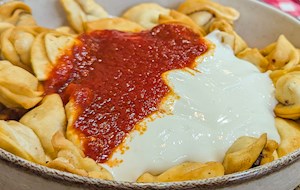
Çıtır mantı

Çıtır mantı is a Turkish fried dumpling dish made from thin wheat dough filled with seasoned minced meat, shaped into small parcels, and cooked in hot oil until crisp, then usually served with garlicky yogurt and a buttery red pepper or tomato-based sauce. It is best understood as a fried variation within the wider Turkish mantı family rather than a single old regional specialty with one fixed place of origin. Mantı itself has a much longer place in Turkish cooking, with filled dough preparations documented in Ottoman cuisine and related dumpling forms found across Central Asia, Anatolia, and neighboring regions, but the explicitly crispy version appears to be a later adaptation built around frying instead of boiling. In contemporary Turkey, çıtır mantı is prepared both at home and in restaurants, and the name is used quite broadly for mantı that is fried until the dough becomes golden and crunchy. The basic dough is made from flour, egg, water, and salt, rolled thin, and cut into small squares. A filling of minced beef or lamb, finely grated or chopped onion, salt, black pepper, and sometimes red pepper flakes is placed in the center before the dough is folded into triangles, bundles, or other compact shapes. Instead of being simmered in water like many better-known mantı styles, the dumplings are fried in hot oil until the exterior becomes crisp while the filling cooks through. Some cooks bake them rather than deep-fry them, but frying is the method most closely associated with the name. Çıtır mantı is commonly served immediately after cooking, either with garlic yogurt spooned over the top or with the yogurt served alongside so the pastry remains crisp for longer. A second sauce made from melted butter with pul biber, paprika, tomato paste, or dried mint is often added, preserving the familiar flavor profile of classic mantı while changing the texture completely. Sumac, dried mint, and red pepper flakes may be used as finishing seasonings. One of the defining characteristics of the dish is the contrast between the crisp fried shell, the soft meat filling, and the cool acidity of yogurt, which makes it work equally well as a hot starter, snack, or more substantial plate. It is eaten throughout Turkey in modern mantı restaurants, casual eateries, and home kitchens rather than being strongly tied to a single city, although similar fried mantı preparations may be marketed under regional names such as Bodrum mantısı. Çıtır mantı is best eaten hot and freshly fried, with garlicky yogurt, tomato or pepper sauce, and simple accompaniments such as salad or pickled vegetables; ayran is the most natural beverage pairing, while Turkish lager or a light, acidic red wine can also work with richer versions.
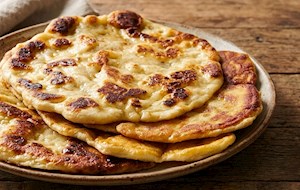
Muufo

Muufo is a thick Somali flatbread made mainly from maize flour, sometimes with sorghum or wheat added, and baked against the hot inner wall of a clay oven known as a tinaar. It is particularly associated with southern Somalia and the agricultural and urban food culture around Mogadishu, Benadir, and the southern river regions, where maize and sorghum have long been important staple grains. Academic research on Somali breads distinguishes muufo from the thinner fermented canjeero or laxoox, describing muufo specifically as a maize-based bread baked in a vertical oven. Its exact beginnings are not recorded, but the bread reflects two long-standing elements of southern Somali food culture: the cultivation of maize and sorghum and the use of clay ovens connected with the Indian Ocean and Red Sea baking traditions. The name is also closely associated with the oven itself; Somali culinary sources use muufo tinaar for the bread and have proposed a connection between muufo and Arabic names such as mofa or mifa for this type of oven, although that etymology remains an interpretation rather than a firmly established linguistic fact. Muufo is prepared from a soft dough or thick batter based on finely ground maize, with water and salt forming the simplest mixture, while many current recipes add some wheat flour, sugar, and yeast to make the bread softer and easier to handle. The dough is shaped with wet hands into a thick round and pressed directly onto the heated wall of the tinaar, where intense heat creates browned or lightly charred patches on the exterior while the center remains dense, tender, and slightly crumbly. Some older Somali versions are unleavened, while other regional forms are fermented; in Brava, for example, an immediately baked maize bread has been distinguished from muufo Baraawe, which is allowed to ferment before baking. Modern Somali households without a tinaar commonly reproduce the bread in a heavy frying pan, on a grill, or in a very hot conventional oven, although these methods do not give exactly the same crust as clay-oven baking. Muufo is generally eaten while fresh because it becomes firmer as it cools, and its substantial texture makes it especially useful for absorbing sauces and meat juices. It can accompany suqaar, meat stews, beans, vegetables, or other saucy foods, but one of its most characteristic serving methods is to tear or cut the bread into pieces, add sesame oil and sugar, and soften the mixture with hot black tea. It may also be eaten more simply with sesame oil, sugar, or a savory stew, and it appears at breakfast as well as later meals. Sweet Somali tea is a particularly natural accompaniment, while meat dishes such as beef or chicken suqaar, beans, and vegetable stews work well with the bread because its dense crumb absorbs their sauces without falling apart immediately.
Empanadas de cazón

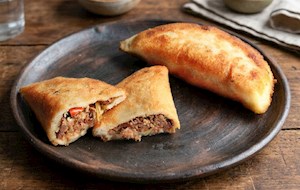
Empanadas de cazón are Venezuelan fried cornmeal turnovers filled with a seasoned stew of cazón, a name commonly used for small sharks, and they are especially associated with the eastern Caribbean coast, particularly Margarita Island in Nueva Esparta and the neighboring states of Sucre and Anzoátegui. They belong to the wider Venezuelan empanada family, in which a thin dough made from maize is folded around a savory filling and fried until crisp, but the cazón version became particularly identified with coastal communities where shark and other firm-fleshed fish were readily available. Filled pastries arrived in Venezuela through Spanish influence during the colonial period, while the use of maize dough and local seafood transformed them into a distinctly Venezuelan preparation; by the 19th century empanadas were already well established in the country, and on Margarita they became increasingly associated with home cooking, beachside stalls, neighborhood vendors, and early-morning breakfasts. The cazón filling is usually prepared separately before assembly: the fish is boiled or poached until tender, cleaned of skin and cartilage, shredded finely, and then cooked with onion, garlic, ají dulce, and salt until the mixture becomes flavorful but fairly dry. Some versions add tomato, chives, cilantro, annatto-colored oil, or additional peppers, while salted or dried cazón may first be soaked or boiled to reduce its salinity. Keeping the filling relatively dry is important because excess liquid can soften the corn dough and make the empanada difficult to seal or fry evenly. The dough is generally made from precooked white or yellow corn flour mixed with water and salt, often with a small amount of sugar, and sometimes with annatto oil for additional color. A portion of dough is flattened into a thin circle, the cazón stew is placed on one half, and the dough is folded over to form a half-moon before the edge is pressed tightly closed. The empanadas are then fried in hot oil until the exterior becomes golden and crisp while the interior remains moist and savory. In Margarita and Sucre, a good empanada de cazón is often expected to be relatively thin, generously filled, and crisp enough to hold its shape without becoming heavy or greasy. Although cazón is the defining filling, related coastal versions may use ray, tuna, other firm fish, shellfish, cheese, or black beans, reflecting the flexibility of the Venezuelan empanada format. Empanadas de cazón are most commonly eaten hot for breakfast or as a snack, particularly at beach kiosks, roadside stands, markets, cafés, and small food stalls throughout eastern Venezuela. They are often served with a homemade chile sauce, guasacaca, or other fresh condiments and pair naturally with fruit juices, papelón con limón, coffee, or cold beer, while on Margarita they are especially associated with casual seaside eating where the fried corn crust and strongly seasoned fish filling require little else.
Hmiss

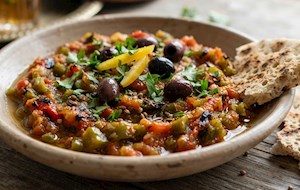
Hmiss is an Algerian cooked salad made mainly from grilled peppers and tomatoes, usually seasoned with olive oil and often garlic, and it is prepared throughout the country under several regional names, including ifelfel in Kabylia and chlita or felfla in parts of western Algeria. Its exact beginnings are not documented, but the dish belongs to the broader North African repertoire built around peppers, tomatoes, olive oil, and bread, ingredients that became deeply established in Algerian cooking after peppers and tomatoes arrived from the Americas. Over time, hmiss developed into a highly recognizable Algerian preparation with regional variations rather than one fixed formula. In eastern Algeria, a common version combines grilled peppers with tomatoes, garlic, and olive oil; the vegetables are peeled, chopped or crushed, then cooked together until much of their excess liquid evaporates and the mixture becomes soft and concentrated. Some cooks grill both the peppers and tomatoes before combining them, while others cook the tomatoes separately before adding the charred peppers. Hot green peppers may be included for heat, and seasonings such as cumin or caraway appear in some regional versions, although neither is universal. In Kabylia, beaten eggs can occasionally be added toward the end of cooking, while versions associated with Tlemcen may include egg, coriander, and caraway. The texture can range from roughly chopped to almost mashed, but hmiss is generally kept more substantial than a smooth purée. Charring the peppers is central to its character: the skins are blackened and removed, leaving the flesh tender and lightly smoky, while the tomatoes provide acidity and moisture and the olive oil binds the mixture. Despite often being described as a salad, hmiss is cooked rather than simply dressed, which distinguishes it from many fresh vegetable salads and also separates it from Tunisian slata mechouia, a related grilled-vegetable preparation with its own typical garnishes and seasoning. Hmiss can be served warm, at room temperature, or cold, usually as a starter, side dish, or part of a spread of small dishes, and it is commonly eaten by scooping it up with Algerian breads such as kesra, aghroum, matlouh, or homemade khobz. It can also accompany grilled meats, roast chicken, fish, eggs, or sandwiches, and richer versions work particularly well beside simple grilled foods because the peppers, tomatoes, and olive oil provide both sweetness and acidity. In Algeria it is especially common when peppers and tomatoes are abundant, and its direct combination of charred vegetables, garlic, and olive oil makes it one of the clearest examples of the country's everyday cooked salads. As a beverage pairing, it suits mint tea, lightly chilled lager, or a dry, fresh white wine, while spicier versions are best served with drinks that do not add extra heat.
Shuàn yángròu
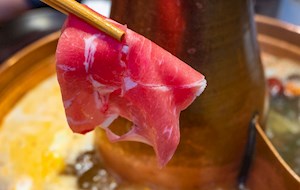
Shuanrou is a lamb hot pot dish particularly associated with Beijing and northern China, that consists of thinly sliced lamb or mutton briefly cooked in simmering water or lightly seasoned broth at the table, then dipped into a rich sesame-based sauce. The dish is known for its tender meat, delicate broth, and savory, nutty dipping sauce, which commonly combines sesame paste, fermented tofu, pickled chive flowers, soy sauce, and other condiments. Unlike the heavily seasoned broths used in Sichuan hot pot, Beijing-style shuanrou relies on a relatively mild cooking liquid that preserves the natural flavor of the lamb. The dish developed from the meat-cooking practices of northern China, where sheep farming and lamb consumption have long been associated with Mongolian and other pastoral communities. Its exact beginnings remain uncertain, although hot pot dishes became increasingly established in Beijing during the Qing dynasty. Popular accounts attribute its invention to Mongol soldiers or Kublai Khan, but these stories lack reliable historical evidence. By the nineteenth century, shuanrou had become a recognizable restaurant specialty in Beijing. Zhengyanglou, a restaurant established near Qianmen in 1854, gained recognition for its exceptionally thin slices of lamb, prepared by skilled knife workers. Another important establishment, Dong Lai Shun, was founded by Ding Deshan in 1903 and began specializing in lamb dishes during the early twentieth century. The restaurant recruited an experienced meat cutter from Zhengyanglou and became particularly associated with carefully selected lamb, precise slicing techniques, and elaborate dipping sauces. In 2008, Dong Lai Shun's lamb hot pot preparation techniques were included on China's national intangible cultural heritage list. The defining cooking vessel is a round copper pot with a central chimney, originally heated with charcoal and designed to keep the surrounding liquid simmering throughout the meal. Modern restaurants also use electric or gas-heated pots, although the copper chimney pot remains closely associated with Beijing-style shuanrou. Preparation begins with selecting tender cuts of lamb, commonly from the shoulder, leg, or other suitable parts of the animal. The meat is trimmed and sliced extremely thinly, sometimes after partial freezing to make cutting easier. In specialized restaurants, experienced workers cut the lamb by hand into broad, nearly translucent slices that cook within seconds. The cooking liquid is usually water or a light stock flavored with ingredients such as ginger, scallions, and occasionally dried mushrooms or dried shrimp. The dipping sauce is prepared separately by combining sesame paste with fermented red tofu, pickled chive flowers, soy sauce, and sometimes shrimp sauce, sesame oil, chili oil, cilantro, and chopped scallions. The fermented ingredients contribute saltiness and savory depth, while the sesame paste provides a thick, creamy texture. At the table, guests place individual slices of raw lamb into the simmering liquid, briefly swishing them until fully cooked before transferring them into their own bowls of sauce. The Chinese verb shuàn refers to this rapid cooking movement, while yángròu means sheep meat. Additional ingredients such as napa cabbage, tofu, mushrooms, glass noodles, and leafy vegetables may be cooked in the same pot, particularly toward the end of the meal. As the ingredients cook, the liquid gradually develops a richer flavor from the meat and vegetables. Shuanrou is generally served as a communal meal, with diners cooking their own portions and adjusting the dipping sauce according to personal preference. It is particularly popular during colder months in Beijing, where restaurants specializing in copper-pot lamb hot pot remain an important part of local dining culture. Characteristic accompaniments include sesame flatbreads known as shaobing, sweet pickled garlic, and fresh vegetables. The mild broth and rich sesame sauce complement the distinctive flavor of lamb without overwhelming it, while pickled garlic provides a sharp contrast to the meat's richness. Shuanrou is commonly enjoyed with Chinese beer, baijiu, or hot tea, and the meal often concludes with noodles or vegetables cooked in the remaining broth.

Single pot still whiskey

Irish single pot still whiskey is a distinctive type of whiskey produced from a mixture of malted and unmalted barley, distilled in copper pot stills at a single distillery, and matured in wooden casks for at least three years. It is one of Ireland's most characteristic whiskey styles, recognized for its rich, creamy texture, pronounced spice, and flavors of orchard fruit, toasted cereals, vanilla, and oak. The use of unmalted barley distinguishes it from single malt whiskey, contributing a fuller mouthfeel and characteristic peppery notes. The style developed during the eighteenth century, when Irish distillers increasingly combined malted and unmalted grains in their whiskey production. A tax on malt introduced by the British government in 1785 encouraged the use of unmalted barley, which was less expensive and helped reduce production costs. Over time, this combination became associated with a recognizable Irish whiskey style, particularly in Dublin and Cork, where large distilleries expanded during the nineteenth century. Producers such as John Jameson, John Power, and the Cork distilling firms helped establish Irish pot still whiskey in domestic and export markets. By the late nineteenth century, it had become one of Ireland's principal whiskey styles, valued for its substantial body and complex flavor. However, declining exports, political and economic difficulties, Prohibition in the United States, and increasing competition from lighter blended Scotch whisky contributed to the contraction of the Irish whiskey industry during the twentieth century. Many distilleries closed, and production of single pot still whiskey became concentrated at Midleton Distillery in County Cork. The style survived through brands such as Redbreast, Green Spot, and Powers before experiencing renewed interest during the late twentieth and early twenty-first centuries. New producers, including Teeling, Dingle, and Boann, subsequently introduced their own expressions, expanding the category beyond its remaining established producers. Under the Irish Whiskey technical specifications, pot still whiskey must contain at least 30 percent malted barley and 30 percent unmalted barley, with up to 5 percent of other cereals permitted. The grains are milled and mixed with hot water to extract fermentable sugars, after which yeast is added to begin fermentation. The resulting liquid, known as wash, is distilled in copper pot stills, usually three times, although double distillation is also permitted. Distillation separates and concentrates the alcohol while retaining compounds responsible for the whiskey's distinctive flavor and texture. The spirit is then transferred into wooden casks, commonly former bourbon or sherry barrels, where it must mature for at least three years on the island of Ireland. During aging, the whiskey develops additional aromas of dried fruit, nuts, vanilla, caramel, and spices, while the influence of wood gradually softens its character. Producers may combine whiskey from different casks and maturation periods, provided all the spirit comes from the same distillery. The finished whiskey must contain at least 40 percent alcohol by volume. Unlike single malt, which uses only malted barley, or blended Irish whiskey, which combines different whiskey categories, single pot still retains the characteristic influence of unmalted barley throughout production. The category includes expressions such as Redbreast 12 Year Old, Green Spot, Powers John's Lane, and Teeling Single Pot Still, which vary in their grain composition, distillation methods, and cask maturation. Younger examples often emphasize fresh apple, pear, cereal, and pepper, while longer-aged whiskeys can develop richer notes of dried fruit, chocolate, toasted nuts, and oak. Irish single pot still whiskey is generally served neat at room temperature in a tasting glass, sometimes with a small amount of water to soften the alcohol and release additional aromas. It can also be enjoyed over ice or used in whiskey cocktails such as the Old Fashioned and Whiskey Sour. The whiskey is commonly served in Irish pubs, whiskey bars, restaurants, and homes, either on its own or after a meal. Its combination of fruit, spice, and creamy texture pairs particularly well with roast pork, smoked meats, aged cheddar, roasted nuts, and mushroom dishes. Richer expressions also complement apple desserts, dark chocolate, caramel, and coffee, while lighter examples can accompany grilled poultry and mildly spiced food.

Jamaican pot-still rum

Jamaican pot-still rum is a full-bodied, highly aromatic spirit produced in Jamaica from fermented sugarcane products, primarily molasses, and distilled in copper pot stills. It is known for intense aromas of overripe banana, pineapple, mango, and citrus, accompanied by notes of molasses, spices, and fermented fruit. These characteristics are especially pronounced in high-ester expressions, although the style also includes lighter, more restrained rums. Rum production developed in Jamaica during the seventeenth century, following the expansion of sugarcane cultivation under British colonial rule after 1655. Sugar plantations, which relied heavily on enslaved African labor, produced molasses that could be fermented and distilled into alcohol. By the eighteenth century, Jamaican rum had become an important export to Britain, North America, and other Caribbean colonies. Pot-still distillation remained central to the industry even after the introduction of continuous column stills during the nineteenth century. Distilleries such as Worthy Park, where rum production was documented in 1741, and Hampden became associated with intensely flavored spirits that were also valued for blending in European markets. Production begins with molasses diluted with water and fermented using yeast, sometimes alongside naturally occurring bacteria. Fermentation can extend over several days or longer, allowing organic acids and other aromatic compounds to develop. Some producers incorporate dunder, the liquid remaining after distillation, or fermented materials known as muck to encourage the formation of esters responsible for the rum's characteristic fruity aromas. The fermented wash is distilled in copper pot stills, often equipped with two retorts that help concentrate alcohol and flavor compounds. Compared with column distillation, this method generally retains more congeners, contributing to the rum's body and aromatic intensity. Distilleries produce different rum marques, distinguished partly by their ester concentrations. The resulting spirit may be bottled unaged or matured in oak barrels, commonly previously used for bourbon. Aging introduces flavors of vanilla, caramel, toasted oak, dried fruit, and spices, while Jamaica's warm climate influences the interaction between rum and wood. Important producers include Hampden Estate, Worthy Park, and Long Pond, each associated with different fermentation methods and flavor profiles. The Jamaica Rum geographical indication, registered in 2016, protects the geographical identity of the spirit, while pot-still production represents a distillation method rather than a separate appellation. Jamaican pot-still rum is commonly enjoyed neat, with water, or over ice, particularly in aged expressions. Unaged and high-proof versions are frequently used in Daiquiris, Mai Tais, Jamaican rum punch, and cocktails containing lime, pineapple, or ginger. Its concentrated fruit and spice flavors pair well with jerk chicken, grilled pork, barbecued meats, and dishes seasoned with Scotch bonnet peppers. It also complements pineapple, banana, coconut desserts, rum cake, roasted nuts, and dark chocolate, while mature expressions can be enjoyed after a meal with coffee or caramel-based desserts.

Japanizu shinguru moruto uisuki
Japanese single malt is a whisky produced in Japan from 100 percent malted barley, distilled at a single distillery, and matured in wooden casks. It is one of the country's most highly regarded whisky categories, with styles ranging from delicate and floral to rich, fruity, spicy, and smoky. Its flavors depend on the barley, fermentation, distillation equipment, climate, and maturation casks, with common notes including apple, pear, citrus, honey, vanilla, malt, toasted oak, and dried fruit. Japanese malt whisky production developed during the early twentieth century, drawing heavily on Scottish distilling techniques. Masataka Taketsuru studied whisky production in Scotland between 1918 and 1920 before returning to Japan with detailed knowledge of malt distillation and maturation. In 1923, entrepreneur Shinjiro Torii began constructing the Yamazaki Distillery near Kyoto, with Taketsuru overseeing its early production. The distillery began operating in 1924 and became the foundation of Japan's modern whisky industry. Taketsuru later established the Yoichi Distillery in Hokkaido in 1934, where the cooler climate and access to suitable water supported his approach to whisky production. For much of the twentieth century, blended whisky dominated the Japanese market, and malt whisky was primarily produced as a component of these blends. This began to change in 1984, when Suntory introduced Yamazaki Single Malt, followed by Hakushu Single Malt in 1994. These releases helped establish single malt as a distinct category in Japan, while producers such as Nikka subsequently expanded the market with whiskies from Yoichi and Miyagikyo. During the early twenty-first century, international awards and growing demand brought greater recognition to Japanese single malts, encouraging the development of smaller distilleries, including Chichibu, established in 2008. Production begins with malted barley, which is milled and mixed with hot water to extract fermentable sugars. The resulting liquid, called wort, is fermented with yeast to produce a low-alcohol wash, which is generally distilled twice in copper pot stills. Japanese distilleries often use several still shapes, yeast strains, and fermentation techniques to create different styles of malt whisky at a single location. Some use peated barley to produce smoky spirits, while others emphasize lighter fruit and floral aromas. The distilled spirit is transferred into wooden casks for maturation, commonly including barrels previously used for bourbon or sherry. Some producers also use Japanese mizunara oak, which can contribute distinctive aromas of sandalwood, incense, and aromatic spices, particularly after extended aging. Japan's varied climate, from the cool conditions of Hokkaido to the warmer regions of central and southern Japan, influences the interaction between whisky and wood. Distillers may combine whiskies matured in different casks and for different periods, provided they originate from the same distillery. Single malt therefore does not necessarily mean single barrel or single vintage. Under the Japanese whisky labeling standards introduced by the Japan Spirits & Liqueurs Makers Association in 2021, qualifying whisky must be fermented, distilled, and matured in Japan for at least three years in wooden casks holding no more than 700 liters. It must also be bottled in Japan at a minimum strength of 40 percent alcohol by volume. The standards became fully applicable to association members in April 2024, helping distinguish domestically produced whisky from products containing imported spirits. Well-known Japanese single malts include Yamazaki, Hakushu, Yoichi, Miyagikyo, and Chichibu, each associated with different production methods and flavor profiles. Yamazaki is particularly known for fruit, spice, and oak complexity, Hakushu for fresh herbal and lightly smoky characteristics, Yoichi for robust malt and peat smoke, and Miyagikyo for softer fruit and floral notes. Japanese single malt is commonly served neat in a whisky tasting glass, sometimes with a small amount of water to release additional aromas. It is also enjoyed over ice, diluted with chilled water in the mizuwari style, or mixed with soda water as a highball, although more expensive aged expressions are generally consumed without mixers. In Japan, whisky is served in bars, restaurants, and homes, either as an aperitif, alongside meals, or after dinner. Lighter single malts pair well with sashimi, grilled fish, steamed seafood, and lightly seasoned poultry, while richer expressions complement yakitori, grilled beef, mushrooms, and aged cheeses. Smoky and heavily matured examples also suit roasted meats, dark chocolate, and desserts containing nuts or caramel.
Honkaku shochu
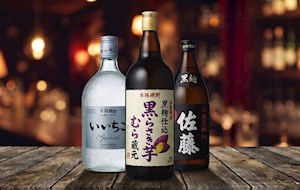
Honkaku shochu is a Japanese distilled spirit made from ingredients such as sweet potatoes, barley, rice, buckwheat, and brown sugar, using koji fermentation and single distillation in pot stills. Produced primarily in Kyushu, southern Japan, it retains the characteristic flavors and aromas of its base ingredients. Sweet potato shochu is generally earthy and aromatic, barley shochu displays toasted grain and nutty notes, while rice shochu tends to be softer and more delicate. Honkaku means authentic or genuine, distinguishing this category from kōrui shochu, a more neutral spirit produced through continuous distillation. Shochu production developed in southern Japan during the sixteenth century, influenced by distillation techniques introduced through trade with other parts of Asia. A 1546 account by Portuguese merchant Jorge Álvares describes a distilled rice drink consumed in southern Kyushu, while the word shochu appears in a Japanese inscription dating to 1559 at Kōriyama Hachiman Shrine in Kagoshima Prefecture. Production expanded during the Edo period, with rice shochu becoming associated with Kumamoto, barley shochu with Iki Island, and sweet potato shochu with Kagoshima. Improvements in fermentation techniques during the twentieth century helped standardize production, while reduced-pressure distillation, introduced in the 1970s, made lighter styles possible. Production begins by steaming rice or barley and inoculating it with koji mold, which produces enzymes that convert starch into fermentable sugars. The koji is mixed with water and yeast for an initial fermentation, followed by the addition of the principal ingredient for a second fermentation. The resulting mash undergoes a single distillation in a pot still, either at atmospheric pressure for richer flavors or under reduced pressure for a lighter character. After distillation, the spirit may be rested in stainless steel tanks, earthenware vessels, or wooden barrels, although prolonged aging is not required. Honkaku shochu may contain up to 45 percent alcohol by volume, with most commercial expressions bottled at approximately 20–30 percent. Recognized regional specialties include Satsuma shochu from Kagoshima, Iki shochu from Nagasaki, Kuma shochu from Kumamoto, and brown sugar shochu from the Amami Islands. Awamori, produced in Okinawa using rice and black koji, belongs to the broader single-distilled shochu category but maintains its own regional identity. Honkaku shochu is commonly served neat, over ice, diluted with cold water as mizuwari, or mixed with hot water as oyuwari, which helps release the aromas of richer varieties. Widely consumed with meals in Japanese izakayas, restaurants, and homes, it pairs well with grilled pork, yakitori, simmered meats, sashimi, grilled fish, tempura, tofu, mushrooms, and Japanese pickles. Richer sweet potato versions generally complement strongly seasoned dishes, while lighter barley and rice expressions are particularly suitable for seafood and vegetables.

Taiwanese single malt whisky
Taiwanese single malt whisky is a type of whisky produced exclusively from malted barley and distilled at a single distillery. Known for its rich texture, concentrated fruit aromas, and pronounced oak influence, it commonly displays flavors of mango, pineapple, citrus, honey, vanilla, caramel, dried fruit, and spices. Taiwan's subtropical climate encourages rapid interaction between whisky and wooden casks during maturation, contributing to its distinctive character. The country's modern whisky industry developed after Taiwan joined the World Trade Organization in 2002, opening opportunities for private spirits production. In 2005, the King Car Group established Kavalan Distillery in Yilan County, northeastern Taiwan. The distillery produced its first spirit on March 11, 2006, and released Kavalan Classic Single Malt in 2008, becoming the country's first major producer of domestically distilled single malt whisky. Whisky specialist Jim Swan helped develop its production techniques, particularly the selection of maturation casks suited to Taiwan's warm, humid conditions. Another important producer, Nantou Distillery, operated by Taiwan Tobacco & Liquor Corporation, began whisky production in 2008 and introduced single malt releases in 2013, followed by the OMAR core range in 2015. Taiwanese whisky gained international recognition when Kavalan Solist Vinho Barrique was named World's Best Single Malt Whisky at the World Whiskies Awards in 2015. Production begins with malted barley, which is milled and mixed with hot water to extract fermentable sugars. The resulting wort is fermented with yeast before undergoing two distillations in copper pot stills. The clear spirit is then transferred into wooden casks, commonly previously used for bourbon, sherry, port, or wine. Some producers also experiment with specially treated wine barrels and other cask types to develop different flavors. Taiwan's high temperatures and humidity accelerate the extraction of compounds from oak and increase evaporation losses during aging. Consequently, relatively young Taiwanese single malts can develop substantial color, body, and cask-derived flavors, although excessive maturation can produce an overly woody character. Producers manage barrel selection, warehouse conditions, and maturation periods to maintain balance. The finished whisky may combine several casks from the same distillery or be bottled as a single-cask expression, sometimes at natural cask strength. Kavalan is particularly associated with tropical fruit, rich oak, and wine-cask maturation, while OMAR produces fruit-forward whiskies matured in bourbon and sherry casks, alongside limited expressions. Taiwanese single malt is generally served neat in a whisky tasting glass, sometimes with a little water to release additional aromas. It can also be enjoyed over ice or mixed with soda water as a highball. In Taiwan, the whisky is served in bars, restaurants, tasting rooms, and homes, either alongside meals or after dinner. Its concentrated fruit and spice flavors pair well with roasted duck, grilled pork, beef, mushrooms, and dishes containing soy sauce or aromatic spices. Richer, sherry-matured expressions complement dark chocolate, dried fruit, roasted nuts, and caramel desserts, while lighter, bourbon-cask whiskies suit grilled seafood, poultry, and mildly seasoned dishes.

Kentucky straight bourbon

Kentucky straight bourbon is an American whiskey produced in Kentucky from a grain mixture containing at least 51 percent corn and aged for a minimum of two years in new, charred oak barrels. Known for its amber color, rich texture, and characteristic flavors of caramel, vanilla, toasted oak, and spices, it is one of the most recognizable whiskey styles in the United States. Its flavor varies according to the grain mixture, distillation process, barrel characteristics, and length of maturation, with some examples displaying notes of honey, dried fruit, nuts, cinnamon, and tobacco. Whiskey distilling developed in Kentucky during the late eighteenth century, when settlers from Pennsylvania, Virginia, and other regions brought distillation techniques to an area where corn was widely cultivated. Farmers converted surplus grain into whiskey, which was easier to preserve and transport than the original crop. During the nineteenth century, Kentucky whiskey became an increasingly important commercial product, shipped along the Ohio and Mississippi rivers to markets including New Orleans. The exact development of the name bourbon remains disputed, although it is closely associated with Bourbon County, named after the French royal family in recognition of French assistance during the American Revolutionary War. By the 1840s, bourbon whiskey had become an established commercial designation. Improvements in distillation, barrel maturation, and bottling helped establish Kentucky's reputation for whiskey production. In 1870, George Garvin Brown introduced Old Forester, one of the earliest bourbons sold exclusively in sealed glass bottles, while the Bottled-in-Bond Act of 1897 established additional standards intended to protect whiskey quality and authenticity. Prohibition interrupted much of Kentucky's distilling industry between 1920 and 1933, although some distilleries continued limited production for medicinal purposes. Following the industry's recovery, the United States Congress recognized bourbon whiskey as a distinctive product of the United States in 1964. Today, bourbon can legally be produced anywhere in the country, but the Kentucky designation requires the whiskey to be distilled and aged in the state, with Kentucky law specifying at least one year of local maturation. To qualify as straight bourbon, it must also meet federal requirements governing ingredients, production, and aging. The grain mixture, known as the mash bill, must contain at least 51 percent corn, with the remainder commonly consisting of rye, wheat, and malted barley. Rye generally contributes peppery and spicy characteristics, while wheat often produces a softer, rounder flavor. Production begins with milling and cooking the grains in water to release fermentable sugars. Many distilleries use the sour mash method, incorporating a portion of liquid remaining from a previous distillation into the next batch to help control acidity and maintain consistent fermentation conditions. Yeast converts the sugars into alcohol, producing a fermented mash that is distilled, usually through a column still followed by a secondary distillation. Federal regulations limit the distillation strength to 80 percent alcohol by volume and the barrel-entry strength to 62.5 percent. The spirit is placed in new, charred oak barrels, where it develops its color and much of its characteristic flavor. Kentucky's seasonal temperature changes influence the interaction between whiskey and wood, encouraging the extraction of compounds responsible for vanilla, caramel, toasted oak, and spice aromas. Straight bourbon must mature for at least two years, and bottles containing whiskey aged less than four years must carry an age statement. No coloring, flavoring, or other spirits may be added, and the finished whiskey must contain at least 40 percent alcohol by volume. Many premium expressions mature for considerably longer, although extended aging can also produce stronger oak and tannic characteristics. Kentucky straight bourbon includes high-rye and wheated expressions, as well as single-barrel, small-batch, and bottled-in-bond releases. Well-known producers include Jim Beam, Wild Turkey, Maker's Mark, Buffalo Trace, Woodford Reserve, and Four Roses. The whiskey is commonly served neat, with ice, or with a small amount of water, which can soften its alcoholic intensity and reveal additional aromas. It is also a principal ingredient in cocktails such as the Old Fashioned, Mint Julep, Manhattan, and Whiskey Sour. In Kentucky, bourbon is closely associated with the Mint Julep served during the Kentucky Derby, as well as distillery tastings and local food culture. Its caramel, oak, and spice flavors pair particularly well with barbecue, smoked brisket, grilled steak, roasted pork, pecans, aged cheddar, and dark chocolate. It also complements desserts containing caramel, vanilla, apples, or toasted nuts and is frequently enjoyed on its own as an after-dinner drink.

Napa Valley Cabernet Sauvignon
Napa Valley Cabernet Sauvignon is a premium American dry red wine made primarily from Cabernet Sauvignon grapes grown in Napa Valley, one of the most celebrated wine-producing regions in the United States. It is known for its full body, concentrated dark-fruit flavors, firm tannins, and aging potential, with aromas of blackcurrant, blackberry, black cherry, plum, cedar, tobacco, and spices. Oak maturation can contribute vanilla, chocolate, and toasted notes, while older wines develop earthy and savory characteristics. Napa Valley is particularly associated with ripe, richly textured Cabernet Sauvignon wines that combine fruit concentration with structure and acidity. The grape is sometimes blended with Merlot, Cabernet Franc, Petit Verdot, or Malbec to adjust the wine's balance. Napa Valley is an officially recognized American Viticultural Area (AVA), while Napa Valley Cabernet Sauvignon is a regional varietal wine rather than a separate appellation. Cabernet Sauvignon became established in Napa Valley during the nineteenth century, with important early plantings at To Kalon Vineyard in Oakville, developed by Hamilton Walker Crabb, and at Inglenook, where Gustave Niebaum cultivated the variety by 1883. The region's wine industry subsequently suffered setbacks from phylloxera, Prohibition, and economic difficulties. Following the repeal of Prohibition in 1933, producers such as Beaulieu Vineyard, Inglenook, Louis M. Martini, and Charles Krug helped rebuild Napa's wine industry. At Beaulieu Vineyard, winemaker André Tchelistcheff introduced improvements in fermentation, cellar hygiene, and barrel maturation that contributed to the development of modern Napa Cabernet Sauvignon. During the 1960s and 1970s, producers increasingly recognized the valley's suitability for Cabernet Sauvignon, expanding plantings and focusing on individual vineyards. A defining event occurred in 1976, when the 1973 Stag's Leap Wine Cellars Cabernet Sauvignon won the red-wine category at the Judgment of Paris, a blind tasting comparing California wines with leading French examples. The result brought international attention to Napa Valley, which became California's first officially recognized AVA in 1981. Cabernet Sauvignon subsequently became the region's dominant grape variety, supported by the growth of internationally recognized wineries. Napa Valley has a Mediterranean climate with warm, dry summers and cooler, wetter winters. Marine air and fog entering from San Pablo Bay moderate temperatures, particularly in the southern valley, while the Mayacamas and Vaca mountain ranges create differences in elevation, sunlight, drainage, and soils. Cabernet Sauvignon performs particularly well in the central and northern valley and on well-drained hillsides, where grapes can develop substantial ripeness while retaining structure. Important growing areas include Oakville, Rutherford, Stags Leap District, St. Helena, Calistoga, Howell Mountain, and Spring Mountain District. Oakville is often associated with concentrated dark fruit and polished tannins, while Rutherford wines may display earthy or tobacco-like notes. Stags Leap District is known for ripe fruit and fine tannins, whereas mountain vineyards frequently produce concentrated wines with firmer structure. These are general tendencies, since individual vineyards, producers, and vintages strongly influence the finished wines. Production begins with grapes harvested when they reach the desired balance of sugar, acidity, tannin maturity, and flavor, generally during late summer or autumn. After sorting and usually destemming, the grapes undergo alcoholic fermentation in stainless steel, concrete, or wooden vessels. The juice remains in contact with the skins to extract color, tannins, and aromatic compounds, with maceration adjusted according to the intended style. Malolactic fermentation generally follows, softening acidity before the wine is transferred into barrels for maturation. French oak is particularly common, although American oak and other vessels are also used. Many premium examples mature for approximately 12–24 months, developing additional complexity as the tannins integrate. New oak contributes vanilla, cedar, toast, and spice, while older barrels provide a more restrained influence. The finished wine is generally deep ruby to purple when young, becoming garnet with age. Its tannins, fruit concentration, and acidity allow well-made examples to mature for ten to twenty years or longer, although aging potential varies by producer and vintage. American labeling regulations require wines labeled Napa Valley to contain at least 85 percent grapes from the designated AVA, while those labeled Cabernet Sauvignon must generally contain at least 75 percent of that variety. These requirements allow blending while preserving the wine's geographical and varietal identity. Napa Valley Cabernet Sauvignon is generally served at 16–18°C (61–64°F), often in large Bordeaux-style glasses. Young, tannic examples may benefit from decanting, while older bottles require careful handling because of sediment. The wine is served in restaurants, wineries, tasting rooms, and private homes throughout California and internationally. Its ripe fruit, acidity, and tannins pair particularly well with grilled steak, roast beef, lamb, venison, braised short ribs, and other richly flavored meats. It also complements mushrooms, roasted vegetables, aged cheddar, Gouda, and other firm cheeses. Napa Cabernet Sauvignon is especially suitable for grilled and roasted meat preparations, including American barbecue, while mature examples can accompany simpler roast meats and mushroom dishes that allow their developed aromas to remain prominent. Its established growing region, diverse vineyard conditions, and combination of concentrated fruit, structure, and aging potential have made Napa Valley Cabernet Sauvignon one of the defining wines of American viticulture.

Constantia

The Constantia wine appellation is an officially designated Wine of Origin ward situated on the eastern slopes of the Constantiaberg mountain range within the Cape Peninsula of South Africa. The geographical footprint of this wine production area was established in 1685 when Simon van der Stel, the Dutch colonial governor of the Cape Colony, granted himself land along the mountain slopes due to the favorable microclimatic wind and temperature conditions, establishing the vineyard boundaries that would subsequently produce the sweet wines exported extensively to European monarchies and historical figures, including Napoleon Bonaparte during his nineteenth-century confinement on Saint Helena, throughout the following two hundred years. Preparation involves the close monitoring of distinct grape varieties, including Sauvignon Blanc and Cabernet Sauvignon for dry expressions, alongside Muscat de Frontignan for sweet expressions, which undergo manual harvesting, followed by careful cluster sorting, destemming, and skin contact optimization, with the dry white varieties fermented under temperature-controlled conditions in stainless steel and the famous non-botrytized sweet variants subjected to prolonged raisining on the vine followed by several years of structural maturation inside French oak barrels. Constantia wine is served poured into targeted stemmed wine glasses, with the dry Sauvignon Blanc variations chilled to eight to ten degrees Celsius to enhance herbal and flinty qualities, and the dense, gold-colored unfortified sweet variations presented at ten to twelve degrees Celsius in smaller dessert vessels to display the viscous texture. It is consumed within upscale hospitality venues, private collector cellars, and estate tasting rooms across South Africa and international luxury markets, standing as the continent's primary historic luxury wine style. For food and beverage pairings, the crisp acidity and prominent minerality of the dry whites complement delicate fats and marine salinity, meaning it is consumed alongside fresh Atlantic oysters, pan-seared scallops, line fish, and local goat cheese salads, whereas the unfortified sweet Muscat expressions pair with rich duck liver pâté, roquefort or gorgonzola blue cheeses, salted nut tarts, and citrus-infused desserts.

Eiswein

Eiswein is a highly concentrated sweet dessert wine produced primarily in Germany and Austria from grapes that freeze naturally on the vine and are harvested and pressed while still frozen. Known internationally as ice wine, it is valued for its intense sweetness, pronounced acidity, concentrated fruit flavors, and considerable aging potential. Unlike sweet wines made from grapes affected by noble rot or dried after harvesting, Eiswein develops its concentration through freezing, which separates much of the water from the sugary juice during pressing. The finished wine is generally golden yellow to amber, with aromas of apricot, peach, honey, citrus, ripe apple, and tropical fruit, sometimes developing notes of caramel and nuts with age. Riesling is particularly important in German production because its naturally high acidity balances the sweetness, while Austrian producers also use Grüner Veltliner, Welschriesling, and other varieties. Important production areas include the Mosel, Rheingau, Rheinhessen, Nahe, and Pfalz in Germany, along with Burgenland and Lower Austria. Eiswein is a legally defined Prädikatswein category in both countries, distinguished by its harvesting method and minimum grape ripeness rather than a single geographical appellation. The practice of making wine from frozen grapes has ancient precedents, but modern Eiswein is particularly connected with nineteenth-century Germany. One of the earliest documented examples dates to February 11, 1830, when winegrowers in Dromersheim, near Bingen in Rheinhessen, pressed grapes left on the vines through an exceptionally cold winter. The grapes had initially been intended for animal feed, but pressing produced a concentrated juice that could be fermented into sweet wine. Accounts of earlier production in Franconia in 1794 also exist. Eiswein remained uncommon during the nineteenth and early twentieth centuries because freezing conditions were unpredictable and harvesting frozen grapes required considerable labor. More systematic production developed during the second half of the twentieth century as vineyard management, pressing equipment, and fermentation techniques improved. Germany formally established Eiswein as an independent Prädikat category in 1982, while commercial production expanded in Austria during the 1970s, particularly around Lake Neusiedl and in Lower Austria. Production begins during the growing season, when grapes ripen but are deliberately left on the vines after the main harvest. Growers must protect them from birds, rot, and unfavorable weather while waiting for temperatures low enough to freeze the water inside the berries. In Germany, the grapes must freeze naturally at temperatures of −7°C (19°F) or colder, while Austria requires a minimum must weight of 25 degrees Klosterneuburger Mostwaage (KMW). German minimum ripeness requirements vary by region and grape variety, generally between 110 and 128 degrees Oechsle. These measurements describe the concentration of dissolved substances in the juice before fermentation. Harvesting commonly takes place during December or January, sometimes extending into February, when sufficiently cold weather arrives. The grapes are picked while frozen, frequently at night or before dawn, and transported quickly to the winery for pressing. Much of their water remains trapped as ice crystals, allowing only a small quantity of concentrated juice to be extracted. This results in extremely low yields, sometimes only a fraction of those obtained from unfrozen grapes. Authentic German and Austrian Eiswein must rely on natural freezing rather than artificially freezing harvested fruit. The juice contains exceptionally high concentrations of sugar and acids, making fermentation difficult because concentrated sugar inhibits yeast activity. Fermentation is therefore slow and carefully controlled, often leaving substantial residual sugar and relatively modest alcohol, commonly around 6–10 percent by volume. Stainless steel tanks and other neutral vessels are frequently used to preserve fruit aromas and freshness, although some producers use wooden barrels. The finished wine combines intense sweetness with strong acidity, preventing it from becoming excessively heavy. Riesling Eiswein often emphasizes citrus, green apple, peach, apricot, and honey, while other varieties may produce more floral or tropical-fruit characteristics. Unlike Trockenbeerenauslese, which relies on severely shriveled grapes predominantly affected by noble rot, Eiswein is defined by natural freezing and is generally made from healthy, ripe fruit, although some berries may also be affected by Botrytis. With bottle aging, Eiswein can develop deeper amber tones and more pronounced aromas of dried apricot, marmalade, caramel, honey, and nuts. Well-made examples can mature for decades, depending on the variety, vintage, producer, and storage conditions. Production remains risky because growers may wait for frost that never arrives while the grapes remain exposed to disease, wildlife, and deterioration. Warmer winters have made reliable production increasingly difficult in some European regions, while extremely low yields and labor-intensive harvesting contribute to the wine's high price. Eiswein is commonly sold in smaller bottles, particularly 375 ml formats, and served chilled at approximately 8–12°C (46–54°F) in dessert wine or small white wine glasses. It is often enjoyed on its own after a meal, although its sweetness and acidity also suit rich savory foods. Foie gras, duck liver pâté, blue cheeses such as Roquefort and Gorgonzola, and rich terrines provide a contrast to its sweetness, while apple tarts, apricot pastries, poached pears, and peach desserts complement its fruit character. It also pairs with lightly sweetened cheesecakes, cream-based desserts, almonds, and walnuts, particularly when the food is not sweeter than the wine. In Germany and Austria, Eiswein is served at wineries, wine tastings, fine-dining restaurants, festive meals, and special occasions, generally in modest pours because of its concentration.
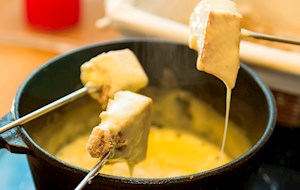
Fondue

Fondue is Switzerland's national dish, a melting pot of different flavors and aromas, similar to the country itself–a melting pot of people and different cultures. Its name comes from the French word fondre, meaning to melt, and it was first described in Homer's Iliad as a mixture of goat cheese, flour, and wine. Fondue's key ingredient is cheese that is melted over a fire, with a lot of regional varieties and flavorful additions such as cherry brandy, white wine, or a sprinkle of nutmeg. It was invented out of necessity, when the alpine locals and traveling herders relied only on cheese, wine, and bread to get them through the winter. As the summer cheese dried out and bread became stale during the winter months, the people started to melt cheese with wine and dip pieces of stale bread into it. Traditionally, fondue is prepared in a flameproof casserole called a caquelon. The dish varies from region to region: fondue Neuchatel uses Gruyére and Emmental, fondue Vandois adds a lot of garlic, while fondue Fribourg is prepared with ripe Vacherin cheese. Pieces of bread are placed on traditional, long-handled fondue forks used for swirling the bread in cheese. According to local customs, if one loses a piece of bread in the pot, he or she has to buy a round of drinks for everyone involved in this unique and cheesy communal affair.

Thanksgiving Dinner
For most Americans, the Thanksgiving dinner usually includes seasonal dishes such as stuffed roasted turkey and side dishes such as mashed potatoes, a rich cranberry sauce, and pumpkin pie, among others. This celebratory meal dates back to November 1621, when the Pilgrims and the Native Wampanoag Indians got together at Plymouth for an autumn harvest celebration, now considered America's first Thanksgiving. The first feast contained turkey (debatable), venison, fish, clams, berries, lobster, pumpkin, waterfowl, and squash, and many of the foods remained a staple of modern Thanksgiving dinners. Turkey is so synonymous with the holiday that the day is sometimes colloquially called Turkey Day. Today, the dinner centers on cooking and sharing a plentiful meal with close family and friends, and it is so popular that there are annual Thanksgiving parades throughout the United States, the largest and most famous of them being Macy's parade in New York City, featuring marching bands, floats, and performers, and attracting about two to three million spectators to the streets.
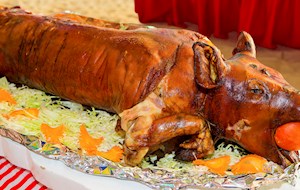
Lechon

Lechon, derived from a Spanish word for roasted suckling pig is one of the most popular dishes in the Philippines. The slowly-roasted suckling pig is usually stuffed with lemongrass, tamarind, garlic, onions, and chives, and is then roasted on a large bamboo spit over an open fire. It is traditionally served whole on a platter, at celebrations and festive events such as weddings and Christmas. Once the meat is properly roasted and falls off the bone, people tend to eat every part of the pig, and the crispy, reddish-brown, crackling skin is especially beloved. Lechon is often served with a thick and rich liver sauce that is cooked with sugar, fresh herbs, and vinegar. If anything is left after the feast, the leftovers are often made into lechon slaw, slowly cooked with vinegar, garlic, and liver sauce for that extra bit of flavor. Apart from the Philippines, the dish is especially popular in countries such as Cuba, Puerto Rico, the Dominican Republic, and Spain. Some famous chefs even named lechon the best pig in the world, so it is definitely worth a try.

Cream Pie
Luscious cream pies are one of the most famous American desserts. Uncomplicated and refreshing, they are usually made with a crunchy bottom crust and a rich, creamy filling, all topped with generous amounts of whipped cream. It is not clear when and where the first cream pie was created, but in the 19th century, they started to appear in the most notable cookbooks at the time. Originally, the crust was made with a basic flour and lard or butter mix, creating a flaky foundation for the decadent filling. Nowadays, the bottom is also commonly made with crushed or crumbled cookies and graham crackers. Primarily, the filling for cream pies was only vanilla-based; it was a custard or a pudding-like cream, thick and lush, created with egg yolks and vanilla. Although a subtle vanilla custard is still the predominant flavor, numerous other varieties, primarily chocolate, have been introduced to become new American favorites. Mocha, butterscotch, caramel, and peanut butter are only a few of the most famous varieties. However, the coconut cream pie and banana cream pie are probably the most important kinds which have become hallmark desserts in the United States. Cream pies are usually associated with traditional American diners where they are prepared and served on a daily basis as the universal American dessert.
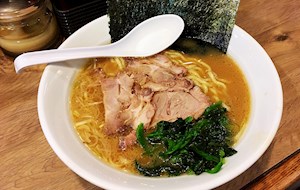
Yokohama-Style Ramen
Yokohama-style ramen or iekei ramen is a Japanese type of ramen originating from the Yokohama area and dating back to 1974. The dish consists of thick noodles and a stock that's a mix of creamy tonkotsu (pork broth) and soy sauce. The toppings include chashu pork, chopped seaweed, leeks, and spinach. There are also optional toppings and condiments such as minced garlic, sesame, preserved vegetables, and black pepper. The name of the dish means home-style ramen, and it was created by a former truck driver called Mr. Yoshimura, who'd opened his own ramen shop in 1974.
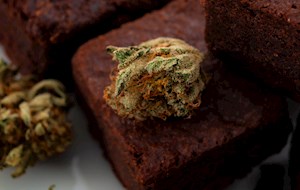
Space Cake

ALTHOUGH THERE ARE CLAIMS THAT EATING SPACE CAKES CAN LEAD TO PSYCHOSIS OR PSYCHOSIS SYMPTOMS FOR SOME PEOPLE, THERE'S STILL NOT ENOUGH CONCLUSIVE SCIENTIFIC EVIDENCE TO SUPPORT THEM. Originating from Amsterdam, space cake is a notorious delicacy that belongs to a group of cannabis-infused edibles. Variations on this specialty abound, and any baked good that contains cannabis butter may be called a space cake. This Dutch specialty is usually prepared with typical cake ingredients such as flour, sugar, baking powder, butter, milk, and eggs, which are combined with a certain quantity of cannabis. A great variety of ingredients can be added to the base to enrich the cake, including cocoa powder, chocolate drops, dried fruit, buttercream, vanilla, or various spices, and the baked cakes often come dusted with powdered sugar, glazed, soaked in rum, or stuffed with cream or custard. As with other cannabis intake methods, the consumption of cannabis in the form of space cakes also provides psychotropic effects upon its consumers due to the presence of THC (tetrahydrocannabinol) and other compounds. In the case of space cakes, the effects are usually prolonged and much stronger, and consumers typically feel high within 3 hours from the consumption. Space cakes with different shapes, flavors, and varying strengths can be savored at nearly any coffee shop in Amsterdam and they’re typically enjoyed alongside a cup of coffee, herbal tea, or beer. When it comes to the legal status of these cakes in the Netherlands, the country’s court allows the sale only of those cakes that are made with crushed weed.
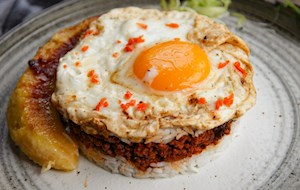
Arroz tapado

Arroz tapado is a molded rice dish with a savory beef filling enclosed between two layers of cooked white rice. Its name means “covered rice,” referring to the way the upper layer conceals the filling until the mound is opened with a fork. Ground or finely chopped beef is cooked with onion, garlic, and seasonings, often with raisins, black olives, and hard-boiled eggs. The rice and filling are prepared separately, layered in a bowl or mold, and turned out onto a plate. Depending on the vessel, the portion may form a dome or a short cylinder, with a dark band of filling visible around the middle. The molding gives the dish its structure, but the rice remains recognizably cooked rice rather than a smooth casing. It should be tender enough to hold together under gentle pressure while retaining the shape of individual grains. Briefly cooking garlic in oil is a common starting point, seasoning the rice before water is added and absorbed. This gives the pale outer layers flavor without competing with the filling. Assembly usually takes place while the rice is still warm: a layer is pressed into the bottom of the mold, the filling is spooned over it, and another layer of rice closes the portion. Light compression helps the mound hold when inverted. The assembled dish does not require baking, since both components are already cooked. The filling begins with an aderezo, a cooked seasoning base of finely chopped onion, garlic, and, in many recipes, ají panca paste. The onion softens in oil before the other ingredients are added, losing its raw bite and contributing sweetness. Ají panca gives the mixture a reddish-brown color and a mild dried-chili flavor. Tomato paste, tomato sauce, or chopped tomato may also be included, but recipes vary in how prominently tomato appears. Cumin and black pepper are frequent seasonings, while parsley can be folded in near the end. The filling needs enough moisture to remain succulent inside the rice, with little loose liquid that might soak through the lower layer. Ground beef produces a fine, crumbly filling that spreads evenly across the mold. Beef cut into small pieces gives a more distinct bite, and both methods are used. When included, raisins and olives remain noticeable in the meat: raisins add concentrated sweetness and a soft, chewy texture, while black olives add saltiness and a firmer contrast. Some cooks soak the raisins before adding them so they enter the pan already plumped. Pitted olives are cut into rings, halves, or smaller pieces. Neither ingredient is compulsory; versions without raisins, or with olives offered as an optional addition, still retain the defining layers of rice and seasoned meat. Hard-boiled egg can be incorporated in two ways. Chopped egg distributes white and yolk throughout the filling, while a halved egg placed in the center creates a larger, separate piece revealed when the mound is cut open. In either case, the egg is cooked beforehand. It adds a mild flavor and a softer texture alongside the beef, with the yolk breaking into the surrounding juices as you eat the portion. The rice and meat layers vary in thickness, but the filling stays concentrated in the middle rather than being stirred through the rice. Arroz tapado is commonly prepared for a home lunch, using a small bowl or cup to shape individual servings. Chopped parsley may be scattered over the unmolded rice. More substantial servings add a fried egg and fried plantain, an accompaniment also found in versions called lo pobre. These additions sit on top or alongside the rice rather than replacing the hard-boiled egg within the filling. The portion is served hot, and a forkful taken through the mound brings together the lightly seasoned rice, beef, and whichever pieces of egg, olive, or raisin are enclosed inside.
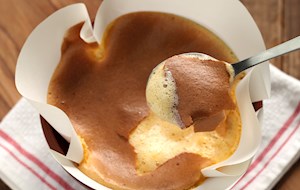
Pão de Ló de Ovar

Pão de Ló de Ovar may be the most famous Portuguese cake, dating back to the 18th century when it was made in convents by nuns. The earliest written evidence about this sponge cake dates back to 1781, in a book called Irmandade dos Passos, where it is said that pão de Ló de Ovar was a sweet offered to the priests who took the wooden framework to carry the statues in the Holy Week procession. This creamy sponge cake is traditionally made from eggs, sugar, and flour, and today, it is often seen at most food fairs in Portugal. The cake is popular throughout the country, not just in the municipality of Ovar, where it is traditionally produced.
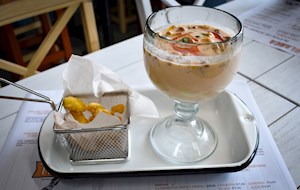
Leche de tigre
Leche de tigre is a highly acidic, intensely flavored citrus marinade primarily used to cure raw seafood, and it also serves as a refreshing standalone beverage or savory appetizer. Initially, this liquid existed simply as the leftover juice sitting at the bottom of a bowl after a meal of raw, cured fish. Over time, consuming this potent residual liquid became a widespread practice due to its reputation for delivering powerful restorative properties, specifically acting as a heavy remedy for severe hangovers and carrying rumors of being a strong aphrodisiac. This reputation directly inspired the name, translating to "tiger's milk," to symbolize the sudden surge of energy and vigor it supposedly provides. As its popularity surged, culinary establishments stopped treating it as a mere byproduct and started building it from scratch as a primary menu item. The preparation begins with aggressively blending freshly squeezed lime juice with aromatic herbs and small pieces of fresh white fish. A standard base drops sharp red onions, potent garlic cloves, fresh cilantro stems, a pinch of salt, and spicy local chili peppers—specifically the fiery aji limo—into a blender alongside cold fish stock. The high-speed blending emulsifies the fish proteins with the citrus, resulting in a distinctly milky, cloudy appearance. The mixture is carefully strained to remove any fibrous chunks, yielding a smooth, savory nectar that balances intense tartness with deep marine flavors. Beyond this sharp baseline, numerous heavy alterations exist to modify the texture and heat. Adding a splash of cold evaporated milk directly into the strained liquid is a heavily favored technique to soften the sharp citrus bite and enhance the creamy mouthfeel. Altering the specific chili peppers completely shifts the visual and aromatic profile; incorporating bright orange aji amarillo paste yields a sweet, fruity heat with a yellow tint, while pureed rocoto peppers dye the liquid a vibrant, deep red and introduce a significantly sharper, biting spice. Plant-based variations bypass seafood entirely, using mushroom broth, celery juice, or coconut milk to mimic savory depth. The tart liquid must be served heavily chilled. It arrives at the table in a tall shot glass or a small, wide-rimmed goblet, meant to be sipped directly from the glass. To turn the drink into a miniature, textured meal, the glass is frequently garnished with plump boiled shrimp, chunks of raw white fish, or crispy rings of deep-fried calamari suspended inside the liquid or hung over the rim. Handfuls of crunchy toasted corn kernels, known as cancha, and large, soft kernels of boiled choclo corn are dropped directly into the glass, while thick cubes of sweet orange potato are served alongside to help offset the aggressive acidity and heavy salt. Additionally, leche de tigre is sometimes mixed with coconut milk, vodka, and white wine for the creation of a unique cocktail.
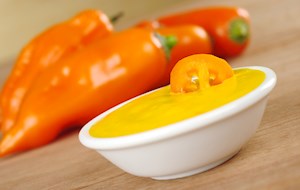
Aji criollo
Aji criollo or salsa de aji is a spicy Peruvian salsa prepared with a combination of yellow aji chili peppers and oil. The sauce is usually pleasantly spicy, but it can also be extremely hot and spicy, so one should be careful when tasting it for the first time. The sauce is traditionally used as an accompaniment to various meat and fish dishes, but it's also often used as a dip for french fries and tequeños. Although it shares the name with an Ecuadorian sauce, those two differ significantly, both in appearance (Ecuadorian version is green), and in the method of preparation and ingredients used.
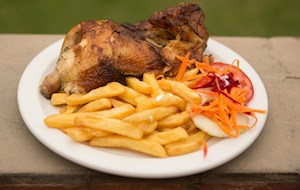
Pollo a la brasa
Pollo a la brasa is a popular Peruvian dish consisting of crunchy and juicy charcoal-grilled chicken that is traditionally served with French fries and salads. Today, it is one of the most consumed meals in Peru, so much that 27 million Peruvians eat it daily. The dish was first invented in Lima in the 1950s, when it was seasoned only with salt, but nowadays the chicken is often marinated in a special combination of ingredients, usually consisting of vinegar, salt, pepper, rosemary, chili, and dark beer.
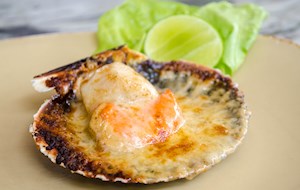
Conchitas a la parmesana
Conchitas a la parmesana is a traditional dish that's served as an appetizer. It consists of scallops that are topped with grated parmesan, then placed under the broiler for a few minutes. When served, the cheese should be bubbling, but the scallops will remain almost raw. The ingredients used for the dish include scallops, Worcestershire sauce, lime juice, butter, salt, pepper, and grated parmesan cheese. The dish is served immediately, while still piping hot, ideally with lime wedges on the side.
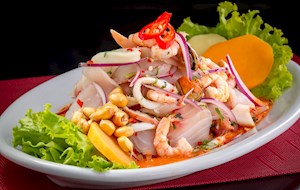
Ceviche mixto
Ceviche mixto is a classic Peruvian appetizer that differentiates itself from other types of ceviche by the addition of various seafood ingredients to regularly used fish. Those include shrimp, squid, octopus, clams, or scallops. A few mussels or small crabs are sometimes also added to the dish. The seafood is typically marinated in lime juice, onions, garlic, celery, coriander, hot chili peppers, and salt. Ceviche mixto is often served with glazed sweet potatoes and Peruvian corn.
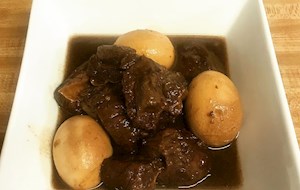
Adobong baka
Adobong baka is a traditional stew originating from the Philippines. This type of adobo is usually made with a combination of thinly sliced beef, soy sauce, vinegar, garlic, peppercorns, sugar, water, salt, and bay leaves. The beef is marinated in a mixture of garlic, bay leaves, peppercorns, brown sugar, and soy sauce. It is then browned in a pan, covered with water, seasoned with salt, and simmered until the sauce is almost fully absorbed. Adobong baka is served hot with rice on the side.
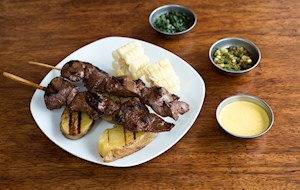
Anticuchos de corazon
Anticucho de corazon is a traditional dish originating from Peru, consisting of beef heart skewers. The dish is made with a combination of beef heart, oil, red wine vinegar, garlic, oregano, cumin, salt, and aji panca hot pepper paste. The beef heart is cut into cubes and marinated in a combination of all other ingredients. The cubes are then skewered and grilled until fully cooked and slightly charred. These beef heart skewers are traditionally served with accompaniments such as thick slices of boiled potatoes, corn, and aji amarillo sauce on the side as a dip. It's recommended to enjoy anticucho de corazon with a bottle of ice-cold beer.
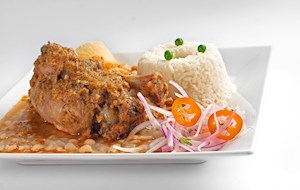
Seco de cabrito
Seco de cabrito is a traditional dish that was originally prepared in the north of the country, but nowadays it's also popular in coastal areas. It consists of goat meat that's cooked with hot peppers, peas, carrots, and cilantro sauce. The list of ingredients also includes onions, cumin, garlic, oregano, oil, and seasonings. The meat is fried, then cooked with the other ingredients until the sauce becomes thick. Once done, seco de cabrito is traditionally served with rice, beans, and boiled cassava as a one-dish meal. This dish is often prepared for festive events such as family celebrations, and it can also be reheated and served the next day.
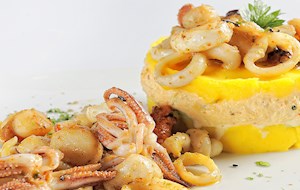
Causa rellena
This traditional Peruvian delicacy is made with yellow potatoes and either tuna salad or chicken. Most often, the potatoes are molded or cut into circles, and the filling is sandwiched in between. The dish is flavored with mayonnaise, ají amarillo chilis, and lime or lemon juice. Causa rellena is typically served cold on a bed of lettuce, while the top is garnished with black olives, making it a perfect appetizer or a light meal on its own. It is believed that the dish was invented during the Pacific War. Food was scarce, and the Peruvian women started collecting potatoes and any other ingredients they could get their hands on. The women created causa rellena, then offered it to soldiers for the cause of defending their homes, hence the name of the dish.
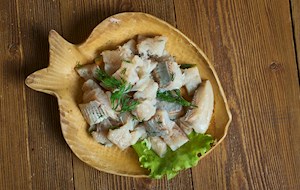
Indigirka Salad

Indigirka is a Russian fish salad that has its origins in Yakutia (Sakha). It consists of diced frozen fish that is combined with onions, oil, salt, and pepper. The salad is typically made from whitefish such as broad whitefish (also known as chir), nelma, and muksun, and it is traditionally served in ice bowls. Indigirka salad first appeared in the middle of the 20th century and was named after the Indigirka River, one of the major Yakutian rivers. It is believed it was created by chef Innokenty Tarbakhov, who based it on a similar ethnic Yakutian dish made with raw fish called raw in the Yakut language or five minutes in Russian. The salad is occasionally accompanied by lemon wedges, but modern variations may include fish roe, fennel, as well as various dressings. This well-chilled appetizer ideally pairs with vodka.
Çıtır mantı
Çıtır mantı is a Turkish fried dumpling dish made from thin wheat dough filled with seasoned minced meat, shaped into small parcels, and cooked in hot oil until crisp, then usually served with garlicky yogurt and a buttery red pepper or tomato-based sauce. It is best understood as a fried variation within the wider Turkish mantı family rather than a single old regional specialty with one fixed place of origin. Mantı itself has a much longer place in Turkish cooking, with filled dough preparations documented in Ottoman cuisine and related dumpling forms found across Central Asia, Anatolia, and neighboring regions, but the explicitly crispy version appears to be a later adaptation built around frying instead of boiling. In contemporary Turkey, çıtır mantı is prepared both at home and in restaurants, and the name is used quite broadly for mantı that is fried until the dough becomes golden and crunchy. The basic dough is made from flour, egg, water, and salt, rolled thin, and cut into small squares. A filling of minced beef or lamb, finely grated or chopped onion, salt, black pepper, and sometimes red pepper flakes is placed in the center before the dough is folded into triangles, bundles, or other compact shapes. Instead of being simmered in water like many better-known mantı styles, the dumplings are fried in hot oil until the exterior becomes crisp while the filling cooks through. Some cooks bake them rather than deep-fry them, but frying is the method most closely associated with the name. Çıtır mantı is commonly served immediately after cooking, either with garlic yogurt spooned over the top or with the yogurt served alongside so the pastry remains crisp for longer. A second sauce made from melted butter with pul biber, paprika, tomato paste, or dried mint is often added, preserving the familiar flavor profile of classic mantı while changing the texture completely. Sumac, dried mint, and red pepper flakes may be used as finishing seasonings. One of the defining characteristics of the dish is the contrast between the crisp fried shell, the soft meat filling, and the cool acidity of yogurt, which makes it work equally well as a hot starter, snack, or more substantial plate. It is eaten throughout Turkey in modern mantı restaurants, casual eateries, and home kitchens rather than being strongly tied to a single city, although similar fried mantı preparations may be marketed under regional names such as Bodrum mantısı. Çıtır mantı is best eaten hot and freshly fried, with garlicky yogurt, tomato or pepper sauce, and simple accompaniments such as salad or pickled vegetables; ayran is the most natural beverage pairing, while Turkish lager or a light, acidic red wine can also work with richer versions.
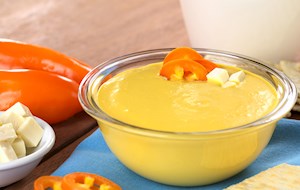
Salsa a la huancaina
Salsa a la huancaína is a creamy yellow sauce made from ají amarillo, queso fresco, milk, and oil, best known as the topping for boiled potatoes in papa a la huancaína. It tastes of fresh cheese and fruity chile and is usually served cool or at room temperature. The sauce is thick and pourable, with a smooth texture in most blender preparations. Queso fresco is a fresh white cheese with a mild, salty flavor, while ají amarillo supplies both the heat and the yellow-orange color. Common recipes use evaporated milk and galletas de soda, plain soda crackers that thicken the mixture, although crackers aren't essential. Fresh or frozen ají amarillo can be used, as can prepared ají amarillo paste. Cooks generally remove the seeds and inner membranes from whole peppers, then either blanch them or sauté them before blending. Onion and garlic are optional additions, often cooked with the peppers in oil. The chile mixture is blended with the cheese, milk, and any crackers until creamy. Some preparations combine cooked and raw ají amarillo, and a little lemon or lime juice may be added, but the basic flavor remains chile and cheese. A sauce made with prepared chile paste can be blended directly without cooking the ingredients together. Huancaína can also be made on a batán, a stone grinding slab used with a rounded grinding stone. The peppers and cheese are crushed together while small amounts of oil and milk are worked into the mixture. This method can leave a slightly grainy texture, with small particles of cheese, rather than the uniformly smooth finish produced by a blender. The name refers to Huancayo, but nineteenth-century records show that the preparation was already being served beyond the city. Papas amarillas a la huancaína appeared on menus for banquets honoring naval commander Miguel Grau in June 1879. An 1897 household manuscript compiled for Isabel Gertrudis Alfaro in Huancayo records a hot version: onion and chile were cooked with cheese or quesillo, another fresh cheese, and vinegar to make a sauce for boiled yellow potatoes. This differed from the familiar cold, blended preparation. The older recipe used a cooked onion-and-chile base and included vinegar; it did not specify the evaporated milk and crackers common in many recipes today. In papa a la huancaína, peeled, boiled potatoes are sliced, generously covered with the sauce, arranged on lettuce, and garnished with a hard-boiled egg and black olives. Yellow potatoes are frequently used, though white potatoes and varieties such as huayro also appear. The dish is served as an appetizer, and it commonly precedes a main course such as arroz con pollo, chicken with seasoned rice, or tallarines rojos, pasta with a red sauce. The sauce is also served separately as a dip for fried yuca (cassava) and tequeños, fried cheese-filled rolls. It is used warm in tallarines a la huancaína, where spaghetti or fettuccine is coated with the chile-and-cheese sauce, sometimes served with lomo saltado, stir-fried beef with onion and tomato.
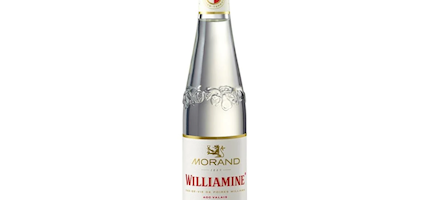
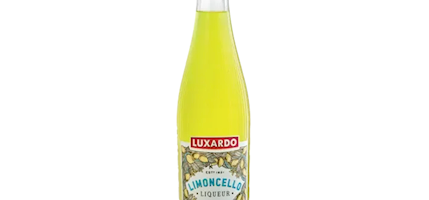


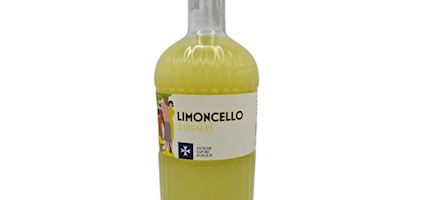

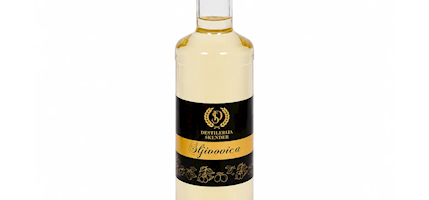

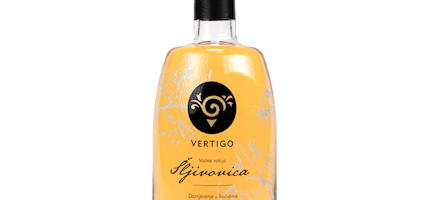
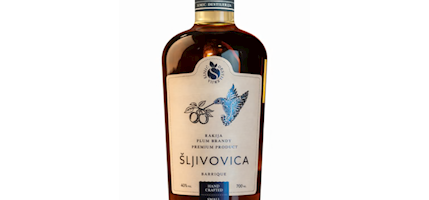
Destilerija Šimić
Šljivovica Barrique Šimić - Nova Era
IWSC- International wine & spirit competition Silver 2024, 2025